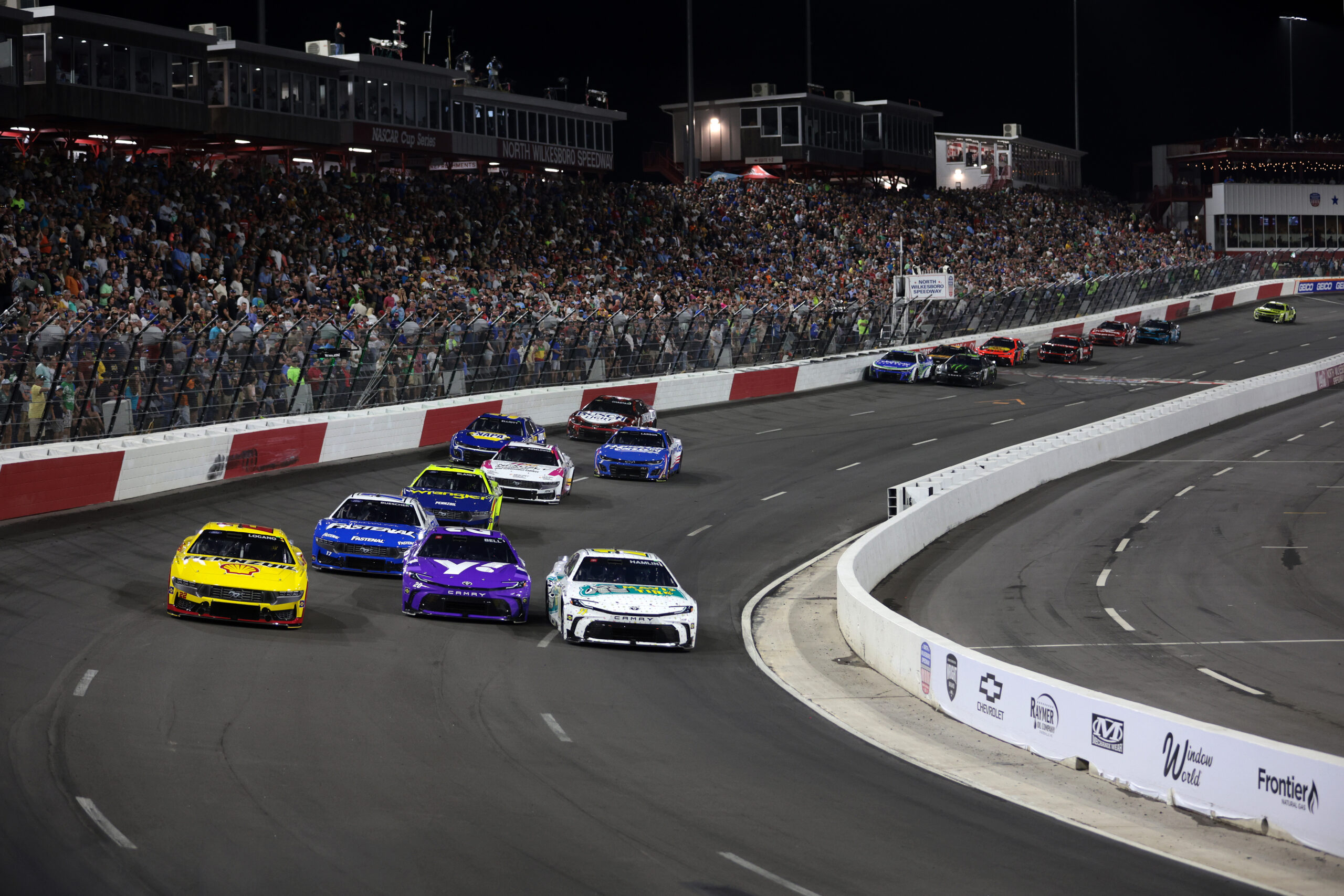
NASCAR is reportedly exploring changes to the Next Gen car ahead of next month’s test at North Wilkesboro with input from crew chiefs, manufacturers, and counsel drivers Christopher Bell and Joey Logano.
NASCAR says it will also explore tweaks to the NextGen car in addition to the 750 spacer next month for the test at Wilkesboro.
— Matt Weaver (@MattWeaverRA) November 11, 2025
I asked a lot of drivers and crew chiefs over the last month what swings they want to see tried in addition to the HP increase.https://t.co/2eIyyVYOPd
It is no secret that NASCAR is seeking improvements in short track racing, which has been heavily criticized since the introduction of the Next Gen car. Though Goodyear has been doing a good job with providing softer tires, generating more wear and consequently more passing opportunities, major changes to this generation of cars are yet to be made. This is a big contrast in comparison to the Gen 6 era, for example, which changed significantly almost every year
| Year | Horsepower | Rear Spoiler Size | Changed? |
|---|---|---|---|
| 2013 | 900HP | 6 inches | Debut |
| 2014 | 850-900HP | 8 inches | Yes |
| 2015 | 725-750HP | 6 inches | Yes |
| 2016 | 725-750HP | 3.5 inches | Yes |
| 2017 | 750HP | 2.3 inches | Yes |
| 2018 | 750HP | 2.3 inches | No |
| 2019 | 550 & 750HP | 8 inches | Yes |
| 2020 | 550 & 750HP | 8 & 2.7 inches | Yes |
| 2021 | 550 & 750HP | 8 & 2.7 inches | No |
Even using ONLY the example of horsepower and rear spoiler, which are easier to understand for the average fan, it’s noticeable that NASCAR made changes to the cars year after year, except for 2017 to 2018 and from 2020 to 2021, meaning there was a significant change in 6 of the 8 years since the car’s debut.
Meanwhile, in the 4 years of the Gen 7, no significant aero/performance changes actually happened. That was until the horsepower boost from 2025 to 2026 was announced by NASCAR, jumping from the 670 HP used since 2022 to 750 HP for ovals shorter than 1.5 miles and road courses.
While it is true that NASCAR made some tweaks over the years, most were due to safety concerns. Most notably, the enhanced rear clip and front splitter were introduced after injuries following collisions that hadn’t resulted in injuries for decades, which was deemed unacceptable by both fans and the industry. NASCAR also implemented multiple changes to prevent the cars from lifting off the ground at superspeedways, but none affected their actual performance.
Meanwhile, the aero and performance changes had little effect on the racing product, leaving NASCAR largely reliant on Goodyear to improve the on-track product.
During the November 12 test at Bristol Motor Speedway, RFK Racing posted a video that had fans talking due to the apparent absence of the rear diffuser, something most fans have been asking to be scrapped out of the car entirely. Drivers such as Denny Hamlin and Christopher Bell have also indirectly advocated for the tool to be removed, defending that the Cup Series car should be more similar to the Xfinity Series car, which fans and drivers alike love.
Good morning from Bristol, baby 🫡@RyanPreece_ is rolling out the RFK TeK Alliance test car for day one of tire testing pic.twitter.com/BliUxHJbHl
— RFK Racing (@RFKracing) November 12, 2025
Scrapping the diffuser entirely is highly unlikely, however, since the car was designed to use one. Removing the rear diffuser would make a significant difference in how it drives, as it would lose rear downforce and grip, especially at high speeds, resulting in a looser and less controllable feel. The airflow underneath would become chaotic without the diffuser to guide it, creating additional drag and turbulence, which would result in slower speeds on straights and reduced overall stability. It can also affect how air moves around the rear suspension and brakes, making the car run hotter or less efficiently. In short, it completely disrupts the balance and stability that the aerodynamics were designed around.
While, again, fans had hope the diffuser had been scrapped completely at least for this test, NASCAR mechanic Bozi Tatarevic noted that the diffuser used had already been in place for road courses and short tracks, though it is smaller compared to the one used on larger and faster racetracks, and that’s why it’s not as noticeable.
Short track/road course diffuser.https://t.co/4x8NJE1za8
— Bozi Tatarevic (@BoziTatarevic) November 12, 2025
That, however, is already a change, since NASCAR had been using the intermediate package/diffuser for “high-speed short tracks” such as Bristol and Dover. Driver Ryan Preece, responsible for the Ford car testing yesterday, said they are “finding the right direction” with the changes.
Bristol testing update, 500 laps later https://t.co/bI7smHKAU9 pic.twitter.com/4PSmAUxXHn
— Ryan Preece (@RyanPreece_) November 12, 2025
Following the Bristol test, NASCAR will head to North Wilkesboro for further testing, where they will consider making technical adjustments to the car to enhance racing and increase passing opportunities. NASCAR President Steve O’Donnell affirmed that the sanctioning body is discussing ideas with drivers, OEMs, Crew chiefs, and others to test at North Wilkesboro and “see what happens.”
Though what exactly the changes are remains unclear, but these questions could be answered by next month. For now, what we know is NASCAR will continue testing the 750HP engine, and the rear diffuser is one change being looked at for tracks like Bristol.
What changes would you make to the Next Gen car? Let us know your opinion on Discord or X. Don’t forget that you can also follow us on Instagram, Facebook, and YouTube.