At Least One Manufacturer is Okay with Increasing Horsepower

What’s Happening?

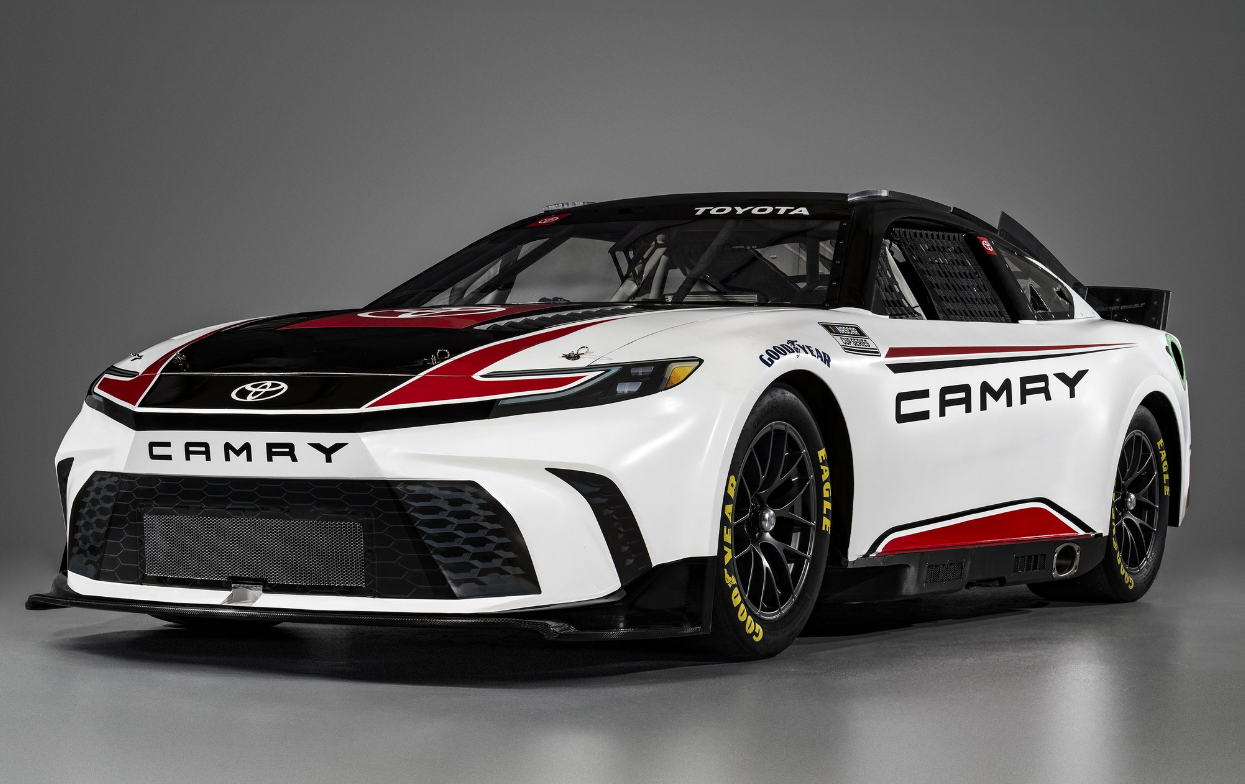
If there is one thing that every NASCAR fan and driver seems to agree on, it’s that there needs to be more horsepower on short tracks to make the racing product better. Well, Jeff Gluck of The Athletic wrote about the short track problem, which featured a comment from David Wilson of TRD. Wilson told Gluck that TRD would be “On board” with increasing horsepower if that was the general consent.

  • The short-track package has been the subject of much scrutiny since the Next-Gen car was introduced. Fans have not liked the racing product on short tracks with the Next-Gen car, while the previous Gen-6 car was highly praised for its’ short track product.
  • For a while now, the general consensus amongst fans and drivers is that NASCAR should look at increasing the horsepower on short tracks and road courses. However, NASCAR has refused to do so citing cost concerns and attracting new manufacturers.
  • Fans have been asking for NASCAR to increase horsepower, and having a manufacturer say they are open to it is a big deal. It provides more ammunition for fans to say that horsepower should increase.

What Did Wilson Have to Say?

Here is the full quote from Wilson to Gluck in the article. Wilson says that he and Toyota are okay with increasing horsepower, but, he also admits the problem is very complicated.

We’d like to see better racing, and the path to that — we’re open to about anything. If the consensus is we need to put the power back up, then we’re on board…But we’re seeing historic reliability with our power plants, and that doesn’t happen by accident. … It’s trying to turn all of those knobs and achieve the best balance and not hurt one particular stakeholder or competitive element moreso than another. I don’t envy NASCAR in that regard, because it’s a tough problem to solve for.

David Wilson via Jeff Gluck of The Athletic

There is a small catch to Wilson being okay with increasing horsepower. He talks about the “historic reliability” that the Next-Gen car has had, and about how NASCAR needs to balance between multiple different factors.

The Next-Gen car has indeed been incredibly reliable, especially in 2023. We recently broke down DNFs in the Next-Gen car, and we found that in the 2023 season, only 7 DNFs were because of engine failures. That’s 1/3 as many engine failures as there were in 2021 and 2022.

Naturally, adding horsepower means a higher strain on the engines. That’s a factor that must be considered if NASCAR wants to increase the horsepower.

Still, regardless of that fact, TRD admitted that they are okay with increasing horsepower. If they are okay with it, then how much would the cost really be?

Is the Cost Really That Much Higher?

While making any major increases to horsepower on short tracks may be a bigger undertaking, multiple people in the industry have said that a small bump in horsepower would not be a major issue. Denny Hamlin was on the Dale Jr. Download, and he said that, from a team owner’s perspective, engine bills have not changed much since the change in horsepower.

I can tell you as a team owner, our engine bills when it was 700 or 800 horsepower versus right now is no different, so I don’t understand why going back and taking a $0.50 piece of aluminum that is a tapered spacer, and opening that thing up to 750 [horsepower], I cannot make sense of why we’re not doing it.

Denny Hamlin

Hamlin also discussed different ways in which increasing horsepower would help the short-track package. You can catch a full breakdown of that below.

Senior Vice President of ECR Engines, Bob Fisher was a guest on Sirius XM NASCAR Radio in December. He said that removing the tapered spacer and increasing horsepower to 750, “Wouldn’t be a huge tear up to engine companies.”

If the issue is cost, there is at least one team owner and one engine builder who agrees the cost would not be that steep. TRD’s David Wilson seems to be at least open to the idea as well.

At least one manufacturer, at least one engine builder, and at least one team owner are all now open to increasing horsepower. If that is the case, then how much longer until NASCAR just decides to increase horsepower?
Share this:

CHICAGO, ILLINOIS - JULY 06: Ty Gibbs, driver of the #54 Monster Energy Toyota, drives during the NASCAR Cup Series Grant Park 165 at Chicago Street Course on July 06, 2025 in Chicago, Illinois. (Photo by Logan Riely/Getty Images

Lawsuit Update: Gabehart Calls JGR Competition Team “Dysfunctional,” Ty Gibbs “Not Accountable”

What’s Happening?

Former Joe Gibbs Racing Crew Chief and Competition Director Chris Gabehart has filed a new response slamming JGR as part of an ongoing lawsuit brought against the former Daytona 500 Champion by his former employer.

Gabehart departed Joe Gibbs Racing this past offseason following eight seasons as a Crew Chief and one as the team’s Competition Director, while serving as an unofficial Crew Chief for Ty Gibbs’ No. 54 team.

This move surprised fans, as, under his tenure in 2026, the team scored 13 wins, 47 top fives, 69 top tens, and placed three cars in the Playoffs, with two in the Championship Four.

Nonetheless, with his future still in the air, JGR sued Gabehart last week, claiming he “embarked on a brazen scheme to steal JGR’s most sensitive information and use it for the benefit of a direct competitor in NASCAR.”

While the industry veteran responded to the allegations last week in a post to social media, he expanded his side of the story in a scathing response filed Wednesday afternoon.

In his response, Gabehart claims that in 2025, he became discontented with his role at JGR “and other aspects of how JGR’s race teams were being run.”

Expanding on this opinion, Gabehart stated first that his duties at JGR as Competition Director were “materially inconsistent with my reasonable expectations when I accepted the position,” going on to say that the structure at JGR was “dysfunctional.”

“I was promised a COO-type role overseeing all competitive operations with autonomy to lead. Instead, I found myself constantly intertwined with Coach Gibbs, senior JGR executives, and family members when making even routine competition decisions—a dysfunctional organizational structure that I could not continue in.” — Chris Gabehart

Ironically, since his departure, Joe Gibbs confirmed during an interview with SiriusXM NASCAR Radio on February 12, that the team now uses a committee approach for the Competition Director duties.

Gabehart then turned his barrel at the No. 54 team, a car driven by Gibbs’ grandson Ty Gibbs, and a team that Gabehart served as the substitute Crew Chief of during the 2025 season, before returning the reins to the team’s official shot caller, Tyler Allen.

The long-time Crew Chief said that in his opinion, the No. 54 team is not held to the same standards as other teams in the organization, saying, “It was my view that the No. 54 car should be managed and held accountable in the same manner as the organization’s other cars.”

He even alleged that Joe Gibbs directly oversaw his grandson’s team and “pressured” Gabehart to take over as Crew Chief early on during his time as JGR’s Competition Director.

“Beginning early in the 2025 season, Coach Gibbs repeatedly pressured me to take over as crew chief of the No. 54 car. I consistently declined, explaining that as Competition Director, I did not believe this was the right move, that it would undermine the long-term development of the team, and that I did not want to be crew chief of the No. 54 or any other car.” — Chris Gabehart

Gabehart even explained how he took over for Tyler Allen before returning duties to the team’s original Crew Chief:

“Despite my objections, Coach Gibbs and ownership continued pressing, and I eventually conceded to the pressure by first helping the No. 54 team more behind the scenes and then, beginning on June 28, 2025, by publicly serving as the crew chief and calling the races on Sundays for nine consecutive races before returning those duties to the original crew chief, Tyler Allen, against the strong desires of ownership, when I made it clear that I did not want to serve as a crew chief for the long term.” — Chris Gabehart

During Gabehart’s tenure with the No. 54 team, which per his account began with the summer race at EchoPark Speedway and concluded after nine races with the Playoff cutoff race at Daytona, the team scored two top fives, four top tens, and tallied an average finish of 14.3. The team also won the inaugural NASCAR In-Season Challenge Tournament during this stretch of races.

Furthermore, at the start of that stretch, JGR initially claimed that Gabehart was not the Crew Chief and was a race strategist for the No. 54 team, though this may have been for one race.

In the 17 races prior to Gabehart’s time as the No. 54’s Crew Chief, with Allen on the box, the team had just two top fives, three top tens, and a 19.4 average finish.

But despite this improvement, the team failed to make the Playoffs, with Gabehart focused on his role as Competition Director. However, he notes in his filing that it is his opinion that the “differential treatment” of Gibbs’ team undermined my position as Competition Director.”

He even touted that Gibbs had a different meeting attendance standard than other JGR team members.

“I also identified specific examples of the No. 54 team’s differential treatment that undermined my position as Competition Director. For example, key personnel decisions were made without my counsel or input despite my role as Competition Director; and critically the No. 54 driver was not held to the same meeting attendance standards as others on the team.” — Chris Gabehart

Ultimately, the real bitterness in this filing is found later on, when Gabehart alleges the lawsuit isn’t about stolen information, rather, as he puts it, “it is about punishing a former employee for daring to leave.”

Directly Addressing the Lawsuit

Gabehart also addressed the origin of the lawsuit in his filing, backing up a claim in his social media post last week that Spire Motorsports, now a co-defendant in this lawsuit, is willing to let a forensic examiner look through their information to confirm Gabehart did not take “sensitive information” from the team.

JGR alleges that he used several methods to take setup information from JGR, including an allegation that he synchronized his personal Google Drive account with a JGR-issued laptop to supply it to a rival team, known to be Spire Motorsports.

In Wednesday’s filing, Gabehart provided a letter from attorneys at the law firm Robinson, Bradshaw & Hinson claiming that Spire, which now employs him as their Chief Motorsports Officer, is willing to allow a neutral forensic examiner to look through Spire materials to “confirm that no JGR information was transmitted to or used by Spire.”

Tuesday night, JGR filed a new document of its own, which requested the court grant a temporary restraining order and preliminary injunction to prevent Gabehart from working at Spire in a similar role to his job at JGR for the next 18 months and require Spire to return any information to JGR.

Nonetheless, this filing, alongside one from JGR Tuesday night, shows there are no signs of this lawsuit slowing down, with Gabehart’s accusations making this one of the most bitter breakups in recent NASCAR history.

What do you think about this? Let us know your opinion on Discord or X. Don’t forget that you can also follow us on InstagramFacebook, and YouTube.

What Is NASCAR Doing With the All Star Race?

NASCAR’s 2026 All-Star format has fans going from “hell yeah” to “what the hell” in record time. With a 350-lap, three-segment race at Dover Motor Speedway and no Open or LCQ, the exhibition’s identity suddenly feels very different — and not everyone is thrilled about it.

  • If the entire field shows up, is it really an All-Star race anymore?
  • Why eliminate the Open when it’s been the most exciting part of the weekend in recent years?
  • Does a 75-75-200 format with inverts and combined averages add drama — or just unnecessary math?
  • And at what point does this just become a 37th points race without points?

The new structure locks in recent winners, past champions, and a fan vote — leaving limited spots available through the segments. It’s structured. It’s legitimate. But it trades exclusivity and simple, high-stakes transfer battles for something that feels more procedural than electric. For many fans, the All-Star race used to mean night racing, short bursts, bold strategy, and desperation. Now, with a longer format and no true “win-and-you’re-in” showdown, Jaret believes it risks feeling like an obligation rather than a spectacle.

Watch Also:

All-Star Race Format is… Different | JGR Adds Spire Motorsports to Lawsuit | NASCAR Power Rankings

NASCAR’s All-Star shakeup, a growing legal fight in the garage, and major early-season momentum swings have all collided at once. With COTA up next, the timing couldn’t be more dramatic, and the ripple effects might be bigger than they first appear.

  • Is the new All-Star format at Dover Motor Speedway adding excitement, or just replacing simple drama with complicated math?
  • Why walk away from the Open and Last Chance format that created real, head-to-head tension?
  • What does Joe Gibbs Racing officially pulling Spire Motorsports into its lawsuit signal about how serious the data war has become?
  • And with Circuit of the Americas on deck, which drivers have actually earned the top spots in the power rankings?

This isn’t just about one exhibition race or one court filing. It’s about direction, leverage, and momentum at a critical point in the season. The format decisions affect the show. The lawsuit could affect how teams operate. And COTA might start separating early contenders from everyone else.

Watch Also: