

When Can a New Manufacturer Join NASCAR? “18-24 Months” Says NASCAR Exec

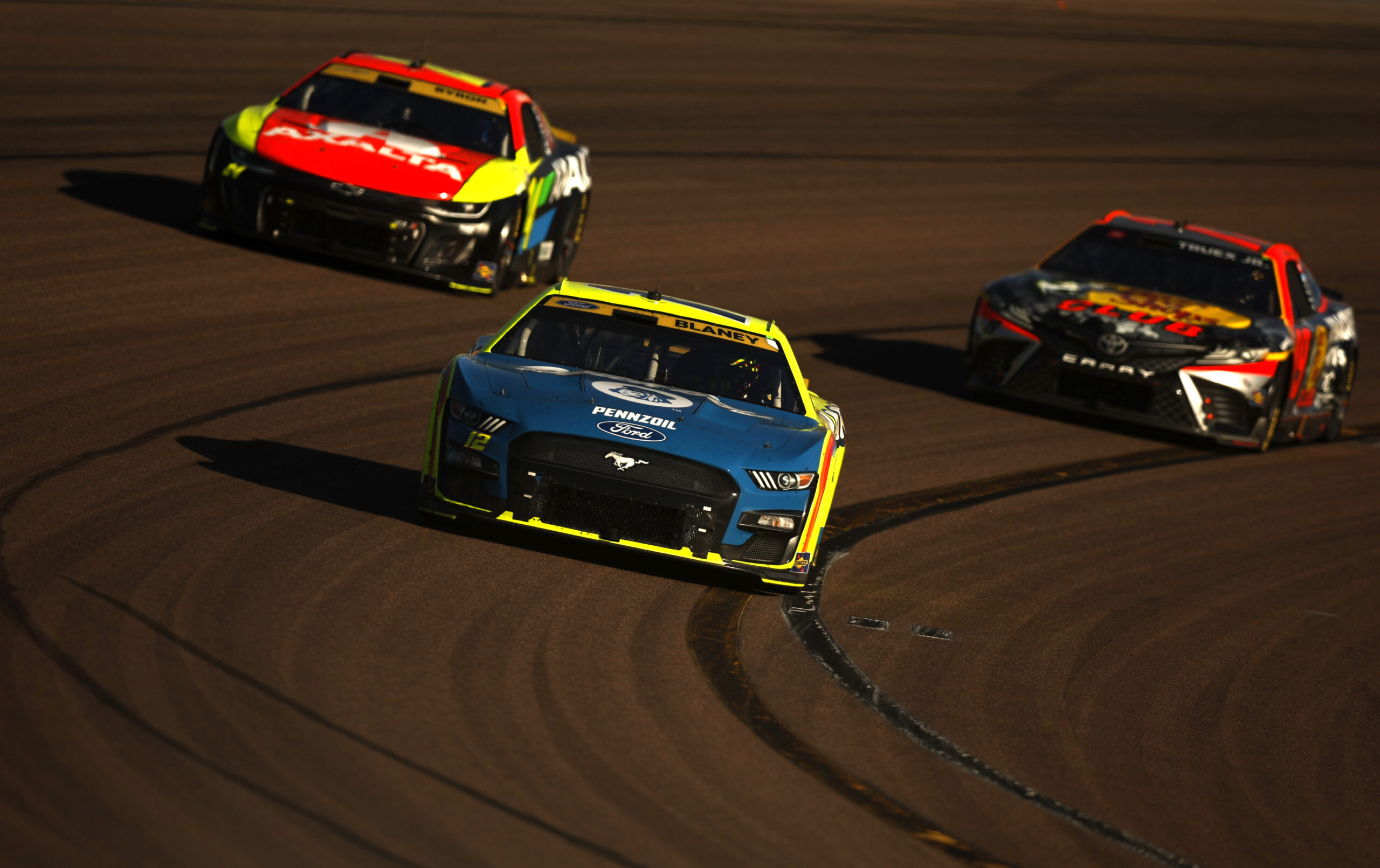
AVONDALE, ARIZONA - NOVEMBER 05: Ryan Blaney, driver of the #12 Menards/Dutch Boy Ford, William Byron, driver of the #24 Axalta Chevrolet, and Martin Truex Jr., driver of the #19 Bass Pro Shops Toyota, race during the NASCAR Cup Series Championship at Phoenix Raceway on November 05, 2023 in Avondale, Arizona. (Photo by Sean Gardner/Getty Images)

What’s Happening?

NASCAR Chief Racing Development Officer, John Probst, joined Sirius XM NASCAR Radio to talk about the future of NASCAR including engine regulations and manufacturers. Within that interview, he gave a specific timeline for when a new OEM could join the sport, 18-24 months (which would be as soon as 2026). What does that mean for the future of the sport?

From our perspective, a timeline for a new OEM coming into our sport is somewhere in the 18-24 month period. When we work with our existing partners, obviously it’s important for us to make sure that any new partner coming in would be a complement to what we have here today, so, there would be an outside chance we could do it quicker. Certainly when our existing OEM partners are on board, which they are, we may be able to expedite that, but, under normal circumstances, 18-24 months.

John Probst on Sirius XM NASCAR Radio
  • NASCAR has been teeming with rumors about a new manufacturer joining for a few months now. Honda has reportedly shown interest in NASCAR, and NASCAR has reportedly shown interest back.
  • However, neither NASCAR nor Honda have officially confirmed the rumors. However, NASCAR has publicly stated that they are in discussions with a potential 4th OEM.
  • Fans are excited to see a potential new OEM join the sport. This gives them a specific timeline, which many have been speculating about.

What Does This Mean?

First off, this is by no means a confirmation that Honda and NASCAR will team up. Neither side has confirmed as such, but, neither side has denied it either. If this was not a possibility, we would have known by now.

Multiple reports have indicated that Honda is interested in NASCAR, so, there’s the 4th manufacturer’s interest. Brian Murphy, who has worked in NASCAR for many years, also mentioned that new manufacturers have to submit and have NASCAR approve body panels about a year and a half in advance before being introduced into the competition. Probst confirmed in the interview that for a new OEM to join in 2026, they would need to submit what they need sometime during the summer. That fits within the 18-24 month window.

We discuss these topics in more detail in the article below.

We also have a report from Jordan Bianchi on “The Teardown” podcast from last weekend. He said that the process for Honda to be introduced into NASCAR has yet to get off the ground. This doesn’t mean that the interest is not there, but, it’s not very far along.

Again, we discuss this in deeper detail below.

For a new manufacturer, be that Honda or someone else, joining in 2026 seems very possible, but, Probst was very clear that it is not a guarantee. As long as the Honda to NASCAR reports keep flowing, this remains a possibility.

What Would a Prospective New OEM Have to do?

Probst gave two major things that new OEMs have to submit to NASCAR to join the Cup Series. The process appears to be a bit simpler for manufacturers than in past years.

The timing has probably never been better for an OEM to consider coming into our sport. In years past, you were effectively trying to build the car from the ground up before coming into our sport. With the Next-Gen Car, the way it is today, we preserved the DNA of the OEMs in the bodywork and in the engines that go in the car. As a new OEM looking to come into NASCAR, you’d be looking at developing a body, and getting an engine approved for use in our sport.

John Probst

A body and an engine is the skeleton a manufacturer needs to create before joining NASCAR. Sounds pretty simple, but the target appears to be moving, as Probst talks about the use of electronics in NASCAR.

Probst says that NASCAR has awarded a contract to McLaren to supply new electronics to the Cup Series car. He did say that this could lead to new technology in the engine, but, NASCAR’s options are still open.

They will open up doors to allow us to explore what may potentially lie ahead with respect to power trains in the Cup Series. In general, it’s just meant to keep our cars current to the relevant technology that exists today and to keep our options as wide open as they can be into the future.

John Probst

A new manufacturer could be on its way soon. However, what template that manufacturer will have to work with remains a mystery.
Share this:

CHICAGO, ILLINOIS - JULY 06: Ty Gibbs, driver of the #54 Monster Energy Toyota, drives during the NASCAR Cup Series Grant Park 165 at Chicago Street Course on July 06, 2025 in Chicago, Illinois. (Photo by Logan Riely/Getty Images

Lawsuit Update: Gabehart Calls JGR Competition Team “Dysfunctional,” Ty Gibbs “Not Accountable”

What’s Happening?

Former Joe Gibbs Racing Crew Chief and Competition Director Chris Gabehart has filed a new response slamming JGR as part of an ongoing lawsuit brought against the former Daytona 500 Champion by his former employer.

Gabehart departed Joe Gibbs Racing this past offseason following eight seasons as a Crew Chief and one as the team’s Competition Director, while serving as an unofficial Crew Chief for Ty Gibbs’ No. 54 team.

This move surprised fans, as, under his tenure in 2026, the team scored 13 wins, 47 top fives, 69 top tens, and placed three cars in the Playoffs, with two in the Championship Four.

Nonetheless, with his future still in the air, JGR sued Gabehart last week, claiming he “embarked on a brazen scheme to steal JGR’s most sensitive information and use it for the benefit of a direct competitor in NASCAR.”

While the industry veteran responded to the allegations last week in a post to social media, he expanded his side of the story in a scathing response filed Wednesday afternoon.

In his response, Gabehart claims that in 2025, he became discontented with his role at JGR “and other aspects of how JGR’s race teams were being run.”

Expanding on this opinion, Gabehart stated first that his duties at JGR as Competition Director were “materially inconsistent with my reasonable expectations when I accepted the position,” going on to say that the structure at JGR was “dysfunctional.”

“I was promised a COO-type role overseeing all competitive operations with autonomy to lead. Instead, I found myself constantly intertwined with Coach Gibbs, senior JGR executives, and family members when making even routine competition decisions—a dysfunctional organizational structure that I could not continue in.” — Chris Gabehart

Ironically, since his departure, Joe Gibbs confirmed during an interview with SiriusXM NASCAR Radio on February 12, that the team now uses a committee approach for the Competition Director duties.

Gabehart then turned his barrel at the No. 54 team, a car driven by Gibbs’ grandson Ty Gibbs, and a team that Gabehart served as the substitute Crew Chief of during the 2025 season, before returning the reins to the team’s official shot caller, Tyler Allen.

The long-time Crew Chief said that in his opinion, the No. 54 team is not held to the same standards as other teams in the organization, saying, “It was my view that the No. 54 car should be managed and held accountable in the same manner as the organization’s other cars.”

He even alleged that Joe Gibbs directly oversaw his grandson’s team and “pressured” Gabehart to take over as Crew Chief early on during his time as JGR’s Competition Director.

“Beginning early in the 2025 season, Coach Gibbs repeatedly pressured me to take over as crew chief of the No. 54 car. I consistently declined, explaining that as Competition Director, I did not believe this was the right move, that it would undermine the long-term development of the team, and that I did not want to be crew chief of the No. 54 or any other car.” — Chris Gabehart

Gabehart even explained how he took over for Tyler Allen before returning duties to the team’s original Crew Chief:

“Despite my objections, Coach Gibbs and ownership continued pressing, and I eventually conceded to the pressure by first helping the No. 54 team more behind the scenes and then, beginning on June 28, 2025, by publicly serving as the crew chief and calling the races on Sundays for nine consecutive races before returning those duties to the original crew chief, Tyler Allen, against the strong desires of ownership, when I made it clear that I did not want to serve as a crew chief for the long term.” — Chris Gabehart

During Gabehart’s tenure with the No. 54 team, which per his account began with the summer race at EchoPark Speedway and concluded after nine races with the Playoff cutoff race at Daytona, the team scored two top fives, four top tens, and tallied an average finish of 14.3. The team also won the inaugural NASCAR In-Season Challenge Tournament during this stretch of races.

Furthermore, at the start of that stretch, JGR initially claimed that Gabehart was not the Crew Chief and was a race strategist for the No. 54 team, though this may have been for one race.

In the 17 races prior to Gabehart’s time as the No. 54’s Crew Chief, with Allen on the box, the team had just two top fives, three top tens, and a 19.4 average finish.

But despite this improvement, the team failed to make the Playoffs, with Gabehart focused on his role as Competition Director. However, he notes in his filing that it is his opinion that the “differential treatment” of Gibbs’ team undermined my position as Competition Director.”

He even touted that Gibbs had a different meeting attendance standard than other JGR team members.

“I also identified specific examples of the No. 54 team’s differential treatment that undermined my position as Competition Director. For example, key personnel decisions were made without my counsel or input despite my role as Competition Director; and critically the No. 54 driver was not held to the same meeting attendance standards as others on the team.” — Chris Gabehart

Ultimately, the real bitterness in this filing is found later on, when Gabehart alleges the lawsuit isn’t about stolen information, rather, as he puts it, “it is about punishing a former employee for daring to leave.”

Directly Addressing the Lawsuit

Gabehart also addressed the origin of the lawsuit in his filing, backing up a claim in his social media post last week that Spire Motorsports, now a co-defendant in this lawsuit, is willing to let a forensic examiner look through their information to confirm Gabehart did not take “sensitive information” from the team.

JGR alleges that he used several methods to take setup information from JGR, including an allegation that he synchronized his personal Google Drive account with a JGR-issued laptop to supply it to a rival team, known to be Spire Motorsports.

In Wednesday’s filing, Gabehart provided a letter from attorneys at the law firm Robinson, Bradshaw & Hinson claiming that Spire, which now employs him as their Chief Motorsports Officer, is willing to allow a neutral forensic examiner to look through Spire materials to “confirm that no JGR information was transmitted to or used by Spire.”

Tuesday night, JGR filed a new document of its own, which requested the court grant a temporary restraining order and preliminary injunction to prevent Gabehart from working at Spire in a similar role to his job at JGR for the next 18 months and require Spire to return any information to JGR.

Nonetheless, this filing, alongside one from JGR Tuesday night, shows there are no signs of this lawsuit slowing down, with Gabehart’s accusations making this one of the most bitter breakups in recent NASCAR history.

What do you think about this? Let us know your opinion on Discord or X. Don’t forget that you can also follow us on InstagramFacebook, and YouTube.

What Is NASCAR Doing With the All Star Race?

NASCAR’s 2026 All-Star format has fans going from “hell yeah” to “what the hell” in record time. With a 350-lap, three-segment race at Dover Motor Speedway and no Open or LCQ, the exhibition’s identity suddenly feels very different — and not everyone is thrilled about it.

  • If the entire field shows up, is it really an All-Star race anymore?
  • Why eliminate the Open when it’s been the most exciting part of the weekend in recent years?
  • Does a 75-75-200 format with inverts and combined averages add drama — or just unnecessary math?
  • And at what point does this just become a 37th points race without points?

The new structure locks in recent winners, past champions, and a fan vote — leaving limited spots available through the segments. It’s structured. It’s legitimate. But it trades exclusivity and simple, high-stakes transfer battles for something that feels more procedural than electric. For many fans, the All-Star race used to mean night racing, short bursts, bold strategy, and desperation. Now, with a longer format and no true “win-and-you’re-in” showdown, Jaret believes it risks feeling like an obligation rather than a spectacle.

Watch Also:

All-Star Race Format is… Different | JGR Adds Spire Motorsports to Lawsuit | NASCAR Power Rankings

NASCAR’s All-Star shakeup, a growing legal fight in the garage, and major early-season momentum swings have all collided at once. With COTA up next, the timing couldn’t be more dramatic, and the ripple effects might be bigger than they first appear.

  • Is the new All-Star format at Dover Motor Speedway adding excitement, or just replacing simple drama with complicated math?
  • Why walk away from the Open and Last Chance format that created real, head-to-head tension?
  • What does Joe Gibbs Racing officially pulling Spire Motorsports into its lawsuit signal about how serious the data war has become?
  • And with Circuit of the Americas on deck, which drivers have actually earned the top spots in the power rankings?

This isn’t just about one exhibition race or one court filing. It’s about direction, leverage, and momentum at a critical point in the season. The format decisions affect the show. The lawsuit could affect how teams operate. And COTA might start separating early contenders from everyone else.

Watch Also: