Is Chase Elliott’s Throwback Paint Scheme the Worst We’ve Seen?

Photo Courtesy of Hendrick Motorsports

What’s Happening?

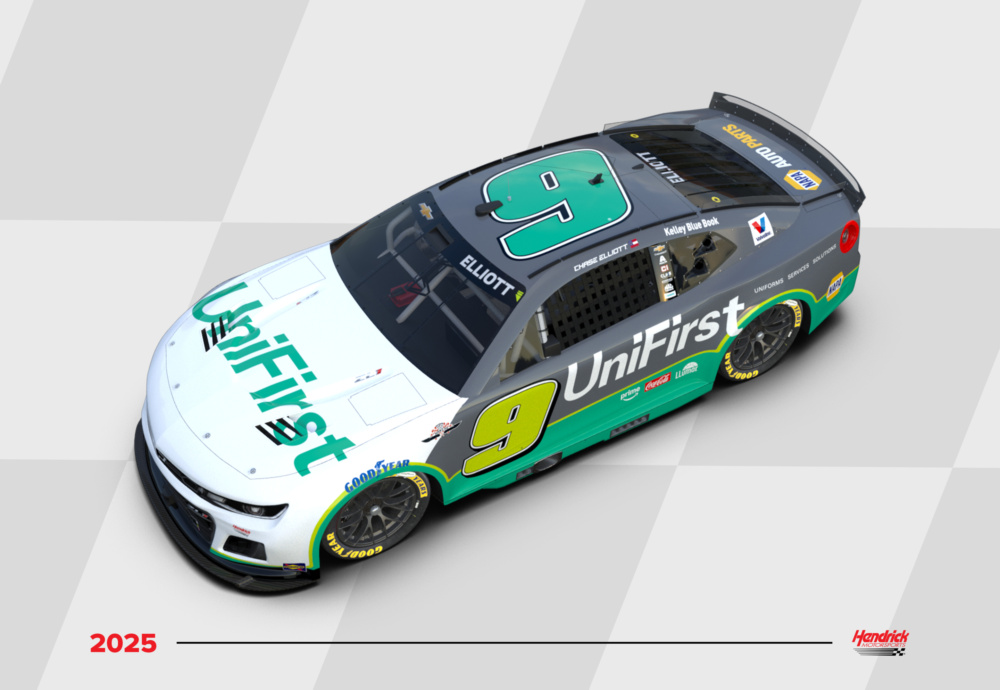
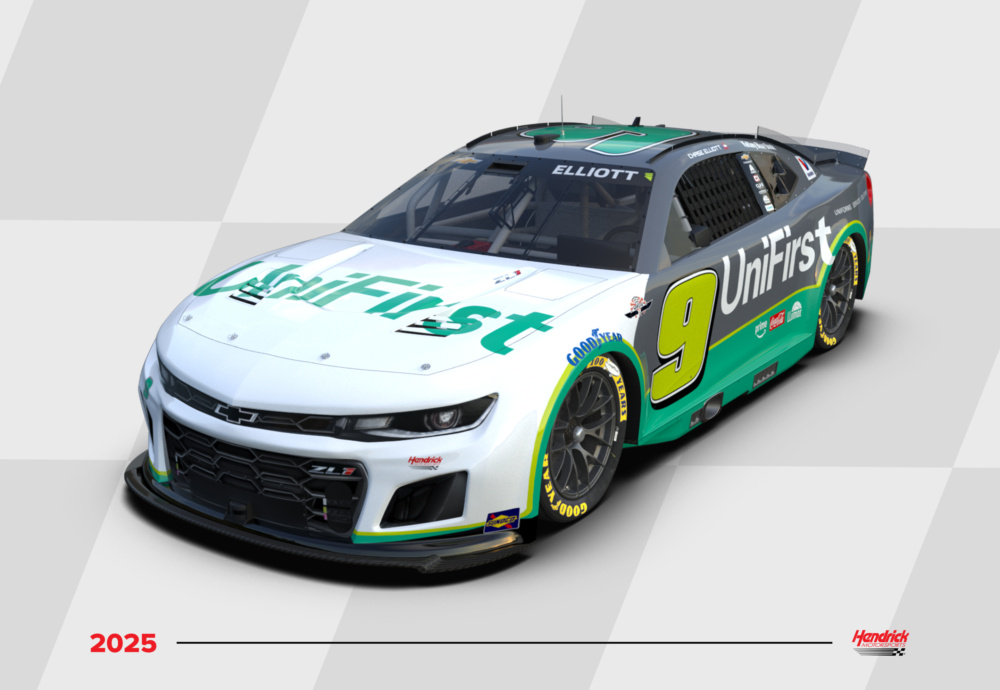
With NASCAR’s 2025 throwback weekend looming, Hendrick Motorsports unveiled Chase Elliott’s 2025 throwback scheme. This reveal has caused a stir amongst fans, with many wondering how the team strayed so far away from the original scheme.

A Missed Opportunity?

Since the debut of NASCAR’s throwback weekend at Darlington, throwback paint schemes in NASCAR have become a point of conversation for fans rather than a fun look at the past.

Each year, fans see a NASCAR-based fan favorite, like Kyle Larson’s Kyle Petty Mellow Yello from 2015, and some non-NASCAR fan favorites, like Brad Keslowski’s 1997 Castrol TOM Supra last season.

The non-NASCAR throwbacks, such as those that reference other racing leagues or fantasy retro paint schemes, face minimal scrutiny. Yet, NASCAR fans are always on the lookout for errors in NASCAR-inspired cars.

Take William Byron’s 2024 Jeff Gordon 2009 “Firestorm” scheme, in which fans complained of the inaccuracy of the car’s nose coloring.

HMS even changed the nose by race weekend to a still inaccurate but easier-on-the-eyes look.

Every year, at least one car rolls into Darlington looking like a NASCAR The Game: Inside Line create a car version of an iconic NASCAR scheme. However, it looks like this year’s candidate for worst paint scheme is NASCAR’s most popular driver, Chase Elliott.

Elliott’s scheme, revealed Tuesday, is a throwback to Ken Schrader’s 1994 Hendrick Motorsports’ Kodiak-sponsored No. 25. Schrader drove the No. 25 for HMS from 1988 to 1996 with Kodiak from 1990 to 1994. However, Elliott’s UniFirst-sponsored throwback, as pointed out almost immediately by fans, looks nothing like the No. 25 did in 1994.

Fan Reactions

Anyone who looks at the reference material, Schrader’s car from 1994, has to admit the throwback paint scheme, while not a bad paint scheme in general, is a bad take on the Kodiak car.

Kodiak was one of the most iconic sponsors of the 1990s and had many great paint schemes. Elliott’s attempt is not even the first throwback to the sponsor, as Kyle Larson drove a Kodiak-inspired Chevrolet for Chip Ganassi in the 2019 throwback race.

For reference, the scheme’s underline goes over the tires, not around the bottom of the car. The gray on top of the underline stops well short of the A-pillar, and, of course, the colors are just incorrect.

Now, you might ask, “Wouldn’t a sponsor prefer to have their current colors on the car rather than the referenced sponsor’s colors?” That is a trend amongst throwback schemes; however, last season, UniFirst allowed this change for a Dale Earnhardt Jr. National Guard throwback.

All things aside, this is rather small in the grand scheme of things; however, as Elliott is NASCAR’s most popular driver, fans are rather upset with this scheme.

Some have even provided their theories as to what happened with this car.

Is it Actually the Worst of All Time?

Now, is this the worst NASCAR throwback scheme ever? Probably not, as most point to Ricky Stenhouse’s 2021 “Tide Throwback,” which it looks like someone didn’t even try to make a good paint scheme, let alone a throwback car, as the worst since the throwback tradition began.

However, for Elliott, the sport’s most popular driver, having your car compared to this car has to sting.

While most are going after Hendrick and even UniFirst for the blame, the car looks okay. While it’s not an accurate representation of Schrader’s car, it is technically still inspired by it, meaning that things could be a lot worse. That doesn’t mean that fans will forget this flop of a throwback scheme anytime soon.

What do you think about this? Let us know your opinion on Discord or X. Don’t forget that you can also follow us /on InstagramFacebook, and YouTube.

Share this:

Too Many Road Courses In NASCAR? | New Power Rankings Post-COTA!

Four road courses on the schedule, and somehow that’s enough to spark one of the biggest debates in the garage. After recent comments from Brad Keselowski questioning the business value of road racing, the conversation has picked up serious steam. Is NASCAR leaning too far into it, or is the current balance about right?

  • Are road courses truly underperforming in ratings and attendance compared to traditional ovals?
  • Does a venue like Circuit of the Americas represent a growth opportunity, or schedule oversaturation?
  • Should NASCAR prioritize sponsor markets over competitive variety?
  • And what does the ideal long-term schedule balance actually look like?

There are valid points on both sides, from sponsorship realities to fan traditions to competitive diversity. Some tracks have gained traction. Others have struggled. The question isn’t just whether road courses belong, but how many make sense within a 36-race season. It’s less about extremes and more about direction. And with future schedule changes always looming, this debate probably isn’t settled anytime soon.

Watch Also:

Denny Hamlin “Floored” by Corey Day’s Reaction to Connor Zilisch

What’s Happening?

Corey Day’s run-in with Connor Zilisch at Circuit of the Americas became one of the most discussed incidents from Saturday’s race, even drawing a response from Denny Hamlin as well, who this week talked about his support for Zilisch.

During the race, Zilisch dealt with brake trouble on his No. 1 Chevrolet but worked his way forward from the rear of the field, advancing from P29 to P4 in the closing laps. With five laps remaining, he engaged in a battle with Hendrick Motorsports driver Corey Day as they exited Turn 2, holding the outside line. But as they contested the position, Day moved up behind him, contact occurred, and Zilisch spun off course to finish the race in P21.

After the contact, frustrated, Connor Zilisch initially referred to Day as an “absolute hack” on his radio, describing the clash as part of the latter’s racing pattern. But the JR Motorsports driver later tempered his comments, simply saying he expects an apology from the young Hendrick Motorsports driver. 

Given that Zilisch declined to escalate the situation, on the latest episode of his Actions Detrimental podcast, Hamlin credited him for calmly managing his response after the race, saying,

“Zillich was smart about this. He in his interview, he’s like, “I looked over at him thinking, come on over here. Come apologize.” And he said he just looked at him with a stare like, I don’t know what it is with these guys. Why, Why can’t they… youth?”

However, he questioned Day’s failure to issue an immediate apology. In fact, he said he was “floored” by Corey Day’s reaction, which involved staring at a frustrated Zilisch rather than apologizing. 

The No. 11 JGR driver also raised questions about how Hendrick Motorsports evaluates developing drivers. Organizations invest with the expectation of returns measured in wins and titles, but when a driver continues to make visible mistakes, fans and especially other drivers will start to scrutinize. Hamlin pointed to the balance between development and production, asking how long it would hold.

The COTA incident was not the first time Day’s racing antics were questioned. Last week, during the Atlanta race, Day was involved in a multi-car crash on lap five after attempting a three-wide move that resulted in contact with Ryan Sieg. The move triggered a chain reaction that collected several cars.

Sieg responded over team radio, questioning both the decision and Day’s presence in the series.

Hamlin argued that drivers are allowed to make mistakes as part of growth. At teams with front-running equipment and title ambitions, time frames are shorter. But he questioned whether Day faces a deadline by season’s end or whether the assessment extends into the following year.

In Day’s case, results have not offset the incidents that have drawn attention. Hamlin referenced Kyle Larson as an example, noting that aggressive driving can lead to contact as well as wins.

Do you agree with Hamlin’s take? Let us know your opinion on Discord or X. Don’t forget that you can also follow us on InstagramFacebook, and YouTube.

AUSTIN, TEXAS - MARCH 01: Bubba Wallace, driver of the #23 Robinhood Toyota, on the red carpet prior to the NASCAR Cup Series DuraMax Grand Prix Powered by RelaDyne at Circuit of The Americas on March 01, 2026 in Austin, Texas.

Bubba Wallace Opens Up Following the Passing of Close Friend

Bubba Wallace shared a message on X following the death of a close friend, writing about the weight of the news over the weekend.

“Makes you think about life and how precious it is… That tune… Nutshell- Alice In Chains Love yall,” he continued.

While Wallace did not name the friend in his post, one day before, reports confirmed that Chase Pistone, 42, had died. Pistone competed on short tracks and in NASCAR’s national ranks and later owned a Legends car. His family asked media outlets to share the Suicide and Crisis Lifeline number, 988. His brothers, Nick and Tom Pistone, confirmed the news to LegendsNation.com.

Pistone, who was the grandson of NASCAR driver “Tiger” Tom Pistone, built his racing career in Legends cars and Late Models before stepping into NASCAR competition.

Apparently, Wallace and Pistone raced each other in Legends cars around 2005. Pistone won four Summer Shootout Championships at Charlotte Motor Speedway, with two titles in the Semi-Pro and two in the Pro divisions. Wallace competed in both Bandolero and Legends categories during that period, winning 35 of 48 Bandolero races in one season.

Both drivers were regulars at the Charlotte Summer Shootout. From there, their paths moved toward the national touring series.

Pistone made starts in ARCA and the NASCAR Craftsman Truck Series in 2005 and 2006, including an appearance with Green Light Racing at Martinsville Speedway. Meanwhile, Wallace moved into the K&N Pro Series East by 2010.

In 2006, Pistone made a start in the Nationwide Series at Martinsville, finishing 37th. After failing to qualify for the ARCA Menards Series race at Daytona in 2007, he stepped away from NASCAR competition until 2014.

He returned that year for eight combined starts in the Truck and Nationwide Series. In his final season at the national level, Pistone recorded a P9-place finish in the Truck Series race at Gateway, the best of his NASACR Truck career.

Beyond driving, Pistone owned CP Inc., building Legends and Late Model stock cars and offering leasing programs that included equipment, crew, and transport.