
The Most Penalized Rules in NASCAR

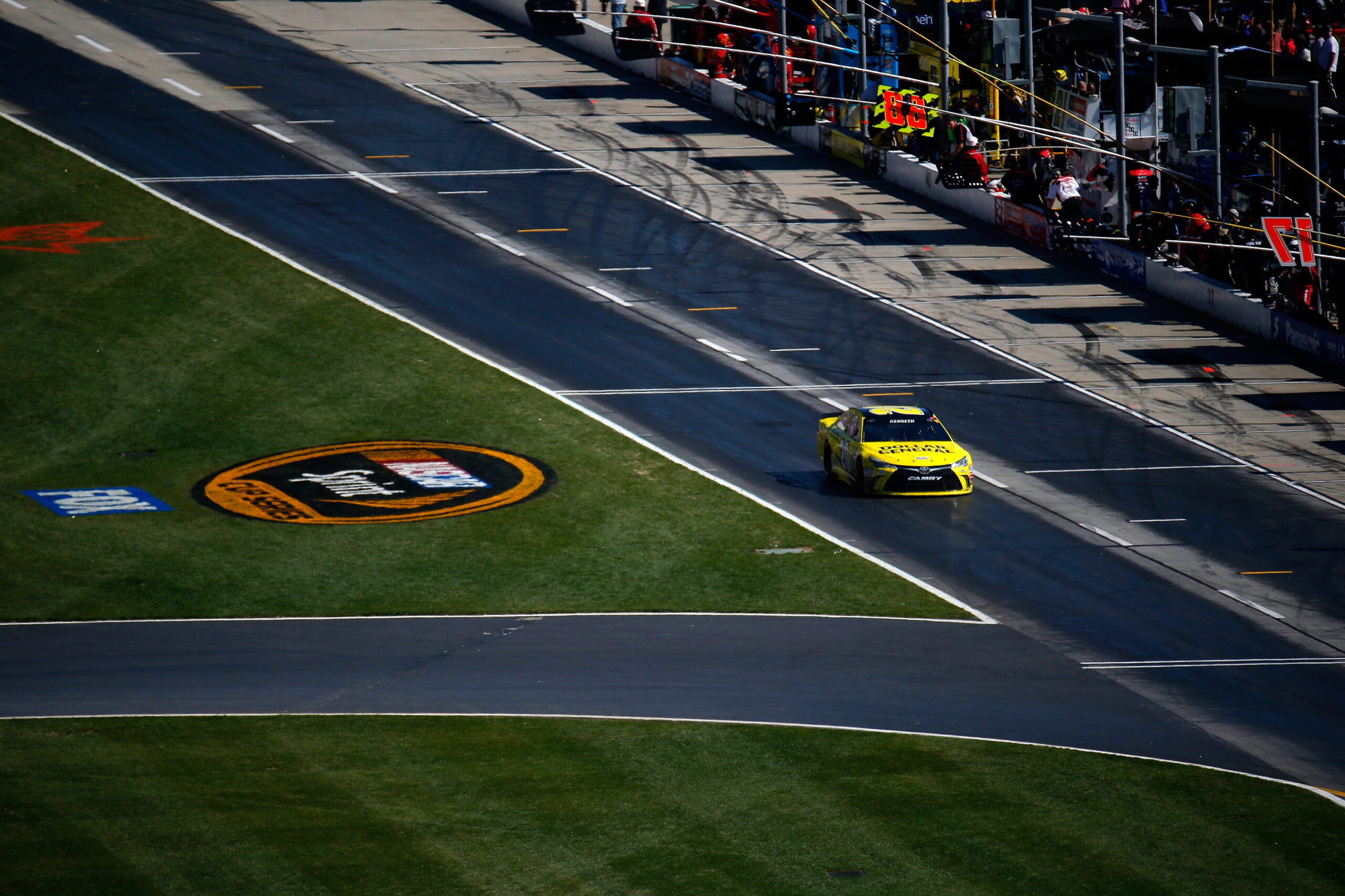
HAMPTON, GA - FEBRUARY 28: Matt Kenseth drives the #20 Dollar General Toyota down pit road after NASCAR officials handed down a pass through penalty for an infraction on the previous pit stop during the NASCAR Sprint Cup Series Folds of Honor QuikTrip 500 at Atlanta Motor Speedway on February 28, 2016 in Hampton, Georgia. (Photo by Kevin C. Cox/Getty Images)

As with any sport, penalties are a way of life for NASCAR drivers. NASCAR, as a sanctioning body, has its very own rule book which, by and large, is ironclad. That, however, has never stopped some more…shall we say, “creative” crew chiefs from interpreting the few gray areas of said Rule Book in order to gain a competitive edge over the rest of the field. As DW once said, they weren’t rule breakers, they were rule makers!

But, as the years have gone by, more and more rules have been added to the NASCAR Rule Book and those gray blotches shrank. This begs the question: What are the most penalized rules in NASCAR? Let’s take a look!

Common Pre-Race Penalties

Almost always, pre-race penalties in a given race weekend come from a driver and/or team failing pre-race inspection. This inspection can be before practice and qualifying or it could be right before the race. Typically, if a team fails inspection once, they’re told to fix the problem and then go through inspection again. If they pass the second time, there are usually no further penalties handed out.

If a team fails pre-race inspection a second time, typically, a crew member (usually the car chief) will be ejected from the race weekend. Whatever the problem area is will sometimes be confiscated, the teams will be told to fix the issue and they will resubmit their car to NASCAR inspection a third time. If the car passes the third time through the inspection line, then typically, no further penalties are dished out.

However, if a car fails inspection for a third time, which rarely ever happens, this constitutes a drive-thru penalty on pit road during the first green-flag lap of a given race, which would usually cause a team to go at least one lap down.

Typically, pre-race penalties fall under the L1 penalty section of the NASCAR Rule Book, which could see teams lose 10-40 driver/owner points, the suspension of one or more crew members (typically the crew chief or car chief), and a fine for said crew members, driver, and owner that is between $25,000 and $75,000 U. S. dollars.

Common In-Race Penalties

If a team has been able to make it through inspection squeaky clean and the green flag has been waved, they might think they’re home free. But, NASCAR teams and drivers are prone to mistakes that can set their day back if not ruin it entirely. Common in-race penalties are among the most common for any NASCAR team.

Pit Road Penalties

Needless to say, most in-race NASCAR penalties occur on pit road. The most common of these is speed penalties either while a driver is coming onto or exiting pit road. Each track’s pit road has a different speed limit though, usually, that limit is between 30 and 65 miles per hour. Though NASCAR stock cars do not have speedometers, they have a light system that alerts a driver when they are past the speed limit on a given pit road. But sometimes, those sensors are not set accurately and a driver will push the limit.

Pit road speeding penalties account for roughly 80% of all NASCAR’s penalties in a given year. Usually, these penalties result in another pass down pit road, at speed, which usually results in the driver going at least 1 lap down.

The Yellow Line Rule (on Superspeedways)

Superspeedways (such as Daytona, Talladega, and Atlanta) are unique in many ways. In accordance with the NASCAR Rule Book, these tracks implement a “yellow line” policy, where drivers are not allowed to pass below a double line separating the racing surface from the apron of the track. While not as common anymore, this penalty was once a heated debate amongst drivers and industry insiders in NASCAR.

The penalty for passing below the yellow line on a superspeedway initially is to give the position back to the driver they passed. If the penalized driver fails to do this, they then must serve a pass-through penalty which can see them suffer from losing a lap or two in the process. There is no points/monetary fine for this type of penalty.

The Damaged Vehicle Policy Clock

This penalty is a more recent one. The gist is that once a car is involved in an on-track incident, it basically has 6 minutes to fix the damage. If they cannot fix said damage before the Damaged Vehicle Clock runs out, the car is automatically retired from the race.

Common Post-Race Penalties

Like pre-race penalties, most post-race penalties stem from inspection issues. Cars filter through post-race inspection about an hour to two hours after a given race. If there are no issues found, all is good and the race results become official. A winner is crowned and all is right with the world. But if a car doesn’t pass inspection, that’s when problems arise.

The first thing checked is the lug nuts and whether they’re tight. For a single loose lug, a crew chief can be fined up to $10,000 dollars. If two or more are found, the crew chief is then ejected for one race and fined up to $20,000.

Other post-race penalties include tampering with the pre-ordered parts on the NextGen car. Usually, if a team is thought to have tampered with this area of the NASCAR Rule Book, a driver/team/owner can be fined up to $100,000 and ultimately disqualified from the race, forfeiting their points earned throughout the race. And sometimes they’re even docked an additional 100 points, as in the case of Brad K. in 2022.

The most recent example of this is eventual 2023 NASCAR champion, Ryan Blaney being disqualified in Las Vegas. The penalty was eventually rescinded but if it hadn’t been, this would’ve been a massive blow to that team in their championship hunt. Another more recent example is from 2022 when BOTH the winner and second-place finishers Denny Hamlin and Kyle Busch were disqualified, handing the victory to NASCAR’s Most Popular Driver, Chase Elliott.

Actions Detrimental To Stockcar Auto Racing

Actions Detrimental to Stockcar Auto Racing is really a blanket term. The NASCAR Rule Book Section 12 rule can be attached to any number of infractions from on-track incidents to what a driver says in the media. Most of the time, however, this penalty is dished out after a driver took on-track action.

Denny Hamlin who hosts the Actions Detrimental podcast received an actions detrimental penalty after he, ironically, on his podcast admitted to intentionally running Ross Chastain into the wall at Phoenix. He was ultimately fined $25,000 though, typically, such penalties warrant race suspensions.

In 2015, Matt Kenseth took out Joey Logano in a playoff race at Martinsville, resulting in his 1-race suspension and a massive monetary fine. Two years before that, Michael Waltrip Racing was caught red-handed manipulating race results in order to get their driver, Martin Truex Jr., in the Chase at Richmond. The result was that Truex didn’t make the Chase, team President, Ty Norris, was suspended, and, strangely, a 13th driver Jeff Gordon was added to the then-12-man Chase.

This is a slippery slope penalty that NASCAR can seemingly attach to almost any infraction that they see warrants it.

Conclusion

How do you feel about the NASCAR Rule Book and its various gray areas, Daily Downforce readers? And, maybe more importantly, what are some rules from said book that you think are overstepping on the part of NASCAR? What would you change? How effective do you think NASCAR is at implementing its own rules and regulations? Let us know your thoughts on all of our various social media websites.

Share this:

CHICAGO, ILLINOIS - JULY 06: Ty Gibbs, driver of the #54 Monster Energy Toyota, drives during the NASCAR Cup Series Grant Park 165 at Chicago Street Course on July 06, 2025 in Chicago, Illinois. (Photo by Logan Riely/Getty Images

Lawsuit Update: Gabehart Calls JGR Competition Team “Dysfunctional,” Ty Gibbs “Not Accountable”

What’s Happening?

Former Joe Gibbs Racing Crew Chief and Competition Director Chris Gabehart has filed a new response slamming JGR as part of an ongoing lawsuit brought against the former Daytona 500 Champion by his former employer.

Gabehart departed Joe Gibbs Racing this past offseason following eight seasons as a Crew Chief and one as the team’s Competition Director, while serving as an unofficial Crew Chief for Ty Gibbs’ No. 54 team.

This move surprised fans, as, under his tenure in 2026, the team scored 13 wins, 47 top fives, 69 top tens, and placed three cars in the Playoffs, with two in the Championship Four.

Nonetheless, with his future still in the air, JGR sued Gabehart last week, claiming he “embarked on a brazen scheme to steal JGR’s most sensitive information and use it for the benefit of a direct competitor in NASCAR.”

While the industry veteran responded to the allegations last week in a post to social media, he expanded his side of the story in a scathing response filed Wednesday afternoon.

In his response, Gabehart claims that in 2025, he became discontented with his role at JGR “and other aspects of how JGR’s race teams were being run.”

Expanding on this opinion, Gabehart stated first that his duties at JGR as Competition Director were “materially inconsistent with my reasonable expectations when I accepted the position,” going on to say that the structure at JGR was “dysfunctional.”

“I was promised a COO-type role overseeing all competitive operations with autonomy to lead. Instead, I found myself constantly intertwined with Coach Gibbs, senior JGR executives, and family members when making even routine competition decisions—a dysfunctional organizational structure that I could not continue in.” — Chris Gabehart

Ironically, since his departure, Joe Gibbs confirmed during an interview with SiriusXM NASCAR Radio on February 12, that the team now uses a committee approach for the Competition Director duties.

Gabehart then turned his barrel at the No. 54 team, a car driven by Gibbs’ grandson Ty Gibbs, and a team that Gabehart served as the substitute Crew Chief of during the 2025 season, before returning the reins to the team’s official shot caller, Tyler Allen.

The long-time Crew Chief said that in his opinion, the No. 54 team is not held to the same standards as other teams in the organization, saying, “It was my view that the No. 54 car should be managed and held accountable in the same manner as the organization’s other cars.”

He even alleged that Joe Gibbs directly oversaw his grandson’s team and “pressured” Gabehart to take over as Crew Chief early on during his time as JGR’s Competition Director.

“Beginning early in the 2025 season, Coach Gibbs repeatedly pressured me to take over as crew chief of the No. 54 car. I consistently declined, explaining that as Competition Director, I did not believe this was the right move, that it would undermine the long-term development of the team, and that I did not want to be crew chief of the No. 54 or any other car.” — Chris Gabehart

Gabehart even explained how he took over for Tyler Allen before returning duties to the team’s original Crew Chief:

“Despite my objections, Coach Gibbs and ownership continued pressing, and I eventually conceded to the pressure by first helping the No. 54 team more behind the scenes and then, beginning on June 28, 2025, by publicly serving as the crew chief and calling the races on Sundays for nine consecutive races before returning those duties to the original crew chief, Tyler Allen, against the strong desires of ownership, when I made it clear that I did not want to serve as a crew chief for the long term.” — Chris Gabehart

During Gabehart’s tenure with the No. 54 team, which per his account began with the summer race at EchoPark Speedway and concluded after nine races with the Playoff cutoff race at Daytona, the team scored two top fives, four top tens, and tallied an average finish of 14.3. The team also won the inaugural NASCAR In-Season Challenge Tournament during this stretch of races.

Furthermore, at the start of that stretch, JGR initially claimed that Gabehart was not the Crew Chief and was a race strategist for the No. 54 team, though this may have been for one race.

In the 17 races prior to Gabehart’s time as the No. 54’s Crew Chief, with Allen on the box, the team had just two top fives, three top tens, and a 19.4 average finish.

But despite this improvement, the team failed to make the Playoffs, with Gabehart focused on his role as Competition Director. However, he notes in his filing that it is his opinion that the “differential treatment” of Gibbs’ team undermined my position as Competition Director.”

He even touted that Gibbs had a different meeting attendance standard than other JGR team members.

“I also identified specific examples of the No. 54 team’s differential treatment that undermined my position as Competition Director. For example, key personnel decisions were made without my counsel or input despite my role as Competition Director; and critically the No. 54 driver was not held to the same meeting attendance standards as others on the team.” — Chris Gabehart

Ultimately, the real bitterness in this filing is found later on, when Gabehart alleges the lawsuit isn’t about stolen information, rather, as he puts it, “it is about punishing a former employee for daring to leave.”

Directly Addressing the Lawsuit

Gabehart also addressed the origin of the lawsuit in his filing, backing up a claim in his social media post last week that Spire Motorsports, now a co-defendant in this lawsuit, is willing to let a forensic examiner look through their information to confirm Gabehart did not take “sensitive information” from the team.

JGR alleges that he used several methods to take setup information from JGR, including an allegation that he synchronized his personal Google Drive account with a JGR-issued laptop to supply it to a rival team, known to be Spire Motorsports.

In Wednesday’s filing, Gabehart provided a letter from attorneys at the law firm Robinson, Bradshaw & Hinson claiming that Spire, which now employs him as their Chief Motorsports Officer, is willing to allow a neutral forensic examiner to look through Spire materials to “confirm that no JGR information was transmitted to or used by Spire.”

Tuesday night, JGR filed a new document of its own, which requested the court grant a temporary restraining order and preliminary injunction to prevent Gabehart from working at Spire in a similar role to his job at JGR for the next 18 months and require Spire to return any information to JGR.

Nonetheless, this filing, alongside one from JGR Tuesday night, shows there are no signs of this lawsuit slowing down, with Gabehart’s accusations making this one of the most bitter breakups in recent NASCAR history.

What do you think about this? Let us know your opinion on Discord or X. Don’t forget that you can also follow us on InstagramFacebook, and YouTube.

What Is NASCAR Doing With the All Star Race?

NASCAR’s 2026 All-Star format has fans going from “hell yeah” to “what the hell” in record time. With a 350-lap, three-segment race at Dover Motor Speedway and no Open or LCQ, the exhibition’s identity suddenly feels very different — and not everyone is thrilled about it.

  • If the entire field shows up, is it really an All-Star race anymore?
  • Why eliminate the Open when it’s been the most exciting part of the weekend in recent years?
  • Does a 75-75-200 format with inverts and combined averages add drama — or just unnecessary math?
  • And at what point does this just become a 37th points race without points?

The new structure locks in recent winners, past champions, and a fan vote — leaving limited spots available through the segments. It’s structured. It’s legitimate. But it trades exclusivity and simple, high-stakes transfer battles for something that feels more procedural than electric. For many fans, the All-Star race used to mean night racing, short bursts, bold strategy, and desperation. Now, with a longer format and no true “win-and-you’re-in” showdown, Jaret believes it risks feeling like an obligation rather than a spectacle.

Watch Also:

All-Star Race Format is… Different | JGR Adds Spire Motorsports to Lawsuit | NASCAR Power Rankings

NASCAR’s All-Star shakeup, a growing legal fight in the garage, and major early-season momentum swings have all collided at once. With COTA up next, the timing couldn’t be more dramatic, and the ripple effects might be bigger than they first appear.

  • Is the new All-Star format at Dover Motor Speedway adding excitement, or just replacing simple drama with complicated math?
  • Why walk away from the Open and Last Chance format that created real, head-to-head tension?
  • What does Joe Gibbs Racing officially pulling Spire Motorsports into its lawsuit signal about how serious the data war has become?
  • And with Circuit of the Americas on deck, which drivers have actually earned the top spots in the power rankings?

This isn’t just about one exhibition race or one court filing. It’s about direction, leverage, and momentum at a critical point in the season. The format decisions affect the show. The lawsuit could affect how teams operate. And COTA might start separating early contenders from everyone else.

Watch Also: