
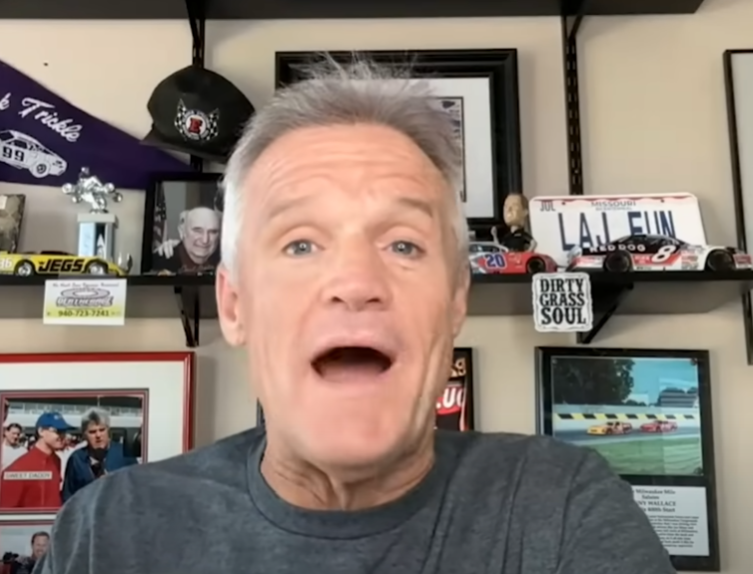





One of our favorite YouTubers here at the Daily Downforce, former NASCAR driver, Kenny Wallace, took to his platform yet again to spark an interesting discussion: Why are drivers quitting NASCAR?
In his video, he leans into that word, quitting, and reiterates that while some drivers do make a big deal of them stepping away in the form of a retirement season of farewell tour (for reference, look at Kevin Harvick’s 4Ever Tour or Dale Jr.’s Fan Appreci88ion Tour), so many others just quietly step away.
Toward the beginning of his video, Kenny holds up a Post-It note with drivers and their ages on it. Many of those drivers, such as Clint Bowyer, are only in their 40s with Tony Stewart being the oldest as he is now in his early 50s. Kenny makes a point to say that Dale Earnhardt raced until he was going on 50 and would have likely raced many more years after that if tragedy hadn’t struck. His own brother, Rusty Wallace retired at the end of the 2005 season and was still winning races. He was 50 at the time, he idolized Dale and believed that since Dale stopped racing at 50, he ought to as well.

He has since told Dale Jr. on the Dale Jr. Download that it was the biggest mistake of his career, stating that he felt pressured to retire from outside forces. Now, drivers are retiring at the age of 42 to 45, still relatively young and they’re certainly still able to compete.
After Dale Jr. retired, he ran an Xfinity race at Richmond, started second, led the most laps, and finished fourth. All summer, Clint Bowyer showed up to put on a show in the SRX Series, even taking it to one of the greatest NASCAR drivers of all time and current driver on the circuit, Kyle Busch. So, these “retired drivers” are still racing and are still relatively competitive.
So, why are drivers quitting, as Kenny said? Well, let’s open our ears and listen as Kenny “de-bullshits” it for us, as he says.
Like it or not, sponsorship drives the sport of NASCAR. Paid drivers exist and if a driver cannot get funding, for whatever reason, they’re going to lose their seat. We saw it as recently as with Kyle Busch and Mars last year. Luckily, Kyle was able to get a deal done with RCR but he has even alluded to in the past that there was a moment during the 2022-’23 silly season where he wondered if he’d even have a ride in NASCAR for the ’23 season. We’re seeing something similar now with Denny Hamlin and FedEx. Teams are looking for a season-long sponsorship commitment, which so many drivers are having trouble getting.
In Kenny’s video, he uses Clint Bowyer as an example. In Clint’s last couple of years with SHR, he was struggling. Many retired drivers did in their final seasons, the only real exception being Jeff Gordon who was able to make it to the final 4 in his swan song season. As Kenny states in his video, once a driver starts to have a bad year or two, rather than fixing the issue with the team, the sponsors call the owners who throw their drivers under the bus. They say that they’re getting older, which is true but they’re not getting so old that they can no longer be competitive. Mark Martin was well into his fifties when he won his final race. But it’s an easy scapegoat and teams and sponsors are all too willing to move on and put someone not quite as talented but a whole lot cheaper behind the wheel.
Again using Clint Bowyer as an example, Kenny cites another reason for this trend being drivers getting big TV contracts. To a driver who has been struggling for the last couple of years of their career, once TV comes knocking, it’s very hard for them to say no. It’s happened with almost every high-profile driver who has retired in the last several years. DW set the trend as he was running horribly in 2000 but then went on to have a legendary comminating career with FOX Sports. Jeff Gordon also tested those waters as have Tony Stewart and the recently retired Kurt Busch. Heck, once his #4Ever Tour wraps at season’s end, Kevin Harvick is going to trade in his helmet and gloves for a suit and a microphone.
As Clint struggled later in his career, FOX Sports came to him with an offer. As Kenny says, the deal was enticing and it would be an easy out from the headaches a struggling race team is bound to have. Why continue to drive during more seasons of potential hardships and frustrating performances when you can still stay involved in the sport by announcing it and making a lot of money doing it? It’s not that he can’t still get the job done (as stated before, he proved otherwise in the SRX Thursday Thunder summer series) but the racing he’s doing now is for pure enjoyment.
There are a lot of stresses that come with the top level of NASCAR that many drivers, once they’ve endured it long enough, are eager to steer clear of. FOX Sports, NBC Sports, and, now, the CW are providing reasonable outs.
A NASCAR driver has to really love what he or she does on most days, as with any career. This is especially true if the driver wishes to stay competitive, which is very important for sponsorship purposes and driver morale. But since the days of drivers either retiring at 50 or even continuing to drive well into their 50s, many things have changed in regard to the competition in NASCAR.
Driving styles have changed. As noted by some of the elder drivers in the sport, the younger generation of drivers are very aggressive. This then leads to driver feuds, which is good for the sport, don’t get me wrong, but what happens when the driver no longer believes that it’s worth the fight? Kenny, continuing to use Clint as an example, suggests that maybe he felt a little roughed up towards the end of his career.
This, in tandem with the appealing TV deal, might have just been enough to entice Bowyer into leaving. Maybe he thought that he wouldn’t have to deal with the eroding respect in the garage area anymore and, again, get paid a lot of money to have that burden taken off his shoulders.
Going hand-in-hand with this general shift in competitive ideology is a complete shifting of the goalposts as to when a driver starts his or her career. Kenny comments, using Tony Eury Jr.’s son as an example, on how early kids are starting to race these days in contrast to the days of Earnhardt, Petty, and Wallace. Tony Eury Jr.’s kids started racing at the age of four or five years old.
As Kenny points out, by the time they’re 35, they’ve been driving racecars or go-carts competitively for 3 decades. Their whole life, essentially. Kenny says that he didn’t start racing until he was 22. Richard Petty wouldn’t let Kyle start until he was 21. Drivers are starting their careers younger and younger which sort of made 40 the new 50.
I recently finished Dale Earnhardt Jr.’s book, Racing To The Finish: My Story. It touched on another key factor when it comes to retirement that Kenny Wallace didn’t really touch on in his video but I felt the need to mention it. In Jr.’s book near the end, he goes through the process of how he came to the decision to retire. When Jr. was medically cleared to return to NASCAR in December of 2016, he had mentioned in the press that he was already having contract negotiations with Rick Hendrick about an extension. When he started racing again, though, and he noticed some of his old symptoms starting to creep back, he looked at his wife and their expected daughter and decided that the risk was no longer worth the reward.
Sure, many drivers get booted out of their rides. It happened to Ryan Newman and Clint Bowyer. Other drivers, though, have been knocked around a lot in their careers. They’ve driven hurt, concealing concussion symptoms from their friends, family, and their team. Eventually, it just becomes too much. So, they decide to step away. They make a conscious choice for their health to end their careers on their terms before something horrible can happen and end it prematurely. That’s another key factor.
Jeff Gordon was in a lot of pain with arthritis in his back. If he hadn’t had that hard hit at Las Vegas which brought that on, he said that he would have likely stuck it out another couple of years. Tony Stewart was also in pain, having many of his later seasons plagued by injury. So, they called it quits on their own terms and that’s commendable.
What do you think, NASCAR fans? Why are drivers retiring so early these days? Let us know on all of our social media platforms and keep it right here at dailydownforce.com for all your latest news articles and deep-diving discussions.