
A recent social media post from Alpha Prime Racing owner Tommy Joe Martins suggests that part of NASCAR’s recent issues don’t revolve around a lack of star-power, rather, as he puts it, “an advertising problem.”
It's not a star-power problem. It's an advertising problem. The drivers you loved in the 90's and 00's had big corporate sponsorships and they spent $ to make them stars, not the teams or league. MAJOR consumer brands activating. Now costs are WAY up, and media is fractured. https://t.co/tkzsIjdcD5
— Tommy Joe Martins (@TommyJoeMartins) April 17, 2026
NASCAR’s viewership decline has taken the front page of conversation this weekend as Bristol drew just 1.945 million viewers.
Names like Denny Hamlin pointed the finger at Bristol’s place on the calendar before the numbers even hit the board. He flagged the head-to-head with The Masters as a drain on the audience at Bristol Motor Speedway, suggesting that the timing of the race walked straight into a storm it did not need to face.
Over the years, the blame game has taken many turns.
Media members, fans, and veteran drivers have all taken their swings, citing rule/cultural changes, the NASCAR Next Gen car, horsepower limits, and a laundry list of other factors as the root of NASCAR’s attendance and viewership slide.
A lack of “star power” is often pointed to as a reason for this issue, but in a recent post to social media, NASCAR O’Reilly Auto Parts Series owner Tommy Joe Martins said that sponsorship may be the issue, saying:
“It’s not a star-power problem. It’s an advertising problem. The drivers you loved in the 90’s and 00’s had big corporate sponsorships and they spent $ to make them stars, not the teams or league. MAJOR consumer brands activating. Now costs are WAY up, and media is fractured.”
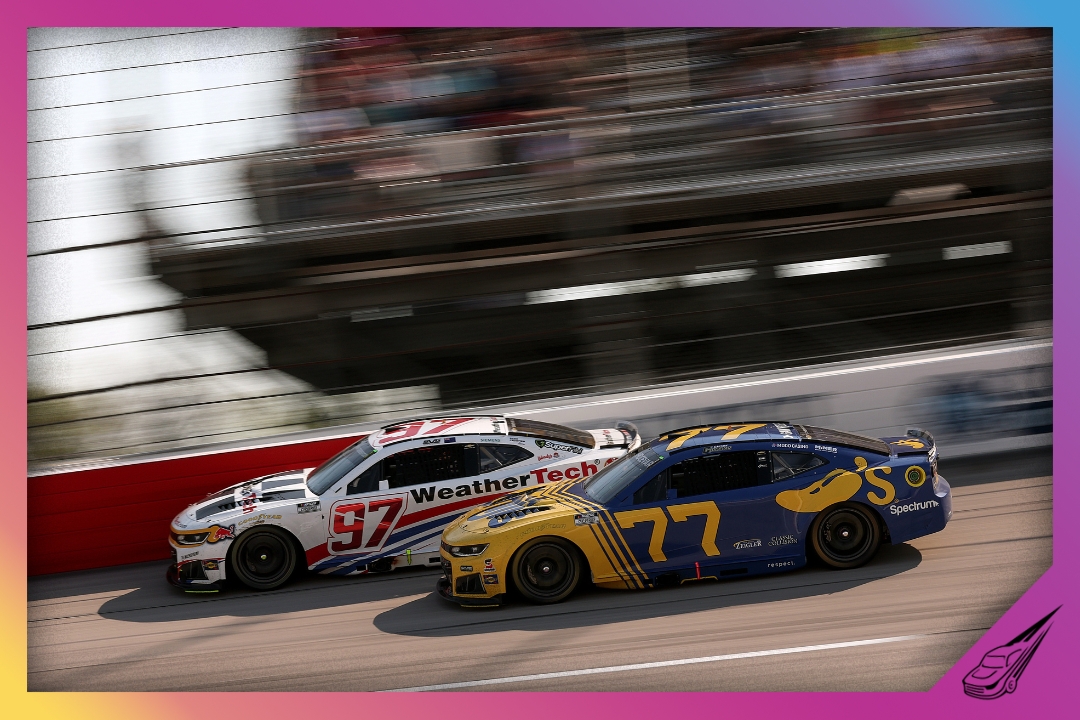
Martins isn’t the first to make this point. In NASCAR, the car has long been the billboard, leaving a gap where larger-than-life personalities once stood, a void the sport has yet to fill.
Drivers now switch paint schemes and sponsors at a pace that has the potential to make anyone’s head spin.
In the 1990s and 2000s, big, renowned names like Jeff Gordon and Dale Earnhardt Jr. were tied to season-long sponsors such as DuPont and Budweiser. But today, rising costs have forced teams into patchwork deals, with multiple sponsors cycling through the season, something that fans and drivers have said is making it harder for casual viewers to even recognize, let alone connect with, a driver or a car.
Companies prefer short-term or digital partnerships, making it harder to build a long-term narrative around a driver. Without that steady exposure, even those who find success on track struggle to strike a chord with the wider public.
Back in the day, major consumer brands poured millions into promoting their drivers through national campaigns and television commercials, building star power from the ground up. Now, with those brands pulling back or shifting to targeted digital campaigns, the burden has shifted to teams and the league, which do not carry the same reach or financial muscle.
The exit of figures like Dale Earnhardt Jr. has also left a gap that has yet to be filled.
While the sport has talent in Ryan Blaney, Chase Elliott, Kyle Busch, Denny Hamlin, and Kyle Larson, turning them into figures with reach beyond the NASCAR bubble has proven easier said than done.
Other than that, the 2025 media rights deal was meant to steady the ship, but the move from network television to cable and streaming platforms such as Amazon Prime Video and TNT Sports’ Max has fractured the audience to some extent.
Sponsors now face a splintered viewership, making it harder to reach the kind of unified national audience that once turned drivers into household names.
NASCAR fans remain among the most loyal when it comes to brands, but that loyalty often connects more to the logo on the car than the driver behind the wheel.
As a result, the situation has created a system in which drivers risk becoming spokespeople instead of the personalities backed by sponsors, and that trade-off has dulled the drivers’ individuality in the audience’s eyes.
While the lack of star power has become a talking point, it is less the cause and more the symptom. The root of the issue, as Martins argued, runs through advertising, sponsorship structure, and, as a result a media geography that no longer plays by the old rules.
What are your thoughts on this? Let us know. Join the discussion on Discord or X, and remember to follow us on Instagram, Facebook, and YouTube for more updates.