NASCAR’s Chase is BACK
What’s Happening? In 2026, after a nearly year-long search for a new points system, NASCAR’s three National Series will return to…




Though fans and drivers alike celebrated NASCAR’s return to the Chase points format, not everyone is praising the system’s new life, as two-time NASCAR Cup Series Champion Kyle Busch said he’s “not really sure why we went back to it” during a recent interview.
After months of deliberation, NASCAR officials announced on January 12 that the sport would no longer utilize its 16-driver, ten-race elimination-style playoff format introduced in 2014 to crown its champions.
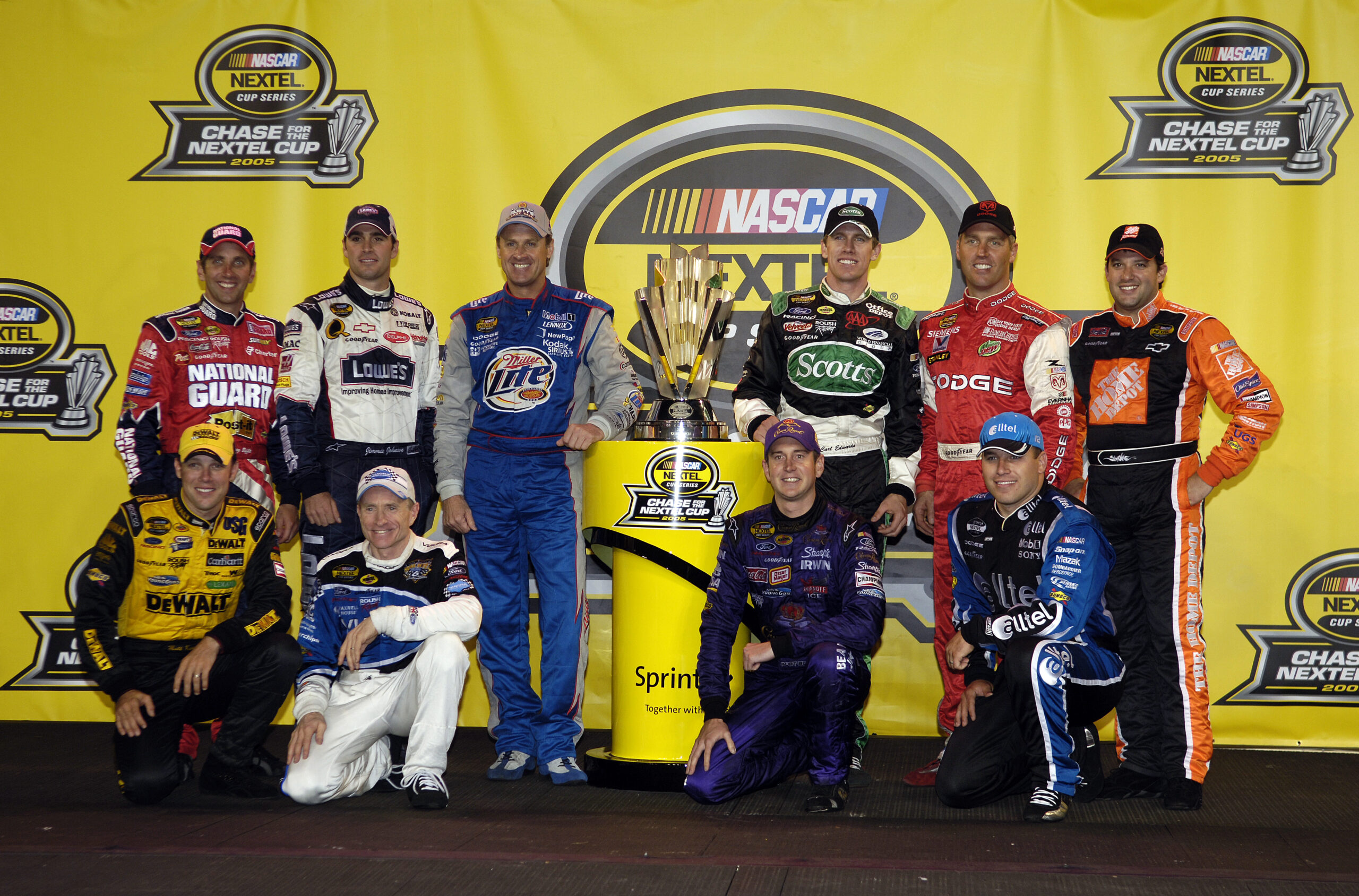
Instead, the sport was going a simpler, familiar route for its postseason, returning to a new form of the Chase format, first introduced in 2004.
Though the Chase still institutes a postseason for 16 of NASCAR’s drivers, the format will crown a champion from a sample of ten races, instead of multiple samples, which included a single race championship round.
At the launch of this system, drivers in attendance, Chevrolet’s Chase Elliott, Ford’s Ryan Blaney, and Toyota’s Chase Briscoe, hyped up the system, giving it their full support alongside NASCAR Hall of Famers Dale Earnhardt Jr and Mark Martin, who were also in attendance, and the broader fanbase online.
But that doesn’t mean every driver, and former champion, is excited that NASCAR is stepping back into the Chase for the Cup, with two-time NASCAR Cup Series Champion Kyle Busch recently telling SiriusXM NASCAR Radio, “I thought we got away from it for a reason in the past, so I’m not really sure why we went back to it.”
Busch, who won both of his titles under the Playoff format, notes that in his eyes, the reason NASCAR left the system (aside from Jimmie Johnson’s dominance) was the moderately sized sample of races, allowing one bad race to kill a driver’s championship hopes.
“The reason why we sort of went away from it was obviously Jimmie Johnson’s dominance, number one, but I feel like number two is there were times where guys, like myself, who would have one bad race or two that would then knock him out of the championship.” — Kyle Busch
While this sounds like a classic Kyle Busch rant, he may have a point.
From 2006 to 2013, under the various iterations of the original Chase, Busch made the Chase five times, finishing a best of fourth in 2013. Of this sample, there is one very clear example of Busch running into “one bad race or two.”
In 2010, Busch entered race 33 of the season at Talladega fourth in points, but, following a 25th at Talladega and a 32nd at Texas, Rowdy was relegated to seventh, finishing eighth in points after the season finale.
Though many could chalk this up to the “bright lights” of the Chase needing drivers to compete at their very best during the ten-race stretch, his point makes a solid example of how drivers used the old format to readjust as unexpected moments tried to derail their season.
But, even Busch was quick to point out this may not be the case this time around, going on to say that in modern NASCAR, with “everybody running over everybody all the time,” these bad races in the Chase could affect everybody, evening the playing field late in the year.
“You might see all 16 of us have a bad race,” Busch said. “If all of us have a bad race, then that could just sort of be construed as your throwaway and you gotta be good in the other nine.”
What’s Happening? In 2026, after a nearly year-long search for a new points system, NASCAR’s three National Series will return to…
Though Busch is somewhat pessimistic about the return of the Chase, NASCAR has instituted some major overhauls to the new format that could help a driver make up for those one or two races where luck is not on their side.
First, at the start of the Chase, unlike past versions, where the reset merely shuffled the field by five, ten or 20 points, under the new format, the driver who finished out the regular season with the most points starts the Chase with a 25 point advantage, meaning that the regular season still means something come the final ten races of the year.
Second is an overall shift in points awarded, which could help any driver make up a deficit should they get it in gear late in the season.
Let’s say a driver has one or two bad races in a row. By winning a race, they are now awarded 55 points, 15 more than in 2024, and 20 more than a second-place driver any given week, meaning that a hot streak could propel you past anything that may disrupt your run at a championship.
What’s Happening? In 2026, NASCAR is returning to a simplified, “Chase” format to crown its three NASCAR National Series Champions. The…
Let us know your thoughts on this! Join the discussion on Discord or X, and remember to follow us on Instagram, Facebook, and YouTube for more updates.