
Every track, past, present, and future, has a story to tell–a storied history with some legendary moments and legendary winners. Since its inception in 1949, 179 unique speedways and tracks have been featured on the NASCAR circuit across its many distinctive series. Today, only 53 of those still remain on the schedule across all of NASCAR’s divisions, while the others often waste away. Some get sold to real estate developers. They get turned into condos or a Walmart or a parking lot or a shopping mall. Others get left to ruin, a painful reminder of their former glory. And some get torn down in order to build a new short track but never reach beyond the blueprint and/or good idea phase of planning.
When NASCAR fans think of Daytona, they most likely think of the Daytona International Speedway with its big, swooping corners and thrilling pack racing. It’s the hope of the Great American Race, NASCAR’s ultimate crown jewel, the Daytona 500. It’s the race that every NASCAR driver wants to win, it’s the race that can define a driver’s legacy in the sport. When people think Earnhardt, they think of Dale’s triumphant win in the Daytona 500 after twenty years of trying, twenty years of frustration. They think of Petty’s seven wins at the track, the Dale and Dale show, Michael Waltrip’s emotional first win cloaked in devastating tragedy. And though the Daytona International Speedway is the World Center of Racing and the home of some NASCAR offices, it is not where the sport got its start racing at the famous Florida beach.
The first track to host a NASCAR race in Daytona beach wasn’t a racetrack at all. Rather, it was a makeshift street/beach circuit that stretched across the Daytona coastline. The original home to NASCAR ran through Ormond Beach, Ponce Inlet, and Daytona Beach Shores. The track was in operation for 56 years, existing long before the existence of NASCAR itself. It is the location where 15 world land speed records were set.
For this eighth entry in our Forgotten Speedways series, we’re going to take a look at the famous Daytona Beach and Road Course, a pivotal circuit in the history of motorsports.
Also Read:
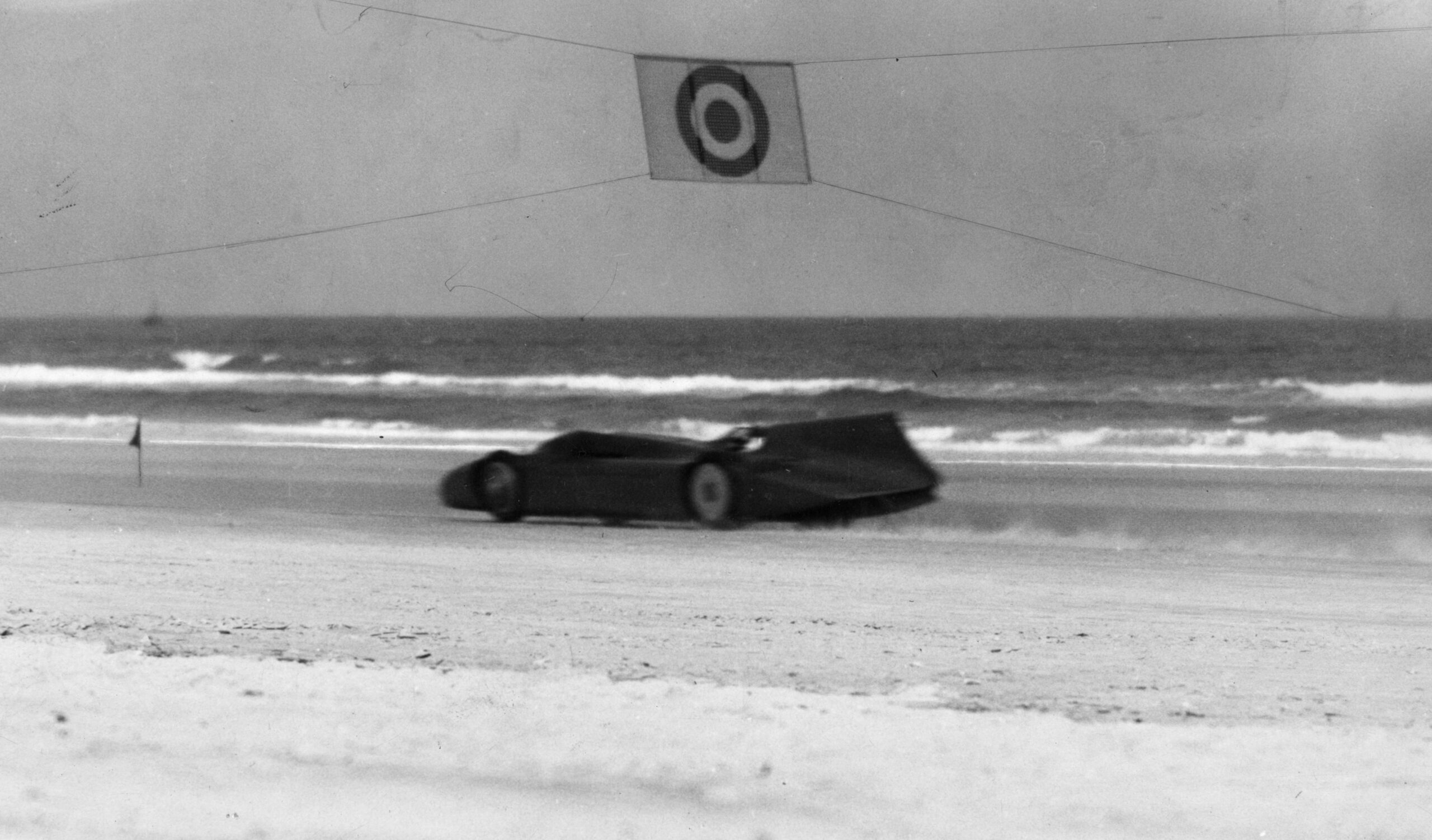
Opened in 1902, the Daytona Beach and Road Course quickly became the home of auto racing in the southern United States, an alternative to the developing racing community in the Indianapolis area. It started less as an organized outfit for weekly races and more of a place for local daredevils to put their machines to the test during their free time. In 1927, Major Henry Segrave, driving his Sunbeam 1000 hp dubbed Mystery, set the world land speed record at 203.79 miles per hour with a top speed of 211 mph. When eventual NASCAR founder, Bill France Sr. caught wind of the car culture in Daytona Beach, he elected to move there in 1935, partially to escape the simmering Great Depression. In Daytona Beach, he set up his first car repair shop.
In 1936, Daytona Beach government officials approached Sig Haugahl about organizing and promoting an automobile race on the 3.2 mile circuit. For this reason, Haugahl is largely credited with the track’s official layout. The City of Daytona Beach Shores a $5,000 purse. The race took place on March 8, 1936 with many daring young men showing up to race. It was initially scheduled for 78 laps, however due to technical issues, the race was stopped after 75 laps. Milt Maron was credited with the win. Also in that race was none other than Bill France Sr., who crossed the line in 5th.
Other races followed to varying success. Big Bill France, however, believed that if they really wanted to hit the big time with the event that the promoters would have to become more organized than in previous years. This was due to a fundamental distrust between the drivers and the promoters who would occasionally leave the event early with all the money in hand. On December 14, 1947, Bill France Sr. had that famous backroom meeting with Ebony Bar at the Streamline Hotel in Daytona Beach, Florida. This meeting was the first in a series that inevitably led to the formation of the National Association of Stock Car Auto Racing (NASCAR) on February 21, 1948. Following the formation of NASCAR, the cite became the annual second event on the NASCAR schedule until the course’s end.
Due to larger crowds and hotels being built along the beachfront, it became increasingly difficult for racers and NASCAR to host an annual event at the beach course. As a solution, Bill France purchased some land near the Daytona International Airport and officially broke ground on the Daytona International Speedway in 1957. The final race at the street course occurred in February of 1958. The next year, the newly built Daytona International Speedway hosted the inaugural Daytona 500. With no use for the street course, the track was closed down.
The historic course started on the pavement of Highway A1A. Today, at that site is a restaurant appropriately named “Racing’s North Turn”. Starting from that point, the circuit traveled south for two miles, parallel to the Atlantic Ocean, until Highway A1A came to an end. The course then took a sharp turn to the left onto the white sand of the beach at Beach Street. This was the “south turn”. The course then follows back north on the sands of Daytona Beach for two miles before once again reaching the “north turn” on Highway A1A.
Depending on layout, the course ran for 3.2 to 4.1 miles in length and was almost paperclip in shape.
The track hosted a number of non-sanctioned races prior to the formation of NASCAR in 1948. Two NASCAR series raced at the track. First was NASCAR’s oldest division, the NASCAR Modifieds. This was followed by the formation of the NASCAR Strictly Stock Series in 1949. The Strictly Stock division is what eventually became the NASCAR Cup Series. Between 1949 and 1958, nine Strictly Stock Series races were run at the track.
There are a number of notable winners from NASCAR’s pioneer era who hoisted trophies at the track. Winners include Red Byron (1949), Harold Kite (1950), Marshall Tieg (1951, 1952), Bill Blair (1953), Lee Petty (1954), Fireball Roberts (1955), Tim Flock (1956), Cotton Owens (1957), and Paul Goldsmith (1958). Both Red Byron and Tim Flock had previous wins at the circuit prior to the formation of NASCAR.
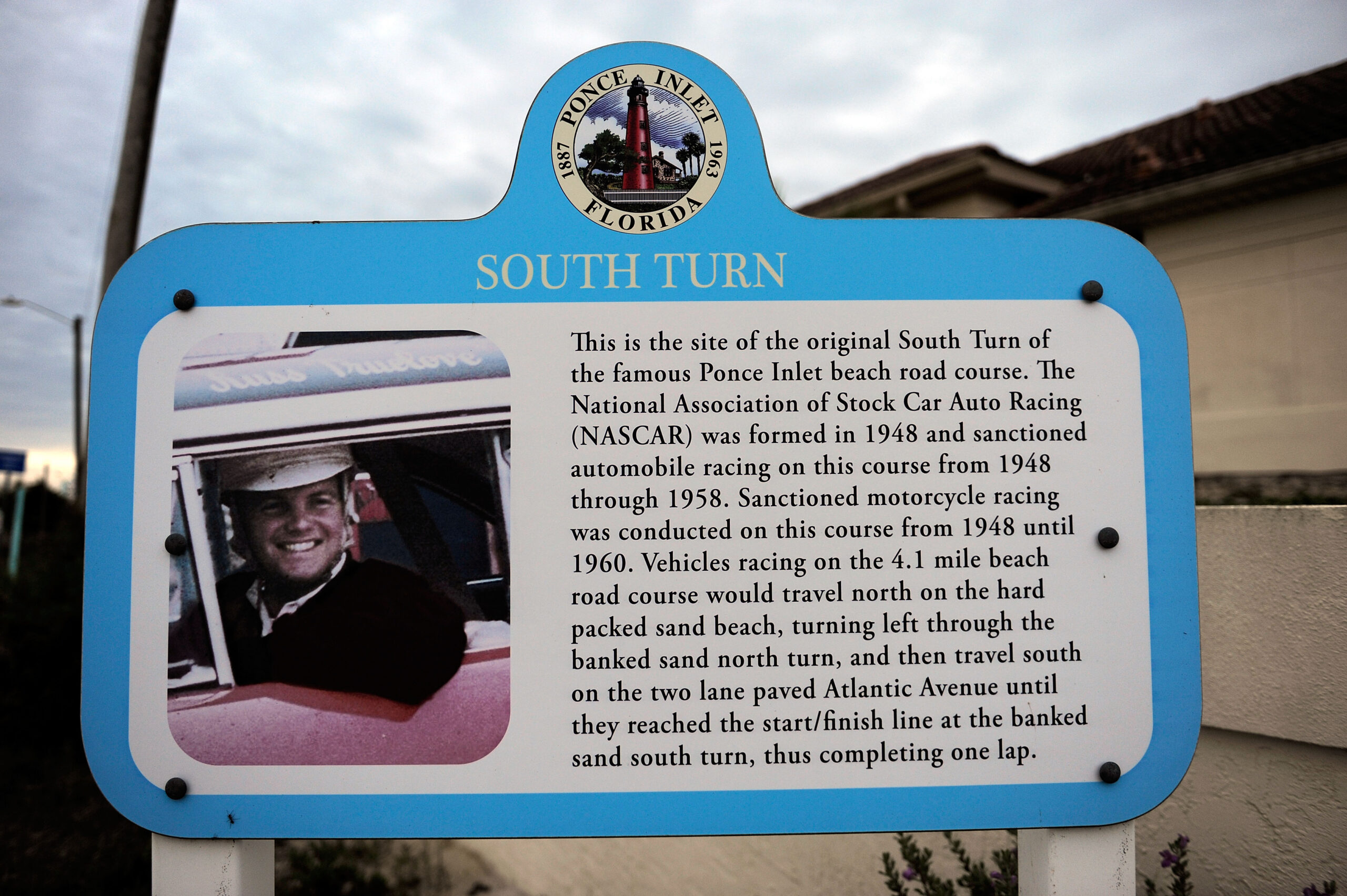
Today, the Daytona Beach and Road Course no longer exists. It was a temporary track that was put up and taken down annually. However, some monuments have been put into place to preserve the history of the track. One is the North Turn restaurant. And, where the south turn was is now is historic marker, designating it as the South Turn of the speedway. On South Atlantic Avenue, where the front stretch was located, is now a number of hotels and resorts. The original location of the track is approximately 5 miles away from the current Daytona International Speedway.
What do you think of this, Daily Downforce readers? With street courses once again being part of the NASCAR schedule (with Chicago in years past and San Diego this year), would you like to see NASCAR once again race on a beach course? Would you have liked to see a race at this track, especially in the NextGen era? Let us know your thoughts! And be sure to keep your eyes peeled for the next installment of Forgotten Speedways.