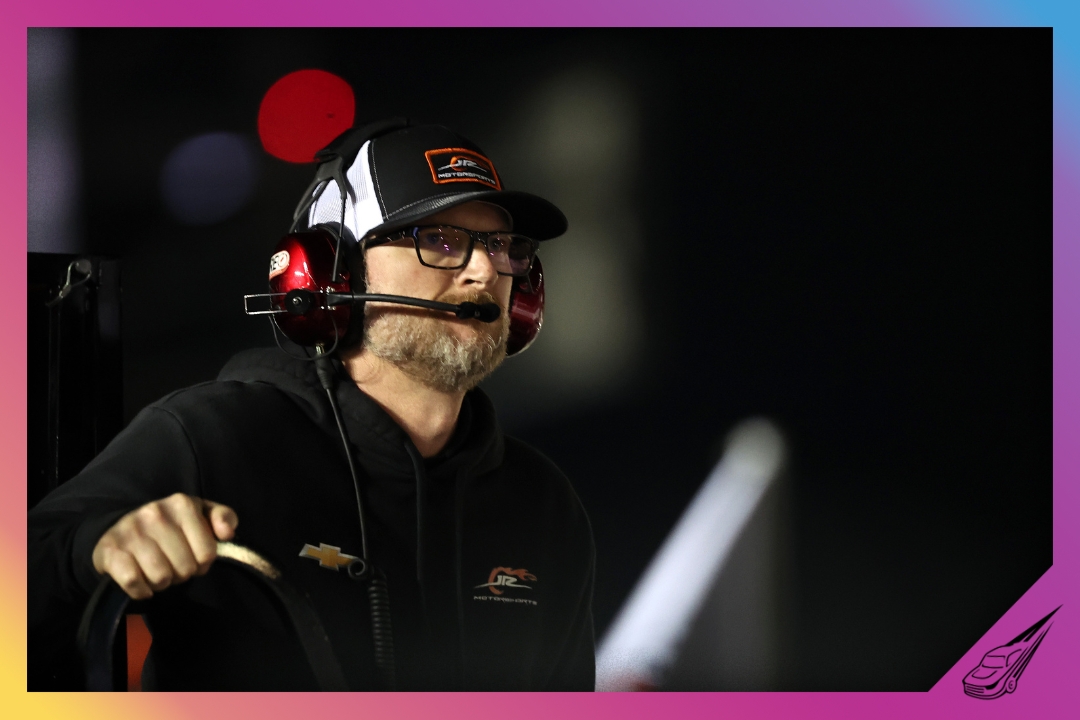

NASCAR analyst Dale Earnhardt Jr. recently joined the growing discussion around the growth of NASCAR’s remote TV broadcasts, saying that while he doesn’t mind them, there is still a difference between in-person and off-site broadcasts.
Imagine the 1979 Daytona 500 done from a studio in Charlotte.
— Dale Earnhardt Jr. (@DaleJr) May 19, 2026
I get that CW does a hell of a job. And I don't mind that it's done in studio. But for anyone to claim it makes no difference is disingenuous.
Last year in March, NASCAR unveiled its multi-million-dollar investment in Studio 43, a production facility that made its broadcast debut during the NASCAR O’Reilly Auto Parts Series race at Homestead-Miami Speedway.
Instead of flying full production crews and broadcasters across the country week after week, NASCAR’s centralized setup now processes broadcasts off-site. Live races are anchored out of the $53 million, 58,000-square-foot NASCAR Productions Facility located in Concord.
The new studio, used by The CW beginning with O’Reilly coverage, was presented as a major shift in race broadcasting, featuring a highly publicized extended reality staging and virtual production systems.
While many fans continue to complain about remote broadcast, drivers like Denny Hamlin, who is working as a guest analyst for The CW this weekend, said fans should get over it, as even when the broadcast team is at the track, they are using monitors much like they do for their limited remote broadcasts.
Still, not everyone on his side of the fence agrees, as NASCAR Hall of Famer and Analyst Dale Earnhardt Jr. does not appear convinced by the direction the sport has taken in increasing the number of remote broadcasts.
In fact, he joined the discussion sparked by Hamlin in a post on X, writing, “Imagine the 1979 Daytona 500 done from a studio in Charlotte. I get that CW does a hell of a job. And I don’t mind that it’s done in studio. But for anyone to claim it makes no difference is disingenuous.”
Of course, this opinion should be no surprise as Earnhardt has stated that he is okay with remote broadcasts, but reassured that he prefers in-person.
Remote-style broadcasts became common during the COVID-19 pandemic, and since then, select Craftsman Truck Series races have continued to use similar methods.
While FOX helped pioneer remote NASCAR broadcasts by calling lower-tier ARCA and Craftsman Truck Series events from its Charlotte-area studios.
Most of NASCAR’s other partners, networks, including FOX, NBC Sports, Amazon, and TNT, continue maximizing on-site presence for the Cup Series races while still using centralized hub systems for international feeds, graphics packages, and digital highlight production.
After securing exclusive rights to the NASCAR O’Reilly Series, The CW joined FOX’s Truck broadcasts when it introduced a remote broadcasting model.
For select races last year and this year, the primary broadcast booth featuring Adam Alexander, Jamie McMurray, and Parker Kligerman calls the action remotely from the Concord studios, while pit reporters remain stationed at the track itself.
The financial incentives behind the setup remain substantial, as the networks save millions by reducing travel and hotel costs and eliminating the need to haul satellite equipment to more than 38 race venues every season. Broadcasters also gain instant access to hundreds of camera feeds, scanner audio channels, and telemetry data streams simultaneously.
In addition, centralized staffing reduces the transport footprint during a NASCAR season that moves from one corner of the country to another with barely enough time for crews to catch their breath between weekends.
However, at the same time, critics argue that the approach comes with trade-offs. Announcers calling races from monitors can miss incidents that occur outside the live feed’s frame.
Still, veterans such as Dale Earnhardt Jr., along with many fans, argue that removing broadcasters from the track strips away the energy, sound, smell, and awareness that come with physically being inside the venue.
Remote production also remains vulnerable to feed delays and synchronization issues, meaning a single technical hiccup can throw timing and coverage out of rhythm in the blink of an eye.
Stay close to the on-track action this weekend and every weekend by following our Race Weekend Dashboard for everything you need to know before, during, and after the race. Share your thoughts by joining the discussion on Discord or X, and follow us on Instagram, Facebook, and YouTube for further updates.