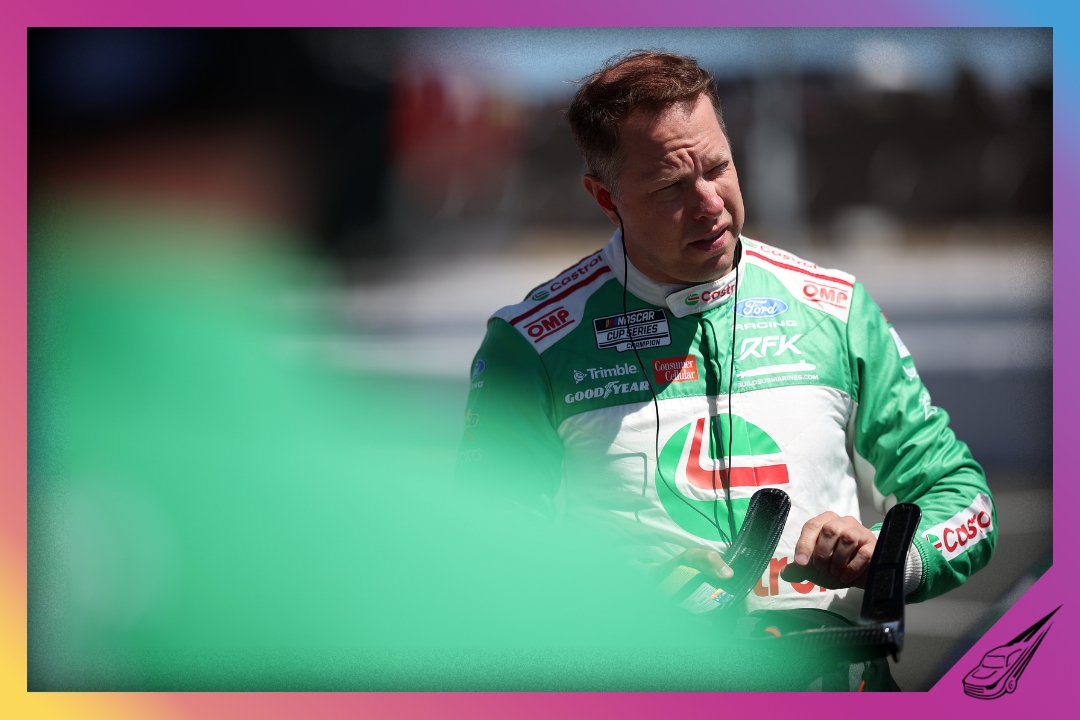

Brad Keselowski recently offered fans an inside look at why one of NASCAR’s most beloved race weekend traditions, shopping at the at-track merchandise haulers, has changed so dramatically over the years.
In fairness to the tracks, they have become significantly more accommodating to merchandise trailers, teams and drivers in the midway over the last 3-5 years. Unfortunately, the cost to own and operate the equipment has gone up 2-4x in the last 15 years for various reasons.
— Brad Keselowski (@keselowski) July 3, 2026
Most… https://t.co/mV7IH6h18s
The discussion began after a clip from the inaugural Cup Series race at Chicagoland in 2001 made the rounds on social media, showing a packed midway, where dozens of individual drivers’ merch haulers stretched across the outside of the track.
This post sparked plenty of nostalgia among longtime fans, many of whom remembered walking from trailer to trailer searching for their favorite driver’s latest gear. Among the replies and quote posts, one fan recalled that driver/team owner Brad Keselowski had previously explained why the sport gradually moved away from individual merchandise haulers.
According to the fan, Keselowski had mentioned that the fees for parking merchandise trailers at race tracks had become financially burdensome, leading many organizations to consolidate into shared operations instead of maintaining separate haulers for each team or driver.
Keselowski noticed the comment and decided to provide additional context, acknowledging that parking costs had been a concern in the past. However, this time, he added that race tracks have become far more accommodating toward merchandise trailers, teams, and drivers over the last three to five years.
In his view, the primary challenge today is no longer the tracks themselves but the rapidly increasing costs of owning and operating the specialized equipment required for merchandise operations.
He wrote, “In fairness to the tracks, they have become significantly more accommodating to merchandise trailers, teams and drivers in the midway over the last 3-5 years. Unfortunately, the cost to own and operate the equipment has gone up 2-4x in the last 15 years for various reasons.”
The RFK Racing co-owner explained that those operating expenses have climbed between two to four times over the last 15 years due to a variety of factors. At the same time, he noted that fans understandably are not willing to pay around $100 for a T-shirt that may have cost only $25 years ago.
“Most fans don’t want to pay $100 for a T-shirt that used to cost $25 and I don’t blame them. The only solve for this we’ve come up with is massive consolidation that nobody really likes. We are open to quality ideas from someone to fix this for everyone. Feel free to respond below.”
Because raising prices to match operating costs is not a realistic solution, the industry has instead turned toward large-scale consolidation, combining merchandise operations into fewer trailers or centralized tents.
The RFK Racing co-owner admitted the current model is far from ideal, calling it a solution “nobody really likes.” He acknowledged the difficult balance between keeping merchandise affordable for fans and maintaining financially sustainable operations for teams.
And while he did not necessarily present the issue as one with an easy fix, he invited fans to contribute ideas that could improve the experience for everyone and to find a better alternative if one exists.
Stay close to the on-track action this weekend and every weekend by following our Race Weekend Dashboard for everything you need to know before, during, and after the race. Share your thoughts by joining the discussion on Discord or X, and follow us on Instagram, Facebook, and YouTube for further updates.