UPDATE: NASCAR and Teams Settle Antitrust Lawsuit
What’s Happening? 23XI Racing and Front Row Motorsports have settled their antitrust lawsuit filed against NASCAR, bringing this long-running saga to…


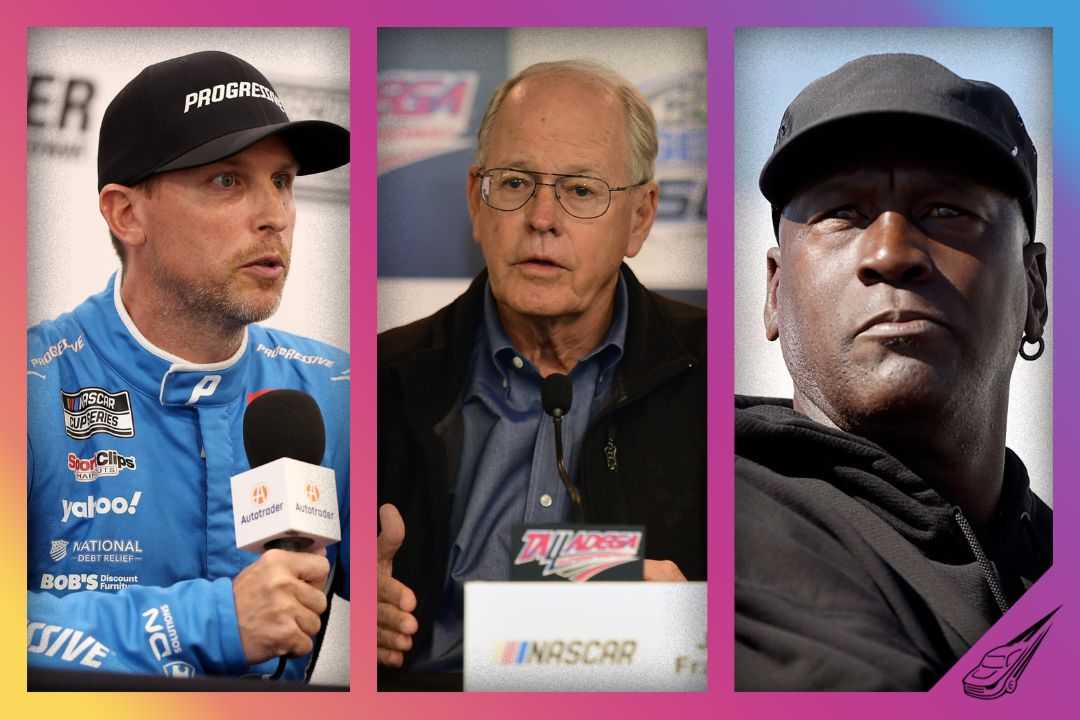
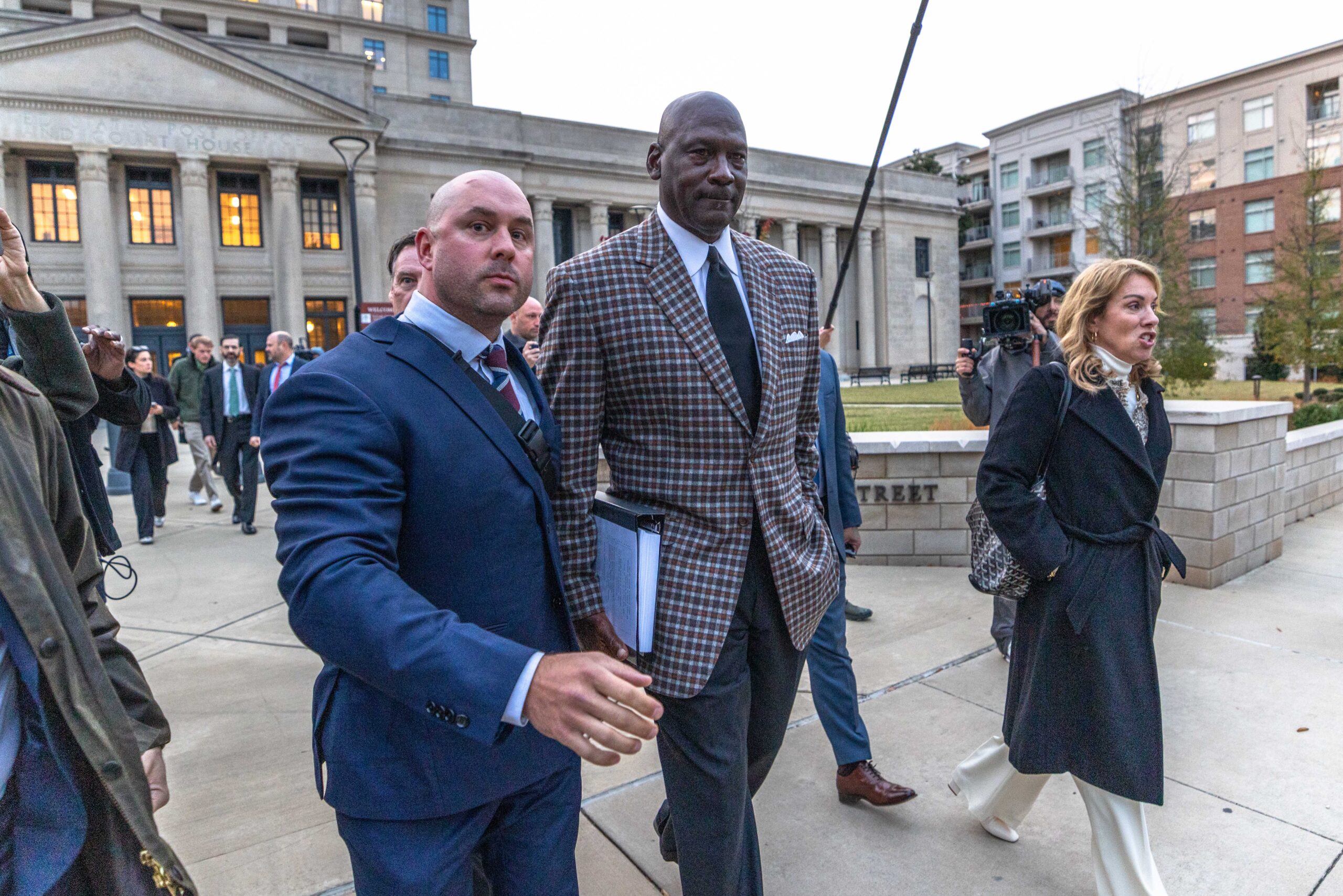
The lawsuit between race teams 23XI Racing/Front Row Motorsports and NASCAR is over. While neither side technically won, the teams walked away with several requests met in their compromise. But what exactly are the teams gaining from this settlement?
What’s Happening? 23XI Racing and Front Row Motorsports have settled their antitrust lawsuit filed against NASCAR, bringing this long-running saga to…
For the majority of the antitrust lawsuit filed by 23XI Racing and Front Row Motorsports in late 2024, what the teams exactly wanted out of this lawsuit was unknown. However, it was assumed some of their pursuits would be similar to those that the 15 charter owning NASCAR Cup Series teams failed to get during negotiations of the 2025 Charter Agreement.
There were some known details, such as the charter owning team’s pursuit of permanent charters, and, specifically, regarding 23XI and FRM, the return of charters lost due in part to this lawsuit.
Nonetheless, what the teams were pursuing during NASCAR Charter Negotiations in late 2023 to late 2024 became all the more clear during the past two weeks in court, where an often-discussed subject was the team’s “four pillars.”
These pillars, goals the teams were pursuing in a new charter agreement, were outlined in a February 9, 2024, letter to NASCAR executives (attached below), which included an increase of distributed revenue, “evergreen” or permanent charters (meaning NASCAR cannot take them away), a “seat at the table for important decisions,” and “New Business Opportunities.”
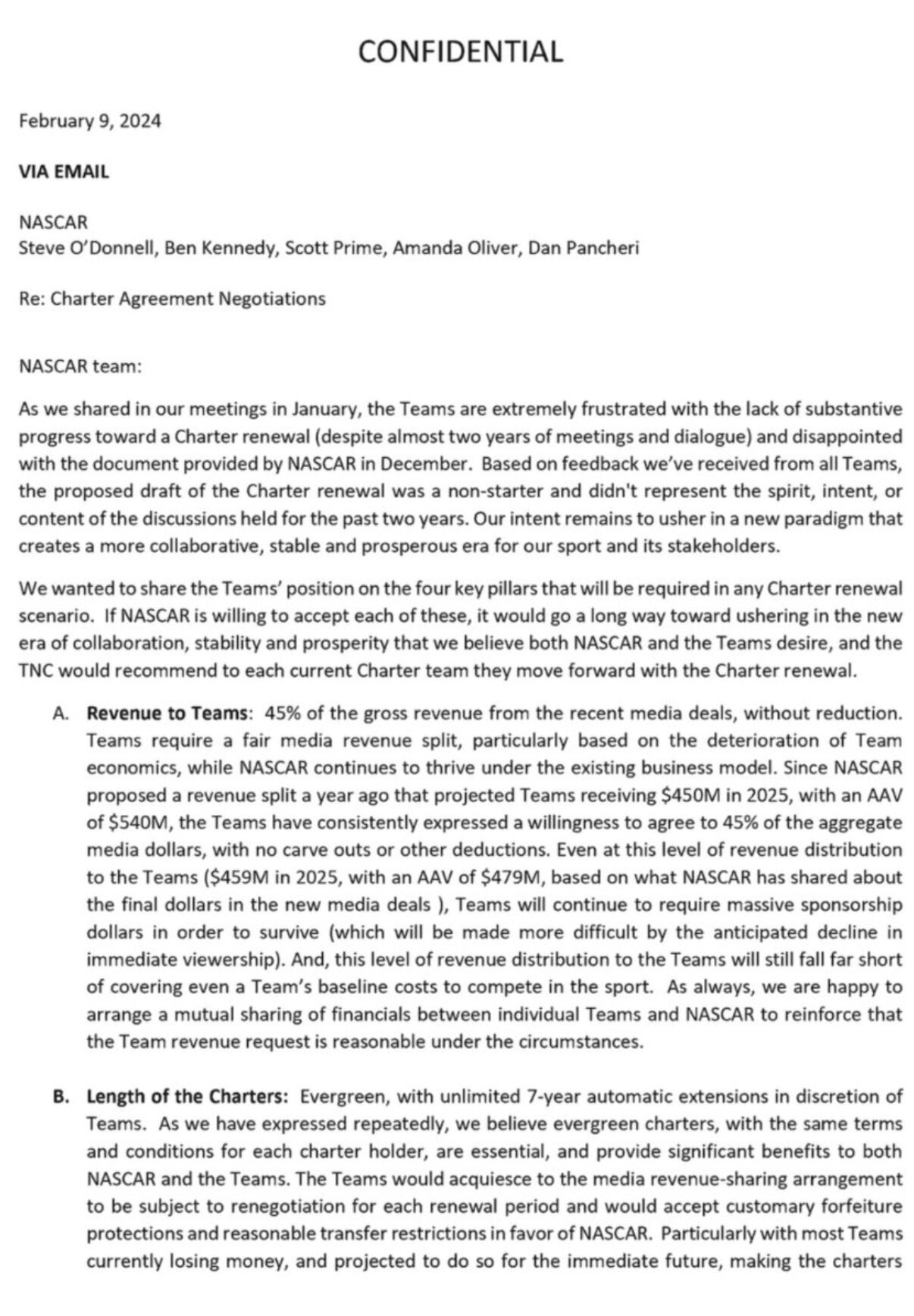
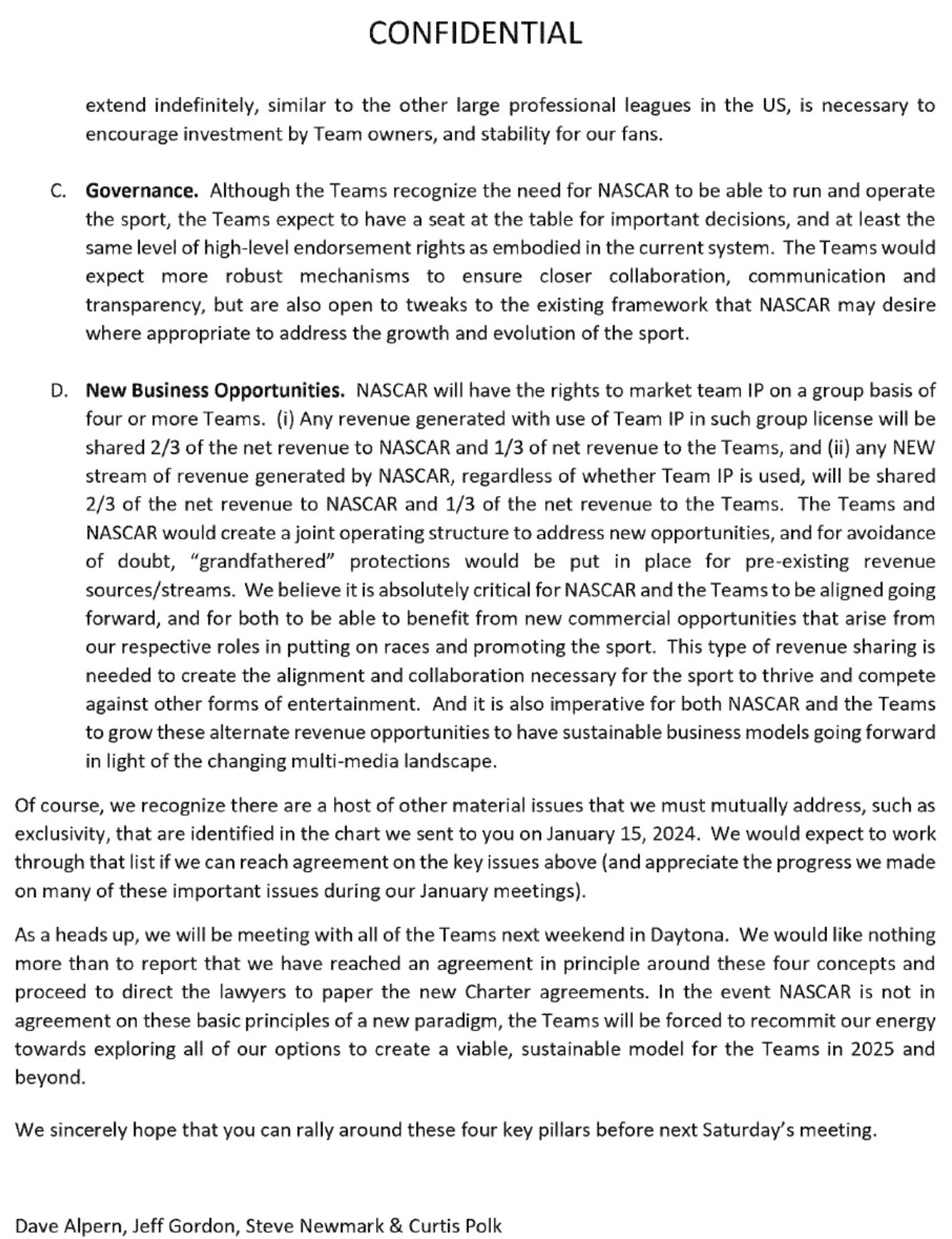
So, in settling their multi-month lawsuit, did the teams walk away with any of this?
Though there are things that will be applicable to both the 13 charter teams that did not sue NASCAR and the two that did, there is one key win for 23XI and FRM.
When they sued NASCAR in October 2024, the teams were risking their combined four charters.
The teams claimed a provision in the agreement prevented them from suing NASCAR on antitrust grounds, asserting that they would be unable to sue if they signed the agreement. But if they did not sign, they would lose their charters, and two additional charters the teams purchased from now-defunct Stewart-Haas Racing (one for each team).
So, the teams had a plan: file a preliminary injunction, and, if that were granted, the court would have NASCAR give the team’s charters and charter earnings until the end of the trial.
Throughout the lawsuit, the teams gained and lost charter status on more than one occasion. Admittedly, this used to be easy to keep up with, but here is a short timeline.
If the teams did not get their charter back, they would not only lose the perks of the charters but also the value and the cost spent to acquire these charters. That is, after all, another appeal of charters, as they give teams an ultra valuable asset to sell should they leave the sport (with recent sales upwards of $40 million).
Well, as confirmed by 23XI and FRM attorney Jeffrey Kessler on Thursday Morning, the teams will regain these charters for 2026 and beyond. This maintains their value as financial assets and, most important of all, thanks to the settlement, the value of these charters may be sky high.
What’s Happening? The 23XI Racing and Front Row Motorsports lawsuit will continue for some time. However, many developments will occur along…
Unfortunately, this is the one gray area of the settlement.
In a statement announcing the settlement, all three parties claim that NASCAR guarantees charter owners a reformed version of the 2025 Charter Agreement, with “a form of ‘evergreen charters,’ subject to mutual agreement.”
This, of course, is a pillar from the 2025 Charter Agreement negotiations, and a major win for the teams, as it will surely increase the value of charters and will give them more of the long-requested security of permanence.
What’s Happening? Per its settlement with teams 23XI Racing and Front Row Motorsports, NASCAR will provide the sport’s 15 charter owning…
Though this is one of the four pillars, with teams getting another pillar, the increase in revenue with the original agreement in late 2024, a quote from 23XI Racing co-owner and long-time business partner of Michael Jordan, Curtis Polk, suggests that the settlement may include more of the four pillars.
“This settlement achieves significant progress toward the Four Pillars,” Polk said. “The result brings NASCAR and the chartered teams into better alignment and supports future growth and sustainability for all stakeholders and a better sport for the fans.”
Shortly after this settlement, sources told Jenna Fryer of AP Sports a little bit about the settlement.
Although this is not confirmed, and Fryer admits these details are “murky” due to an upcoming call between NASCAR and charter-owning teams, if 23XI/FRM and NASCAR agreed to these terms, they would address the four pillars.
The teams would get back the three-strike rule, increased to a five-strike rule, a rule that gave the teams some decision-making power, though, in court testimonies, it led to some questions about its effectiveness.
This addresses the pillar regarding “a seat at the table for important decisions.”
Regarding the final pillar, “New Business Opportunities,” if these are part of the terms in this settlement, the teams will get international revenue, such as money made from races in places such as Mexico, something they did not receive in 2025, and a third of revenue from Intellectual Property, something directly requested in the February 9, 2024, letter to NASCAR executives.
No one technically won this lawsuit; however, the teams did get some major victories, and NASCAR, of course, walked away without fear of the unknown had the court ruled against them.
Nonetheless, the real winner, as many will say over and over again, is the lawyers for both parties. This lawsuit and trial lasted a total of 435 days, and those billable hours really do stack up.
What do you think about this? Let us know your opinion on Discord or X. Don’t forget that you can also follow us on Instagram, Facebook, and YouTube.