

With Zane Smith Gone, Who Does Ford Have Left in Their Pipeline?

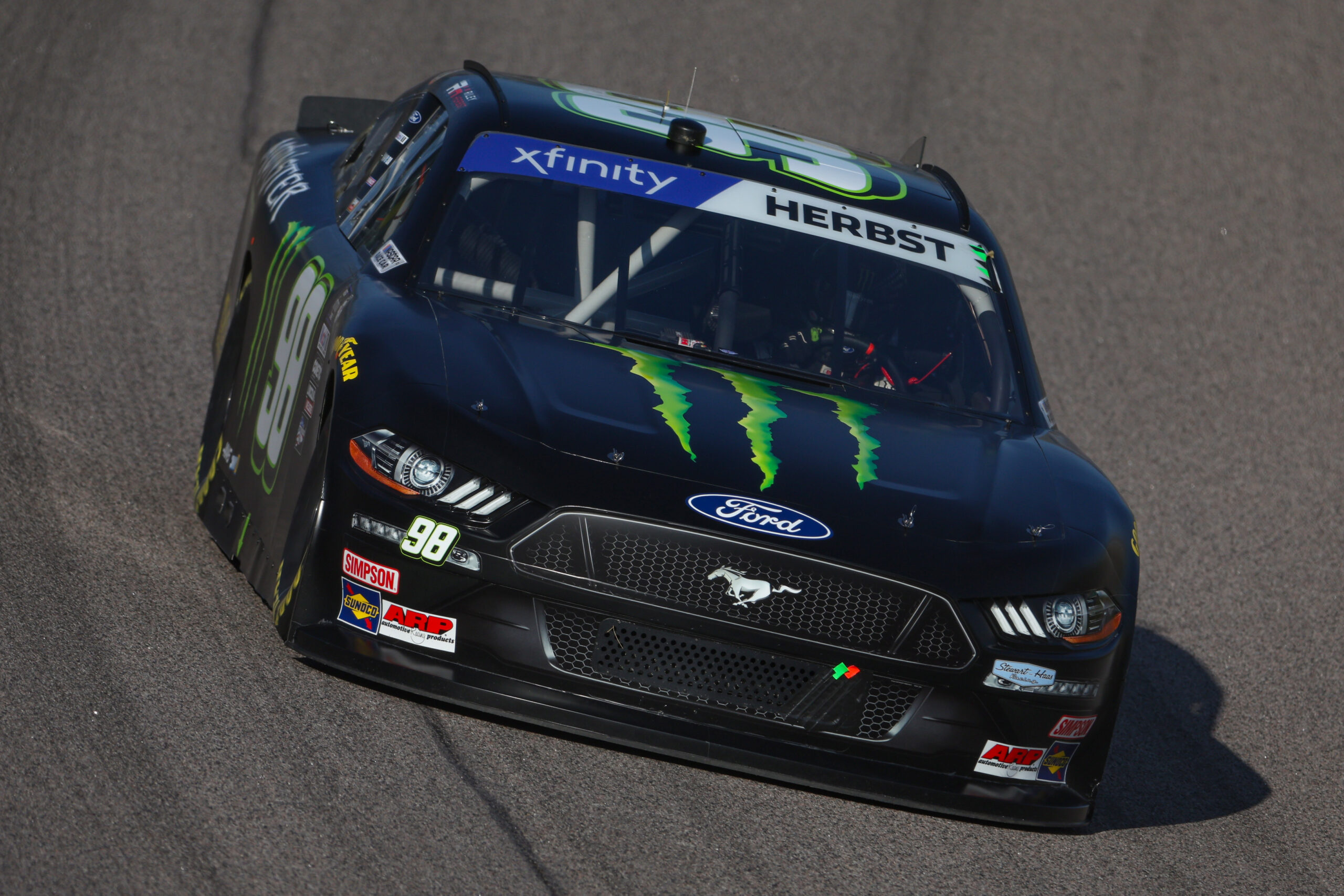
KANSAS CITY, KANSAS - SEPTEMBER 09: Riley Herbst, driver of the #98 Monster Energy Ford, drives during qualifying for the NASCAR Xfinity Series Kansas Lottery 300 at Kansas Speedway on September 09, 2023 in Kansas City, Kansas. (Photo by Jamie Squire/Getty Images)

Ford lost Zane Smith to Chevrolet. Smith was far and away the best prospect in the Ford pipeline, but, he is now gone. Ford’s pipeline is now pretty dry with Smith being gone, so, who does Ford have left among their prospects?

The Xfinity Series

This season, only five drivers drove the full schedule for Ford in the Xfinity Series including the following: Joe Graf Jr., Ryan Sieg, Brett Moffitt, Riley Herbst, and Cole Custer. Of those five drivers, only one made the Xfinity Series Playoffs in Custer.

None of those five drivers are exactly hot prospects. Herbst is the youngest of that group at 24 years old, and he has not yet won an Xfinity Series race. Custer and Graf Jr. are both 25, and Custer already has three unimpressive Cup Series seasons under his belt with Graf never being a serious Xfinity Series race-win contender.

To put it bluntly, there is nobody in the Xfinity Series that can be considered a hot young prospect for Ford. The only driver in the Playoffs already has raced with little success in the Cup Series, yet he may be their best option moving forward. If the Xfinity Series is this barren, then what about the Truck Series?

The Craftsman Truck Series

Ford has two race teams under their umbrella in the Craftsman Truck Series in ThorSport and Front Row Motorsports. Zane Smith currently drives for Front Row, so he does not count as being a Ford prospect anymore since he is moving to Chevrolet. The other three drivers are as follows: Ben Rhodes, Ty Majeski, Matt Crafton, and Hailie Deegan.

Crafton is a Truck Series lifer, so, he is likely not moving up to the Cup Series. Rhodes and Majeski are 26 and 29 years old respectively. Hailie Deegan is 22 years old, but she failed to make the Truck Series Playoffs this year. Ford also has the young Connor Jones making part-time starts with ThorSport in the Truck Series, but he has yet to win an Arca race or even a CARS Tour race.

Again, there are drivers with talent in this list, but, no young phenom for Ford to build their future around. That is someone Ford may need with Aric Almirola potentially retiring at season’s end. It just does not exist in either the Xfinity or Craftsman Truck Series.

Where Does Ford Go From Here?

Wow, Ford is in a tough spot, and it is easy to see why Stewart-Haas Racing wants Aric Almirola to return next year. There is just not a lot of options for Ford in their pipeline. Ford either needs to poach someone from another team or develop someone from a very young age to replace Zane Smith. Not only was Smith an unfortunate loss for Front Row, but it also meant that Ford’s pipeline may need to be reset completely.
Share this:

AVONDALE, ARIZONA - NOVEMBER 08: NASCAR Executive Vice President Steve O'Donnell speaks to the media during the NASCAR annual State of the Sport address at Phoenix Raceway on November 08, 2024 in Avondale, Arizona. (Photo by Jared C. Tilton/Getty Images)

NASCAR President Pitches Mid-Week Racing and a Shorter Schedule

What’s Happening?

NASCAR President Steve O’Donnell says the Cup Series schedule is not guaranteed to remain at 36 races, and the sanctioning body is evaluating whether a different structure would make more sense.

Speaking about the long-term outlook, O’Donnell said everything from the total number of events to when they are held is under consideration.

“It’s worked for us, but I would not say this is the way it will always be. Is there a number of races that makes more sense? Could it be 30, or even more? Could we introduce midweek races and shorten the season? All of that is on the table.”

The Cup Series has run a 36-race points schedule for more than two decades, typically from February through November.

NASCAR’s current media rights deal spreads races across multiple broadcast, cable, and streaming partners, having been in place since 2025. Compared to the previous deal, far fewer races now air on traditional broadcast television, so fans have to follow the season across several networks and platforms, including FS1, USA, Prime Video, and TNT Sports. O’Donnell previously acknowledged that the transition led to a late-season dip in viewership as coverage has been on broadcast TV less often, and it clashes directly with the NFL.

Midweek Racing on the Table?

O’Donnell says weekday races are an option if NASCAR wants to shorten the overall calendar without dramatically reducing the number of races. The sport last had midweek races during the 2020 season, when it was the first sport to return to action, at Darlington. During that time, NASCAR did multiple midweek races, including at Darlington, Charlotte, and Kansas, to compensate for the weeks missed during quarantine, and the audience showed up in TV ratings.

A shorter season could also reduce direct competition with football, which dominates the U.S. sports calendar each fall, while additional races would create more inventory for media partners.

What Are Other Sports Doing?

Across sports, schedules are increasingly shaped by media strategy rather than tradition. The NFL, for example, has expanded its reach without drastically lengthening its season, adding standalone games on holidays, exclusive streaming packages, and international matchups to maximize value per game. The league also added a 17th regular-season game in 2021, its first expansion in decades, as part of a broader revenue push.

Other U.S. leagues are following similar paths. The NBA introduced an in-season tournament to create new broadcast inventory without extending the schedule, while MLB continues to sell national windows and streaming packages across its existing 162-game season.

In motorsports, Formula 1 has expanded the calendar itself. The series ran 21 races in 2021. 10 years earlier, it ran 19 races. And now it has a record-breaking 24-race schedule, despite being a global championship. Much of that growth is driven by hosting fees from cities and governments, as well as rising international demand, but drivers and the industry have already shown displeasure regarding the ever-growing schedule, deeming it too exhausting.

The shifts across sports accelerated drastically after the pandemic, when leagues became more dependent on media revenue and more willing to adjust calendars, formats, and distribution to match changing viewing habits. NASCAR, for example, rarely changed its calendar before 2020, but after the pandemic, it’s become one of the most diverse calendars in motorsports: racing on dirt, in stadiums, reviving old tracks, adding road courses, expanding internationally, and constantly changing its post-season race placements.

No Changes Announced

NASCAR has not announced any plans to alter the Cup schedule. O’Donnell’s comments indicate the organization is evaluating options as it plans future seasons under an evolving sports media environment.

What do you think? Should NASCAR have more, fewer, or the same number of races going forward? Would you like to see midweek races? Let us know what you think on Discord or X. Don’t forget that you can also follow us on InstagramFacebook, and YouTube.

Confirmed: Lionel and Round 2 to Merge into New “Lionel Brands Group”

What’s Happening?

Following days of intense online speculation and rumors within the diecast community, Lionel, LLC has officially confirmed that it is set to be acquired by Round 2, a portfolio company of Praesidian Capital.

The two giants of the hobby and collectibles industry will eventually merge to form a new entity known as the Lionel Brands Group.

The Daily Downforce reached out to Lionel, and they confirmed Round 2’s intent to purchase the company, noting that the transaction is expected to progress over the coming weeks. The move signals a major shift in the landscape of NASCAR merchandising and diecast production, bringing together two of the most recognizable names in the business.

“We are aligned around a shared vision to build a stronger, fan-first platform that supports the brands, communities, and partners that have made each company successful,” the statement read.

Business as Usual for Now

For fans and collectors worried about immediate disruptions to their pre-orders or current programs, Lionel emphasized that the transition will not affect day-to-day operations in the short term.

“In the near term, it remains business as usual,” the company stated. “Our priority is maintaining continuity and supporting the programs already underway.”

Lionel, which has long held the exclusive license for NASCAR diecast, and Round 2 (known for brands like AMT, Johnny Lightning, and Racing Champions) aim to leverage their combined “strong legacies” to create new growth opportunities.

While the announcement confirms the intent to merge, specific details regarding future product lines or changes to the “Lionel Racing” brand remain under wraps. The company noted that future updates will be shared via their official social media channels as the transaction moves forward.

The statement concluded with a nod to NASCAR fans: “We’ll be in touch once we have more to share – Enjoy the race Atlanta!”

Are you a diecast collector? What do you think about this latest move? Let us know your opinion on Discord or X. Don’t forget that you can also follow us on InstagramFacebook, and YouTube.

MADISON, ILLINOIS - JUNE 01: Denny Hamlin, driver of the #11 Yahoo! Toyota, and crew chief Christopher Gabehart talk on the grid during qualifying for the NASCAR Cup Series Enjoy Illinois 300 at WWT Raceway on June 01, 2024 in Madison, Illinois. (Photo by Logan Riely/Getty Images)

JGR Lawsuit: What Confidential Information Was Allegedly Taken?

What’s Happening?

Joe Gibbs Racing alleged that former competition director Chris Gabehart took a wide range of confidential team information regarding competitive performance data, engineering processes, financial records, and internal personnel details. But what exactly do the documents say was taken?

  • Performance, payroll, and financial data stored on personal devices: The lawsuit claims that numerous internal photos were saved to Gabehart’s personal phone and Google Photos account, which JGR says were not approved for confidential storage and were accessible to third parties, including his spouse. These images allegedly included post-race audits for the entire 2025 season, detailed team payroll information with contracts and compensation structures, tools for projecting employee pay, driver salaries for multiple seasons, sponsor and partner revenue figures, pit crew analytics, and tire performance analyses.
  • Extensive race analytics and proprietary setup files: Within the “Spire” folder, JGR says investigators found deeply technical documents tied to competitive performance. This allegedly included 140+ pages of post-race data analysis from a 2025 Las Vegas event detailing what metrics the team measures and how it measures them, as well as more than 20 “eLap” files generated by proprietary software. These reports incorporate inputs from hundreds of employees, historical databases, and simulation work to determine optimal racecar setups, which means it effectively represents the culmination of years of institutional knowledge.
  • Driver feedback systems and engineering intelligence: The complaint also references internal post-race debrief surveys completed by drivers after each event, which document both subjective feedback and structured data collection. Additional documents allegedly covered proprietary engine output information and recommended gear-shift points, along with photos of racecar diffuser skirts showing damage after a 2025 race.
  • Tire strategy, logistics, and fuel-modeling methods: Several documents reportedly describe how JGR selects, manages, and cycles tires during races. Others detail initiatives for transporting equipment and racecars more efficiently while improving communication among engineers. The filing also mentions proprietary fuel-mileage estimation models for both JGR drivers and competitors, including methods used to refine accuracy during races.
  • Compensation records and competitive performance comparisons: Investigators allegedly found spreadsheets listing base salaries and bonus structures for key team personnel, along with documents comparing a JGR driver’s performance at a specific race to that of a Spire driver using JGR’s proprietary analytical tools. JGR argues that both categories of information are highly sensitive.
  • Alleged recruitment of JGR personnel: In addition to the data itself, Gabehart allegedly attempted to recruit JGR employees to join him at Spire. The complaint states that he had access to payroll information for all drivers and employees, which JGR suggests could have supported those efforts. According to the filing, at least one employee has already left JGR for Spire.

What JGR Is Seeking From the Lawsuit

JGR states it is entitled to damages believed to exceed $8 million, potentially subject to enhancement, along with attorneys’ fees. The organization is also seeking multiple forms of relief, expected to exceed that amount, as well as a cease-and-desist order to prevent any use or disclosure of what it describes as trade secrets.

You can learn more about the lawsuit itself, the circumstances surrounding Gabehart’s departure, and the broader allegations in the article linked below