
Corey Day’s run-in with Connor Zilisch at Circuit of the Americas became one of the most discussed incidents from Saturday’s race, even drawing a response from Denny Hamlin as well, who this week talked about his support for Zilisch.
During the race, Zilisch dealt with brake trouble on his No. 1 Chevrolet but worked his way forward from the rear of the field, advancing from P29 to P4 in the closing laps. With five laps remaining, he engaged in a battle with Hendrick Motorsports driver Corey Day as they exited Turn 2, holding the outside line. But as they contested the position, Day moved up behind him, contact occurred, and Zilisch spun off course to finish the race in P21.
After the contact, frustrated, Connor Zilisch initially referred to Day as an “absolute hack” on his radio, describing the clash as part of the latter’s racing pattern. But the JR Motorsports driver later tempered his comments, simply saying he expects an apology from the young Hendrick Motorsports driver.
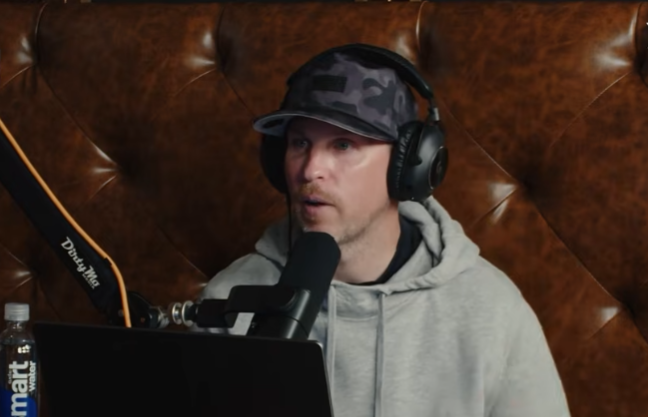
Given that Zilisch declined to escalate the situation, on the latest episode of his Actions Detrimental podcast, Hamlin credited him for calmly managing his response after the race, saying,
“Zillich was smart about this. He in his interview, he’s like, “I looked over at him thinking, come on over here. Come apologize.” And he said he just looked at him with a stare like, I don’t know what it is with these guys. Why, Why can’t they… youth?”
However, he questioned Day’s failure to issue an immediate apology. In fact, he said he was “floored” by Corey Day’s reaction, which involved staring at a frustrated Zilisch rather than apologizing.
The No. 11 JGR driver also raised questions about how Hendrick Motorsports evaluates developing drivers. Organizations invest with the expectation of returns measured in wins and titles, but when a driver continues to make visible mistakes, fans and especially other drivers will start to scrutinize. Hamlin pointed to the balance between development and production, asking how long it would hold.
The COTA incident was not the first time Day’s racing antics were questioned. Last week, during the Atlanta race, Day was involved in a multi-car crash on lap five after attempting a three-wide move that resulted in contact with Ryan Sieg. The move triggered a chain reaction that collected several cars.
Sieg responded over team radio, questioning both the decision and Day’s presence in the series.
Hamlin argued that drivers are allowed to make mistakes as part of growth. At teams with front-running equipment and title ambitions, time frames are shorter. But he questioned whether Day faces a deadline by season’s end or whether the assessment extends into the following year.
In Day’s case, results have not offset the incidents that have drawn attention. Hamlin referenced Kyle Larson as an example, noting that aggressive driving can lead to contact as well as wins.
Do you agree with Hamlin’s take? Let us know your opinion on Discord or X. Don’t forget that you can also follow us on Instagram, Facebook, and YouTube.
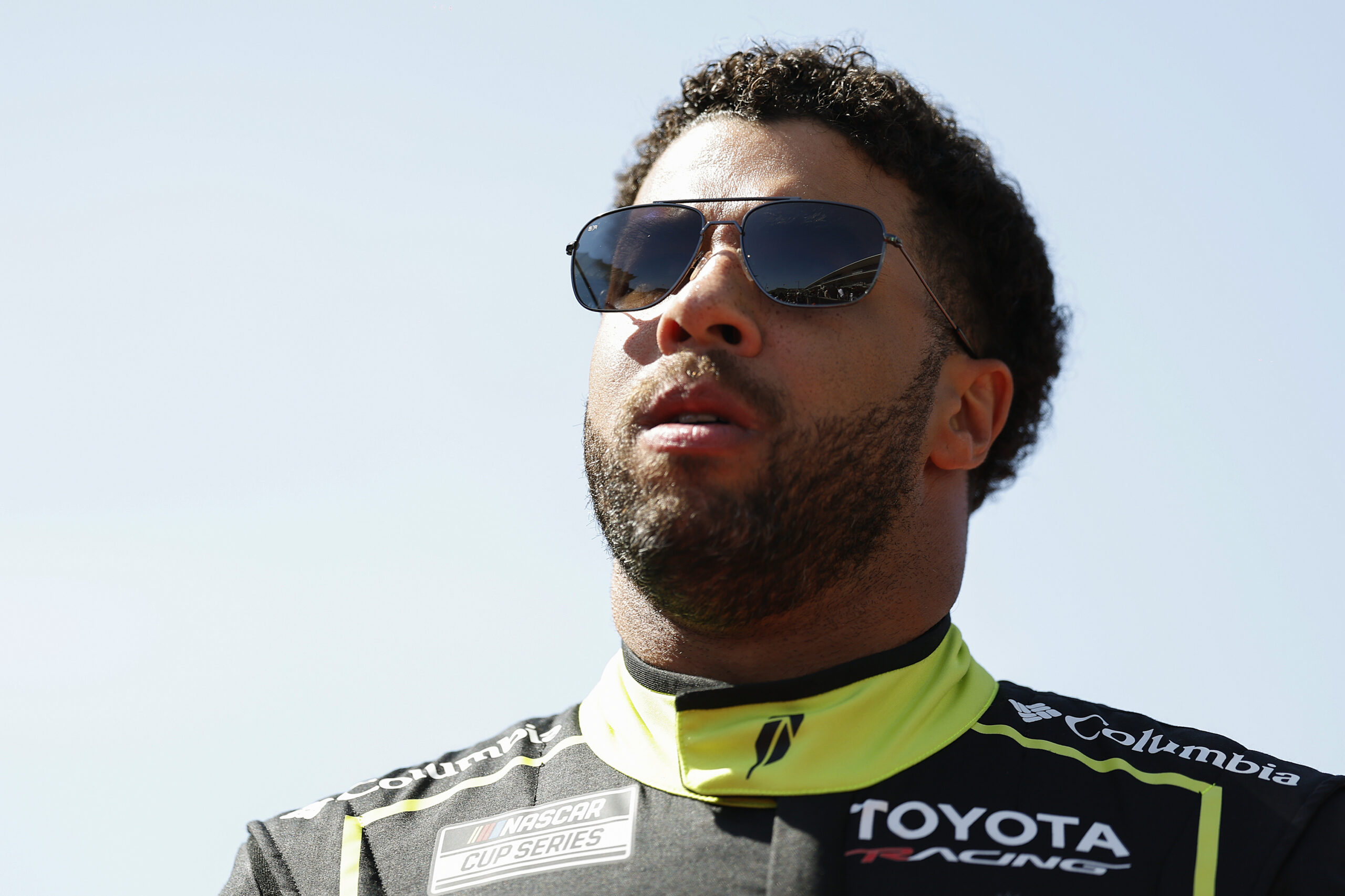
Bubba Wallace shared a message on X following the death of a close friend, writing about the weight of the news over the weekend.
“Makes you think about life and how precious it is… That tune… Nutshell- Alice In Chains Love yall,” he continued.
While Wallace did not name the friend in his post, one day before, reports confirmed that Chase Pistone, 42, had died. Pistone competed on short tracks and in NASCAR’s national ranks and later owned a Legends car. His family asked media outlets to share the Suicide and Crisis Lifeline number, 988. His brothers, Nick and Tom Pistone, confirmed the news to LegendsNation.com.
Pistone, who was the grandson of NASCAR driver “Tiger” Tom Pistone, built his racing career in Legends cars and Late Models before stepping into NASCAR competition.
Apparently, Wallace and Pistone raced each other in Legends cars around 2005. Pistone won four Summer Shootout Championships at Charlotte Motor Speedway, with two titles in the Semi-Pro and two in the Pro divisions. Wallace competed in both Bandolero and Legends categories during that period, winning 35 of 48 Bandolero races in one season.
Both drivers were regulars at the Charlotte Summer Shootout. From there, their paths moved toward the national touring series.
Pistone made starts in ARCA and the NASCAR Craftsman Truck Series in 2005 and 2006, including an appearance with Green Light Racing at Martinsville Speedway. Meanwhile, Wallace moved into the K&N Pro Series East by 2010.
In 2006, Pistone made a start in the Nationwide Series at Martinsville, finishing 37th. After failing to qualify for the ARCA Menards Series race at Daytona in 2007, he stepped away from NASCAR competition until 2014.
He returned that year for eight combined starts in the Truck and Nationwide Series. In his final season at the national level, Pistone recorded a P9-place finish in the Truck Series race at Gateway, the best of his NASACR Truck career.
Beyond driving, Pistone owned CP Inc., building Legends and Late Model stock cars and offering leasing programs that included equipment, crew, and transport.
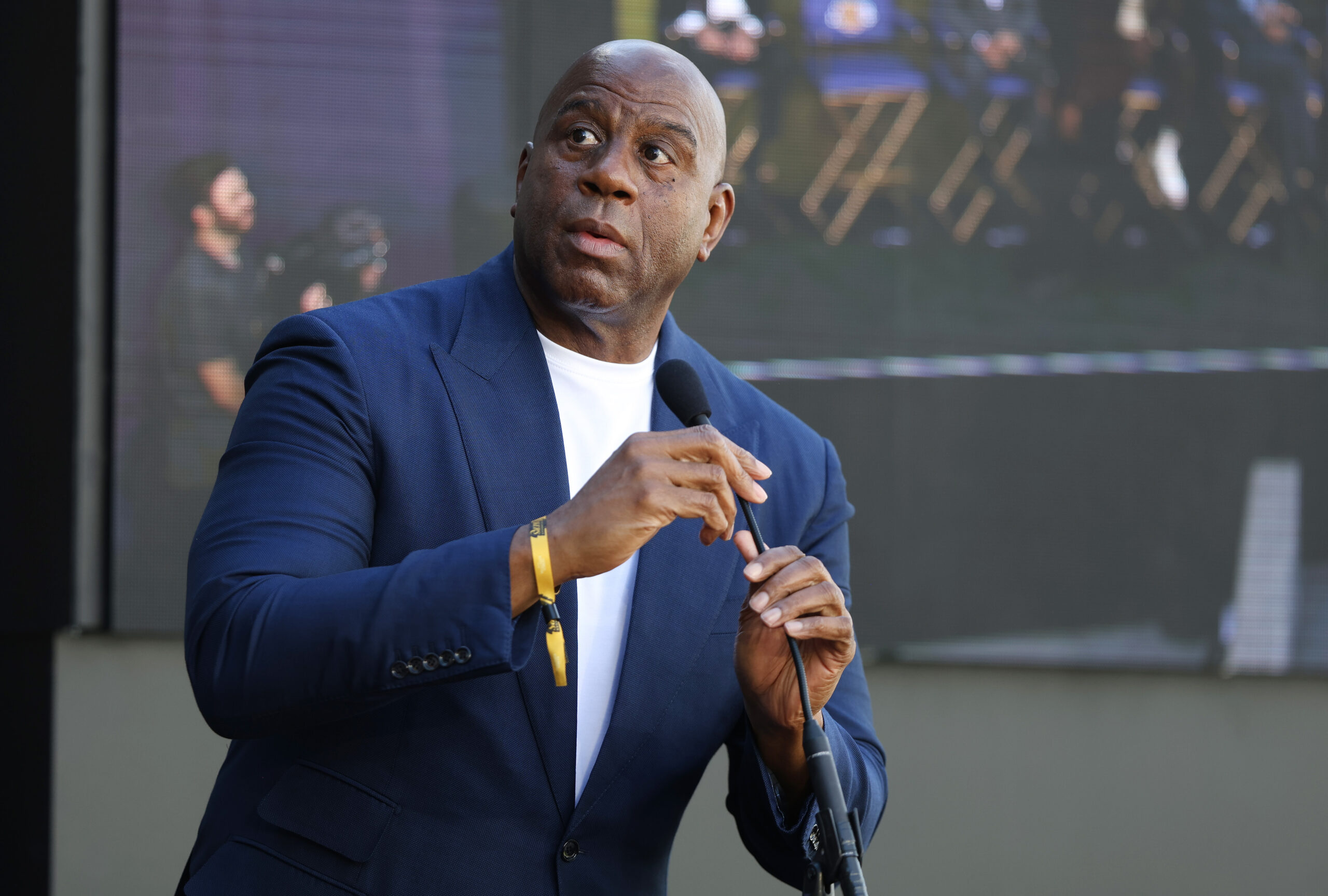
Magic Johnson, who faced Michael Jordan 18 times on the NBA court, including 13 regular-season games and 5 games in the 1991 NBA Finals, recently offered public praise for 23XI Racing’s rise in the 2026 NASCAR season.
The two former NBA players built their rivalry on NBA courts before competing together on the 1992 U.S. Men’s Olympic Basketball Team, known as the “Dream Team,” where the pair were known as both friends and fierce competitors. In fact, Magic Johnson played a central role in recruiting Michael Jordan and Larry Bird to join the 1992 U.S. Olympic squad.
The defining clash between Johnson and Jordan came in the 1991 NBA Finals, a season that was the shift from the Los Angeles Lakers’ “Showtime” run to the rise of the Chicago Bulls. And now, years later, Johnson turned to social media to compliment MJ’s stock car venture.
The presence of Michael Jordan in the garage has not only drawn fresh eyes to NASCAR, but also widened the sport’s reach beyond its base and placed it on platforms fans haven’t seen in years, like ESPN. The network has not held NASCAR broadcast rights since 2014, and since then, its focus has centered on properties under its umbrella, including the NBA, NFL, and WNBA. But now, even without rights, NASCAR headlines tied to MJ and 23XI Racing’s run have found space throughout their coverage.
MJ’s 23XI Racing team has opened the season with three straight wins with their No. 45 driver, Tyler Reddick. The run began with a win in the Daytona 500, the organization’s first success in that event since its launch in 2021.
Reddick followed with a win at Atlanta and then completed the sweep at the Circuit of the Americas, becoming the first driver in Cup Series history to win the opening three races of a season.
The accomplishment also placed the 23XI Racing team alongside one of the most successful organizations in NASCAR, Petty Enterprises, which last won the first three Cup races of a season in 1963.
When Reddick’s Toyota crossed the start/finish line at COTA, MJ was seen celebrating on pit road with the crew. In post-race remarks, Jordan acknowledged the pressure Reddick carried entering COTA with a chance to sweep the opening stretch. He praised the No. 45 crew and crew chief Billy Scott, and credited co-owner Denny Hamlin as the “mastermind” behind the roster build, citing Hamlin’s role in identifying Reddick’s talent and bringing him into the team.