

How Much Fuel Does a NASCAR Stock Car Burn During a Race?

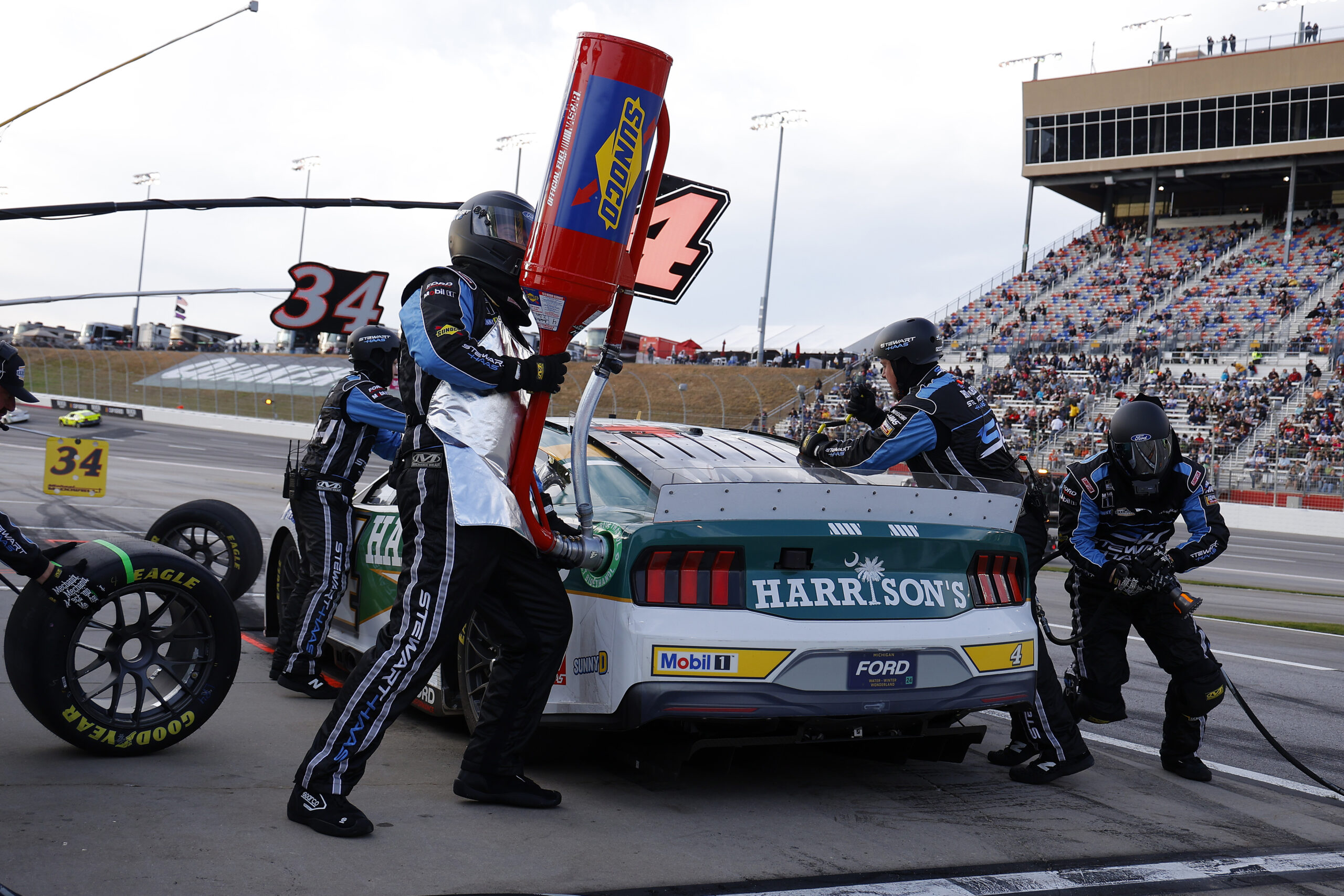
HAMPTON, GEORGIA - FEBRUARY 25: Josh Berry, driver of the #4 Harrison's Ford, pits during the NASCAR Cup Series Ambetter Health 400 at Atlanta Motor Speedway on February 25, 2024 in Hampton, Georgia. (Photo by Todd Kirkland/Getty Images)

What’s Happening?

Fuel mileage is a critical part of any NASCAR race, and saving every last ounce of fuel has often made the difference between winning and losing races. While fuel mileage races are not as common as they once were, fuel is still a necessity to make Cup Series cars go. The question we are here to answer today is, how much fuel does a NASCAR Cup Series car burn during a race?

  • NASCAR Cup Series cars are not equipped with fuel gauges like everyday passenger cars are. Cup Series teams determine fuel mileage based on math, experience, and instinct.
  • We will use math to determine the fuel mileage of a NASCAR Cup Series car. However, it is important to note that fuel mileage does depend slightly on the track and the speeds cars are running.
  • Fans are always curious about fuel mileage during a NASCAR race. It plays a large role in every team strategy, and gambles on fuel mileage can create drama and intrigue.

Cup Series Car Fuel Mileage

With no fuel gauge in the cars, it’s hard to know exactly how much fuel a Cup Series car burns throughout a race. What we can do is use math to estimate, keyword “estimate”, based on what we do know.

According to KLAS 8 Las Vegas, a Cup Series Next-Gen car uses an 18-gallon fuel tank. We can use that combined with the official fuel window from different NASCAR track types to roughly estimate how much fuel it would take to get through an entire NASCAR Cup Series race. Here are those figures in the table below.

TrackRace DistanceFuel Window
(According to Race Broadcasts)
Amount of Fuel Burned
Daytona (Superspeedway)200 Laps (500 Miles)40-44 Laps (100-110 Miles)~82-90 Gallons
Las Vegas (Intermediate)267 Laps (400 Miles)60-64 Laps (90-96 Miles)~75-80 Gallons
Phoenix (Short Intermediate)312 Laps (312 Miles)92-98 Laps (92-98 Miles)~57-61 Gallons
Martinsville (Short Track)500 Laps (263 Miles)150-160 Laps (79-84 Miles)~56-60 Gallons

It’s worth noting that these are very rough estimates, but they give an idea of how much fuel a car consumes.

We see here that fuel consumption depends largely on the length of the race in terms of miles. A 500 laps race at Martinsville sounds long, but, it’s also a short track which means the cars cover about half the distance they do in the Daytona 500 for example. We see that the shorter (In terms of distance) races on small tracks burn less fuel than the longer races on big tracks do.

However, this is under the assumption that the cars are running full speed from start to finish, which, we all know is not true. Other factors come into play that do affect fuel mileage.

Other Factors

The three factors that play a major role in fuel mileage are drivers saving fuel, drafting, and caution flags. We can’t measure exactly how much fuel a driver tries to save if they have to, so, we won’t look at that. We can estimate how much the other factors impact fuel consumption.

Drafting

This is most prevalent on superspeedways like Daytona, Talladega, and Atlanta, but, it also exists on other tracks as well. Drafting allows drivers to maintain speed without mashing the foot to the floor. If you watch telemetry data at superspeedways, drivers in the middle of the pack are often at half throttle because the draft keeps them in the pack.

The less throttle you use, the fewer RPMs the engine turns, which means it consumes less fuel. We saw this in the Daytona 500 where the field was puttering around well off the pace early in the race to save fuel. This would allow them to pit later, meaning they had to take less fuel, meaning a shorter pit stop. Although, drivers are not keen on fuel saving.

Regardless, this does make an impact on how much fuel a car consumes. It’s hard to know exactly how much, but, we do know that drivers were able to go more than 50 laps on fuel during the first stage of the 2024 Daytona 500. However, there is another factor that played into that as well, caution flag laps.

Cautions

The cars run slower under caution flag conditions, so, they naturally burn less fuel. How much less? Well, a general rule of thumb from racing in the past is that 2 caution flag laps equals about 1 green flag lap of fuel consumption, meaning drivers consume about half as much fuel under caution. If we take that logic, here is how much fuel NASCAR Cup Series cars roughly used including caution flag laps.

TrackRace DistanceCaution LapsFuel Window
(According to Race Broadcasts)
Amount of Fuel Burned
Daytona (Superspeedway)200 Laps (500 Miles)20 Laps (50 Miles)40-44 Laps (100-110 Miles)~78-86 Gallons
Las Vegas (Intermediate)267 Laps (400 Miles)35 Laps (52.5 Miles)60-64 Laps (90-96 Miles)~70-75 Gallons
Phoenix (Short Intermediate)312 Laps (312 Miles)40 Laps (40 Miles)92-98 Laps (92-98 Miles)~53-57 Gallons
Martinsville (Short Track)500 Laps (263 Miles)38 Laps (~20 Miles) *Before OT150-160 Laps (79-84 Miles)~54-58 Gallons

Again, these are very rough calculations, but, they again give an idea about how much fuel was consumed by these cars during a race.

Caution flags can extend the fuel window of the cars quite far if there are enough yellow flags during a race. We see how the Phoenix race covered twice the amount of distance under caution as the Martinsville race (Before OT started), and that caused drivers to potentially use less fuel at Phoenix.

So, How Much Fuel Do They Consume?

The ultimate answer is that it depends on the race tracks. If cars are going over a shorter distance at a slower pace, the cars naturally burn less fuel. However, it’s impossible to know exact figures since we do not know exactly how much fuel the cars consume under caution, during the race when saving fuel, or in the draft of the car in front.

However, a safe ballpark estimate based on our calculations would roughly be between 50-60 gallons for the shorter tracks, 70-80 gallons for intermediates, and 80-90 gallons for superspeedways.

Share this:

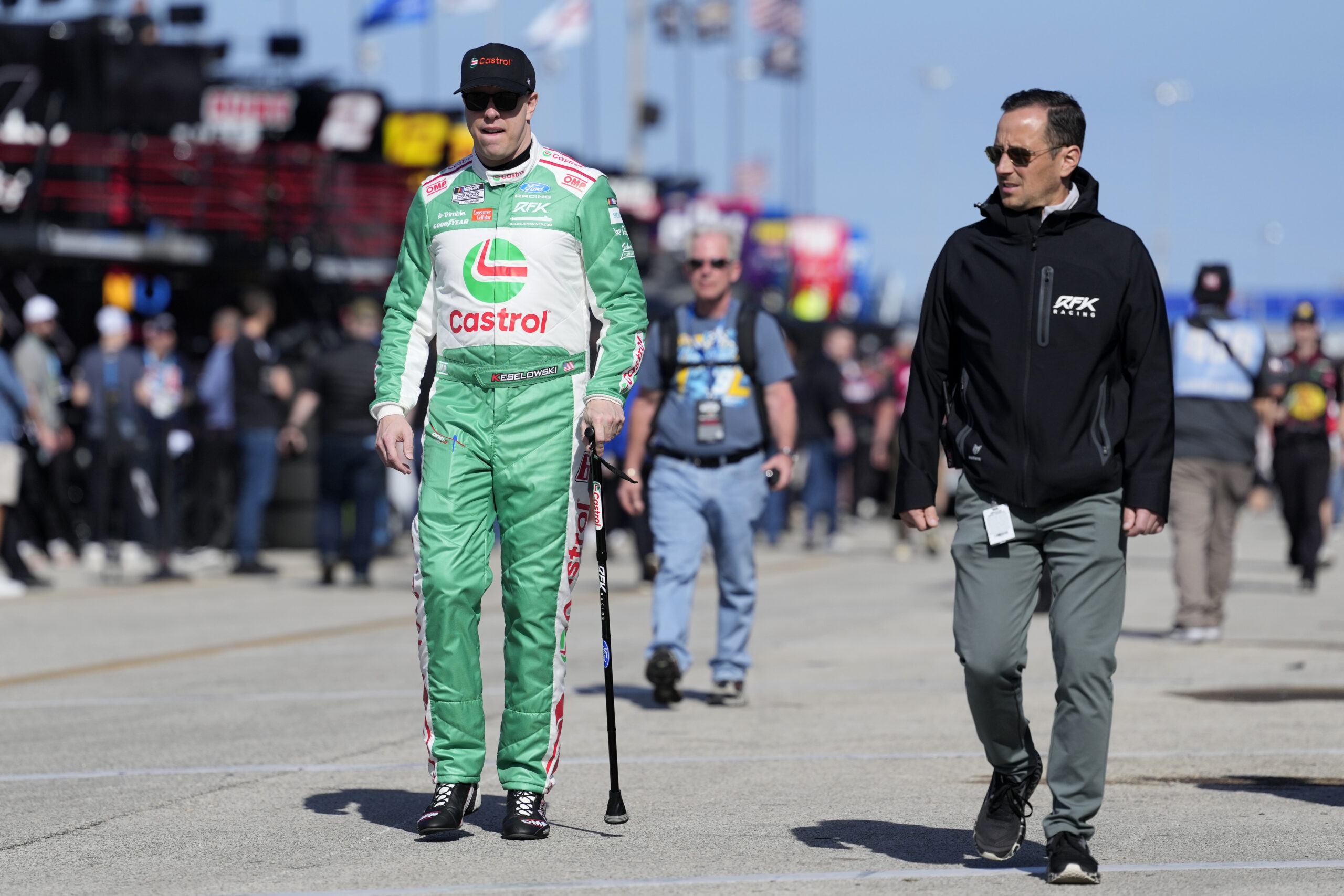
DAYTONA BEACH, FLORIDA - FEBRUARY 14: Brad Keselowski, driver of the #6 Castrol Ford, walks with a cane in the garage area during practice for the NASCAR Cup Series Daytona 500 at Daytona International Speedway on February 14, 2026 in Daytona Beach, Florida.

Will Brad Keselowski Miss Out on COTA?

What’s Happening?

Brad Keselowski showed he can still wheel it at Daytona, establishing that even a broken femur, one of the worst hits an athlete can take, could not keep him on the sidelines. In fact, on the final lap, he was still in the hunt, attempting to go three-wide with Elliott before Riley Herbst’s move up the track wrecked both his plans and his car, leaving him with a P5 finish. Now, while he is ready for the Atlanta race on Sunday, his planned COTA run on March 1, 2026, hangs in the air, as he is still recovering from his injury, and a road course race requires more strength and leg work than oval races. Hence, Joey Hand is lined up as the relief driver for the No. 6 Ford.

Speaking in the Atlanta media scrum, Keselowski said he is glad to have Hand in the wings, noting he serves as Ford’s reserve for road courses. Hand has raced and won across the globe, even finishing P4 in the Chicago Street race back in 2024 for RFK Racing. That’s why Keselowski called him “a great guy,” adding that “he’s been very helpful.”

Still, with Hand being smaller in build, fitting him into the RFK Racing co-owner’s seat could pose a risk. When Fox Sports reporter Bob Pockrass floated the idea of Keselowski starting the race and then handing over mid-way, the 2012 Cup champ left the door open. “No, it is possible. So we kind of run through all that. and we’ve got a lot of good options with it,” he said, keeping all cards on the table.

The team has already been laying the groundwork, and Keselowski sounds like someone bracing for a game-time call on whether he can go the distance. He admitted, “I’m going to just see how I feel. I’ve got some more stuff, tests next week to get through with medical tests and physical tests, and I’ll probably just see how those go and make a decision on what’s best for the team,” after navigating the G-forces at Atlanta and eyeing more medical checkups.

That leaves the door ajar for a split-duty play, where Keselowski could start the race to bank points and then hand over the wheel to a stand-in, most likely Hand, if Keselowski’s leg refuses to cooperate.

Background

During the off-season, Keselowski broke his right femur in an accident while he was on a trip with his family, out skiing, in December 2025. He was cleared for the Daytona 500, but road courses like COTA demand more from the body. Even during Daytona Speedweeks, he hinted that while he could handle straight-line racing, a full road-course grind might be a different beast. Ahead of the season opener, the RFK Racing owner was seen moving through the garage with a cane, indicating that the road back still has miles left.
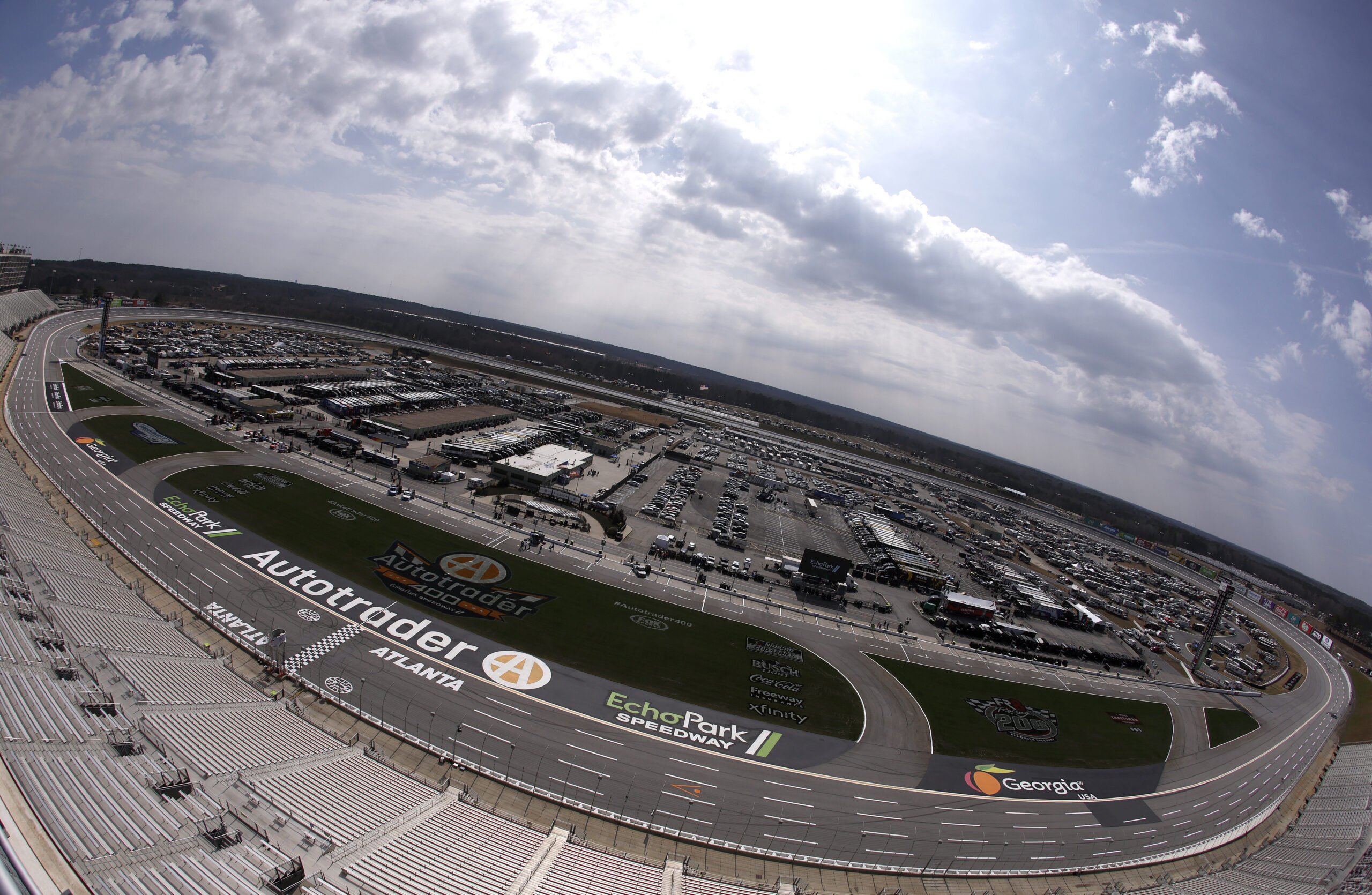
HAMPTON, GEORGIA - FEBRUARY 20: A general view of the Echo Park Speedway prior to qualifying for the NASCAR Craftsman Truck Series Fr8 Racing 208 on February 20, 2026 in Hampton, Georgia. (

With Cup Qualifying Canceled, Here’s Your Starting Lineup

What’s Happening?

After Daytona’s chaotic run at the superspeedway, packed with fuel-saving, pileups, and a last-lap crash before Tyler Reddick drove it home to hand 23XI Racing, Denny Hamlin, and Michael Jordan their first Daytona 500 win, the 38-driver pack is now ready to go to the next mini superspeedway stop, EchoPark Speedway. But rain and lightning have already pulled the plug on Cup Series qualifying on Saturday morning, so the metric will set the grid. Here’s where the field will roll off for the Autotrader 400.

The formula previously relied on four criteria: the car’s rank in owner standings (35%), the driver’s finish in the last race (25%), the car’s finish in the last race (25%), and the driver’s fastest-lap rank (15%). For full-time pairings, the two 25% chunks often merged into one 50% slice. But for 2026, NASCAR trimmed the math. Now it will all come down to the car’s place in owner standings (30%) and the entry’s finish in the last race (70%).

By that yardstick, Reddick seizes pole for Sunday and the first pit box of the season’s second round. If 23XI keeps him in the hunt through the draft at Atlanta, he could go back-to-back and start the year two for two.

Team Penske will get another chance at a superspeedway-style track. Joey Logano, who finished the Daytona race last weekend in P3 and won his Duel, will line up alongside Reddick on the front row. The former Atlanta resident will return to the ground he knows well, and if the calendar keeps its rhythm, his even-year run could start early.

Ricky Stenhouse Jr., runner-up in the 500, will start from the third.

On his outside will sit hometown hope Chase Elliott, who came within a turn of stealing Daytona before Herbst tagged the rear of the No. 9 and sent it into the wall, leaving him fourth. But given that he still showed he can slice through traffic on a drafting track and be there when it counts, it might pay off very well at Atlanta. He left Florida without the trophy but with points in hand, two wins on the track, and an average finish of 11.4. He might just be the fan-favorite in Atlanta.

Rounding out the top five is Brad Keselowski, who opened the points season in P5. It is not a bad way to kick off the year, and the former EchoPark winner and last summer’s runner-up understands how to stay in the fight here.

Zane Smith, Chris Buescher, Riley Herbst, Bubba Wallace, and Josh Berry fill out the top ten on the grid.

Who’s out?

Casey Mears in the No. 66 Garage 66 Ford will sit this one out after the team pulled the entry due to damage from Daytona Speedweeks.

Meanwhile, open teams JJ Yeley in the No. 44 for NY Racing and BJ McLeod in the No. 78 for Live Fast Motorsports raced their way in. However, the Austin Dillon and BJ McLeod entries failed inspection twice, leading to the ejection of their car chiefs and the loss of pit stall selection.
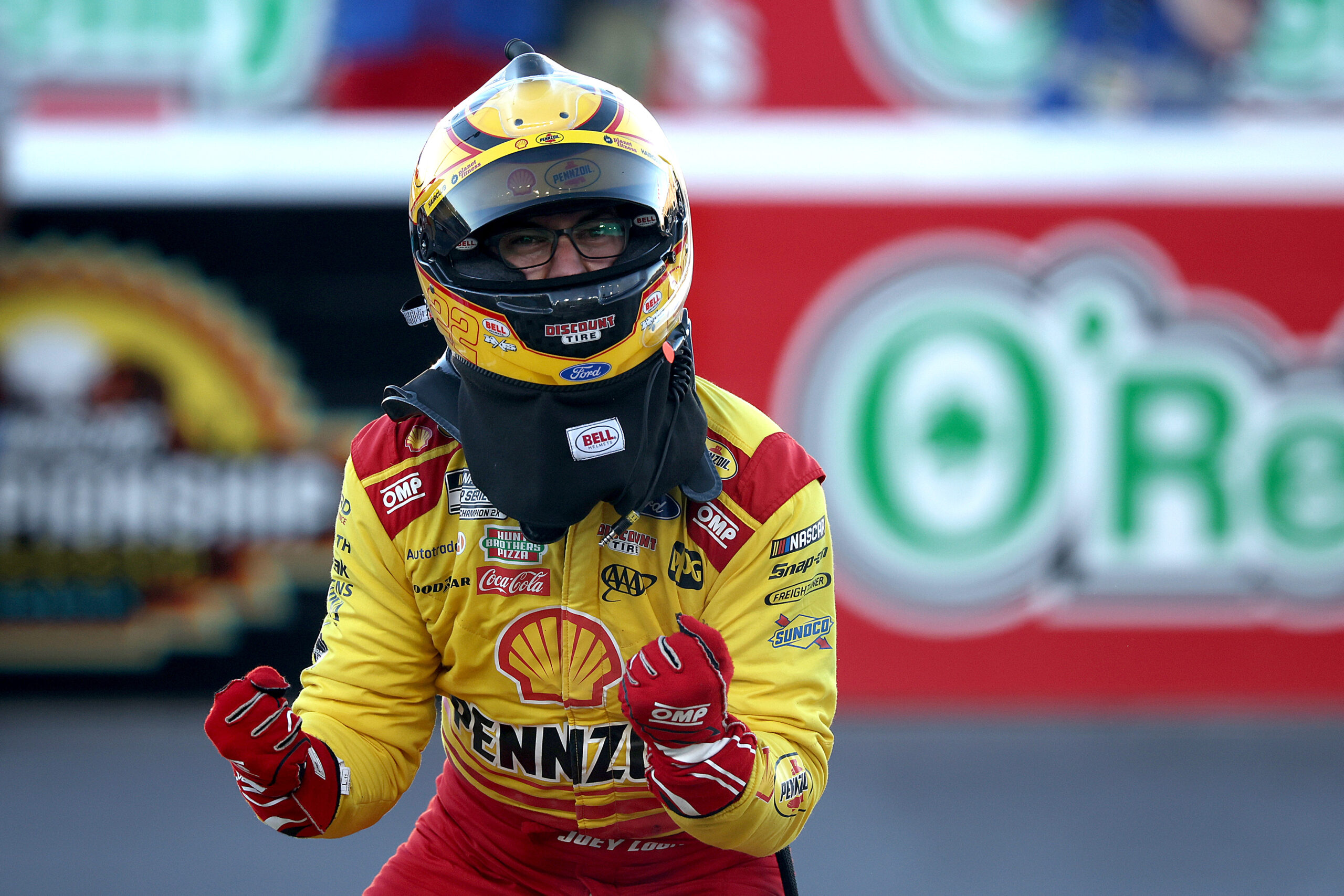
Joey Logano Could Break Richard Petty’s 47-Year-Old Record

What’s Happening?

Joey Logano could break Richard Petty’s 47-year-old record for the most consecutive drafting-track races led this weekend at EchoPark Speedway. After leading laps in the Daytona 500, Logano has now led in 19 straight drafting-track races, dating back to 2023, tying a mark The King set from 1974 to 1979.

  • If Logano leads even a single lap in Sunday’s NASCAR Cup Series race, he would set a new all-time record with 20 consecutive drafting-track races led.
  • Richard Petty established the original streak across events at Daytona International Speedway and Talladega Superspeedway, the only true drafting tracks of that era.
  • Since its 2022 reconfiguration, EchoPark Speedway has raced like a superspeedway, placing it in the same statistical category as Daytona and Talladega.
  • Joey Logano has led laps in 35 of his last 37 drafting-track starts dating back to 2019, with the only exceptions being Atlanta (now EchoPark) in July 2022 and Talladega in October 2022.
  • Since joining Team Penske in 2013, Joey Logano has led in 45 of the 59 drafting-track races disputed since the 2013 Daytona 500.

Logano now has a clear opportunity to move past Petty and claim sole possession of one of NASCAR’s longest-standing superspeedway records, and considering his and Team Penske’s history of dominance in this style of tracks, it seems that he is poised to break it.