
Has NASCAR Overcomplicated Qualifying?

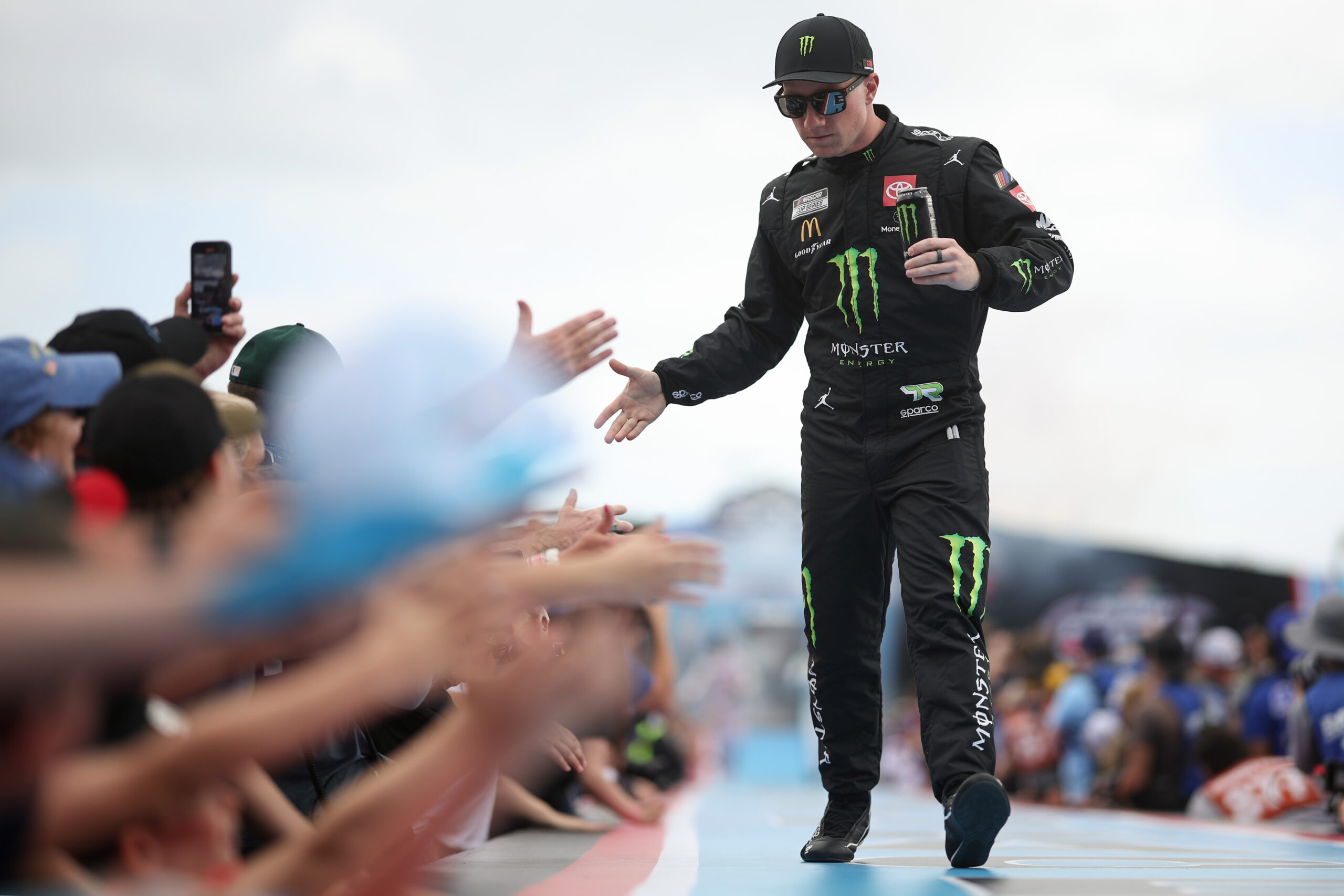
DAYTONA BEACH, FLORIDA - FEBRUARY 19: Tyler Reddick, driver of the #45 Monster Energy Toyota, greets fans onstage during driver intros prior to the NASCAR Cup Series 65th Annual Daytona 500 at Daytona International Speedway on February 19, 2023 in Daytona Beach, Florida. (Photo by James Gilbert/Getty Images)

What’s Happening?

NASCAR has made a trend of overcomplicating its most straightforward systems over the past 25 years, whether changing the points system to the Chase in 2004, Changing the Chase again, or Changing the Chase to Playoffs.

Even something as easy as qualifying has become a weekly topic of the online NASCAR community. A system once thought to remain untouched has been modified, returned to its original system, cast aside, brought back, and changed once again. Now, the current system begs the question again: Is qualifying too complicated?

What once was

For years, qualifying was a highlight of every race weekend. The original system took a lot of work to follow. It featured cars going all out for two laps at each track, then ordered by fastest lap. Got it? I’m glad you could hang in there for the complexities of that system.

The speed, intensity, and occasional edge-of-your-seat moments made for an almost bonus race every race weekend. Many memories were made with this system. However, as with most things in the 2010s, NASCAR would change it.

In 2014, the first year of the Playoffs, NASCAR introduced the “knockout” group qualifying system. The system saw three-timed rounds to set the field. The first 15-minute round featured all cars, the second a 10-minute round featuring the 24 fastest cars, and the third round was a five-minute finale with the 12 fastest cars running for the poll.

This system would continue to evolve until the infamous 2019 Auto Club race, where the final round didn’t happen as drivers chose strategy over speed, and no one could post a lap time.

It’s not that this system didn’t require strategy, be it drafting, tire usage, dirty air, or overall track conditions. However, teams, always wanting to win at whatever they were doing, over-strategized until NASCAR stepped in and returned to the old format at Dover.

This didn’t last long, as in 2020, the COVID-19 pandemic led to the use of a metric for running order, which would return for the majority of the 2021 season.

For 2022, NASCAR shook it up but maintained the same principles. There were two groups, Group A and Group B. They would run a single lap or for 15 minutes on road courses. The top five from each would advance to a final round for the poll. Superspeedways had a similar format but no groups, and the top ten would advance to a final round.

This stuck around for 2023, with tweaks to how the qualifying order was decided. But like a mid-race wedge adjustment, more changes would be made for 2024.

What now is

The 2024 qualifying process is simple, in a NASCAR way. But once again, this sport once had Mario Lopez explain in simple terms how its champion was crowned.

For those who watched the previous two years, it’s similar to that format with one very distinct change. That change is that a driver who has a faster time in one group can systematically start a race behind a driver who is slower than them from another group.

Fundamentally, it is the same, except for how drivers qualifying outside the top ten would line up. Those in Group A would be sorted on the outside row, and Group B would be sorted to the inside row, with the fastest five from each group moving to the final round of qualifying.

This was done to help ensure fairness with the ever-changing track conditions during practice and qualifying. However, this created initial confusion when looking at the scoring data and seeing that the driver in 13th could be slower than the driver in 16th.

As standard, the top five from each group would advance to the final round and go all out for one lap to set the top ten starters. This was until the hounds of unfairness howled again.

This led to a few weeks ago, when NASCAR decided to make the final round essentially a smaller version of the normal round, with the top five from Group A running for the outside row of the top ten and the top five from Group B running for the inside row.

However, it can’t be that easy, as the front row, starting positions one and two, are the fastest two of groups A and B, with the fastest of those two getting the poll.

As you would expect, this would lead to more fans pointing out that the driver in fourth could literally be slower than the driver starting fifth.

Read also:

How do the drivers, fans and the online community feel?

NASCAR fans and online commentators have responded in the usual manner.

The system’s backlash has been very similar to the backlash found with the 2014 system. While some like what NASCAR has cooked up from a competition standpoint, some still disagree with the complexity of the system as a whole.

This came to a head last week at Indianapolis when Chase Elliott laid down a 49.504 while Denny Hamlin’s lap was 49.589. In this system, Hamlin would start second, Elliott third.

This happened because Tyler Reddick ran a 49.469, faster than both. But Reddick was also in group B with Elliott. With the system in place, Elliott being slower than Reddick and from the same group, Elliott would not be on the front row; instead, Hamlin, from Group A, would be on the front row as the fastest of the Group A qualifiers.  

There have been many complaints about NBC and Fox Sports’ presentation of qualifying, specifically in the department of graphics. The two sides have had to work furiously this season to keep up.

NBC has had to step up tremendously, especially with the recent changes to the final round of qualifying. The network created a live scoring pylon that is as easy to understand as possible. This pylon shows what groups will be in what row and how the front row lines up.

Unfortunately, the NASCAR app has the potential to confuse those who are far from a TV. Even then, the lack of a voice like Mike Joy or Rick Allen to explain the convoluted system makes it more difficult for fans checking in to see their favorite driver starting behind a slower car.

The system still may not make sense for the drivers. In a prerace interview before the race at Iowa, Michael McDowell was unsure whether NASCAR would align the groups by row. After this interview, Jeff Burton quickly reminded fans how the system works and why the system was installed.

Conclusion

While NASCAR finds the right balance of simplicity, fairness and excitement, fans will always continue to have ideas on what is best for the sport. Be that the points system, the schedule, and, yes, how the cars line up on Sunday. For now, NASCAR fans can rest easy knowing that, at the very least, the fastest car will start in the first spot, well, at least for now.

Share this:

DAYTONA BEACH, FLORIDA - FEBRUARY 12: Ryan Preece, driver of the #60 Kroger/Viva Towels Ford, and Kyle Busch, driver of the #8 zone Jalapeno Lime Chevrolet, race during Duel 1 for the NASCAR Cup Series Daytona 500 at Daytona at Daytona International Speedway on February 12, 2026 in Daytona Beach, Florida. (Photo by Sean Gardner/Getty Images)

The Complete 2026 NASCAR TV Ratings Tracker

What’s Happening?

This year marks the second season of NASCAR’s groundbreaking 2025 media rights deal, and fans are curious to see just how year two will stack up with year one. This article will walk you through the 2026 season race by race, comparing viewership week by week to NASCAR’s 2025 season.

  • The goal of this article is to keep a tally of each race on the 2026 NASCAR Cup Series schedule. Our tracker will also compare head-to-head each week’s race (or closest comparable race) to its 2025 counterpart.
  • This tracker will mostly focus on how NASCAR fared week to week, regardless of schedule changes, such as Watkins Glen, which shifts from the fall in 2025 to 2026.
  • To understand how a race stacked up against itself from the prior season, turn to our race-by-race list to see the totals of compared weeks. Look below to the season as a whole section, which only counts races up to a specific week.
  • Throughout this tracker, alongside breakdowns by race type, broadcast availability, and Chase races, there will be notes about any potential delays or changes to the broadcast network or the race weekend.
  • For tracks like Chicagoland, which replaces the Chicago Street Circuit, their race will be compared head-to-head with last season’s most comparable race. In Chicagoland’s case, that would be the 2025 Chicago Street Race.

The 2026 Season as a Whole: Through Week 3

All Races (3 Total in 2026): Includes Ratings for The Clash, Daytona Duels, and the All-Star Race, along with the 36-race regular schedule

  • 2026 (3 Races) Total/Average Viewership to Date: 11.673 Million/3.891 Million Per Race
  • 2025 (3 Races) Total Viewership to Date: 11.674 Million/3891 Million Per Race
  • Total Viewership Difference (2026 vs 2025): -0.001 Million (-0.008%)
  • Average Viewership Difference (2026 vs 2025): -0.0003 Million (−0.007%)

Network Races to Date (2 Total in 2026): Points and Exhibition/Qualifying Races

  • 2026 (2 Races) Total/Average Viewership to Date: 9.838 Million/4.919 Million Per Race
  • 2025 (2 Races) Total Viewership to Date: 9.838 Million/4.919 Million Per Race
  • Total Viewership Difference (2026 vs 2025): -0.000 Million (0%)
  • Average Viewership Difference (2026 vs 2025): -0.000 Million (0%)

Exhibition/Qualifying Races (2 Total in 2026): ONLY Includes Ratings for The Clash, Daytona Duels, and the All-Star Race

  • 2026 (2 Races) Total/Average Viewership to Date: 4.184 Million/2.092 Million Per Race
  • 2025 (2 Races) Total Viewership to Date: 4.913 Million/2.457 Million Per Race
  • Total Viewership Difference (2026 vs 2025): -0.729 Million (-14.838%)
  • Average Viewership Difference (2026 vs 2025): -0.365 Million (−14.855%)

Daytona 500 on FOX via Adam Stern

  • 2025 Viewership: 6.761 Million Viewers*
  • 2026 Viewership: 7.489 Million Viewers*
  • Viewership Comparison (2025 vs 2026): +0.728 Million Viewers (+10.767%)

*The 2025 Daytona 500 was pushed back several hours due to rain, while the 2026 Daytona 500 was pushed up one hour to avoid inclement weather

NASCAR Cup Series 2026 Duels at Daytona on FS1 via Adam Stern

  • 2025 Viewership: 1.867 Million Viewers
  • 2026 Viewership: 1.865 Million Viewers
  • Viewership Comparison (2025 vs 2026):-0.002 Million Viewers (-0.108%)

NASCAR Cup Series 2026 Cook Out Clash on FOX/FS2 via Frontstretch

  • 2025 Viewership: 3.077 Million Viewers
  • 2026 Viewership: 2.349 Million Viewers**
  • Viewership Comparison (2025 vs 2026): -0.728 Million Viewers (-23.659%)

**2026 Clash was pushed from Sunday to Wednesday due to snow, and moved to FS2 due to overrunning time on FOX.

This tracker will be updated throughout the season. Make sure to check back in for the latest!

Scene Vault Launches “Firestorm,” a Documentary Series About NASCAR’s Darkest Era

What’s Happening?

Scene Vault Podcast’s creator Rick Houston is launching a new documentary series that will take a deep look at one of the most painful and transformative periods in NASCAR history. Firestorm, produced by The Scene Vault Podcast, chronicles the 17 month stretch from May 2000 to October 2001 when 5 drivers lost their lives in on-track accidents, marking the era that permanently changed the sport’s approach to safety.

The 10-episode series revisits the tragedies involving Adam Petty, Kenny Irwin Jr, Tony Roper, Dale Earnhardt, and Blaise Alexander. Rather than focusing solely on the crashes themselves, Firestorm analyzes the human stories behind the drivers, the emotional toll on the garage, and the sweeping changes that followed.

Listeners can access the series through The Scene Vault’s podcast platforms, where episodes are released as part of its long-running motorsports history programming. The show is available on major podcast services, as well as through videos on YouTube.

The first episode of Firestorm is already up on YouTube, and you can check out by tapping below

Topics covered in the series include:

  • In-depth profiles of the 5 drivers whose deaths defined the era
  • The technical failures and safety shortcomings present at the time
  • Behind-the-scenes debates over measures such as SAFER barriers (“soft walls”)
  • Resistance to head-and-neck restraint systems like the HANS device
  • How the tragedies accelerated sweeping safety reforms across NASCAR

Where to Listen/Watch

  • Scene Vault on Spotify
  • Scene Vault on YouTube
  • You can also listen on Audible, Amazon Music, iHeartRadio, Apple Podcasts, and other services by simply searching for “The Scene Vault Podcast”

By combining archival research, firsthand accounts, and technical analysis, Firestorm aims to document how grief and controversy ultimately led to one of the most significant safety revolutions in motorsports history, providing context as for why modern NASCAR safety standards exist and the heavy price paid to achieve them.

Subscribe to The Scene Vault and hit the bell to never miss an episode.

More Drafting On-Deck! | Analyzing Elliott, Blaney, Hocevar and More Ahead of Atlanta

From the chaos of the Daytona 500 to what might be the best race of the season, EchoPark/Atlanta Motor Speedway is up next. Tyler Reddick comes in with momentum after his Daytona triumph, but Atlanta’s drafting style can flip the script in a heartbeat. The data says one thing, history says another, and several heavy hitters are already looking for redemption. Eric Estepp and Ryan Stevens from WinTheRace.info break down and preview the race weekend at EchoPark Speedway.

  • Can Reddick pull off the rare Daytona, Atlanta double and chase a feat not seen since Matt Kenseth did it in 2009?
  • Is Hendrick Motorsports as dominant as its speed suggests, or are the finishes hiding a bigger issue?
  • Should we trust Ryan Blaney and Team Penske after a surprisingly quiet Daytona?
  • Which sleeper, like Zane Smith or Carson Hocevar, could shock the field late?

There are massive storylines bubbling under the surface. Hendrick has owned Atlanta in the Next Gen era, but recent crashes and bad luck tell a different story. Penske’s numbers remain elite here, even if Speedweeks raised eyebrows. And a handful of aggressive young drivers are hovering right on the edge of a breakthrough. Atlanta rarely disappoints, and with desperation already creeping in after just one race, Sunday could get wild in a hurry. If Daytona was about survival, this one might be about execution.

Watch Also