What’s Different about NASCAR’s New Chase Compared to Past Versions?

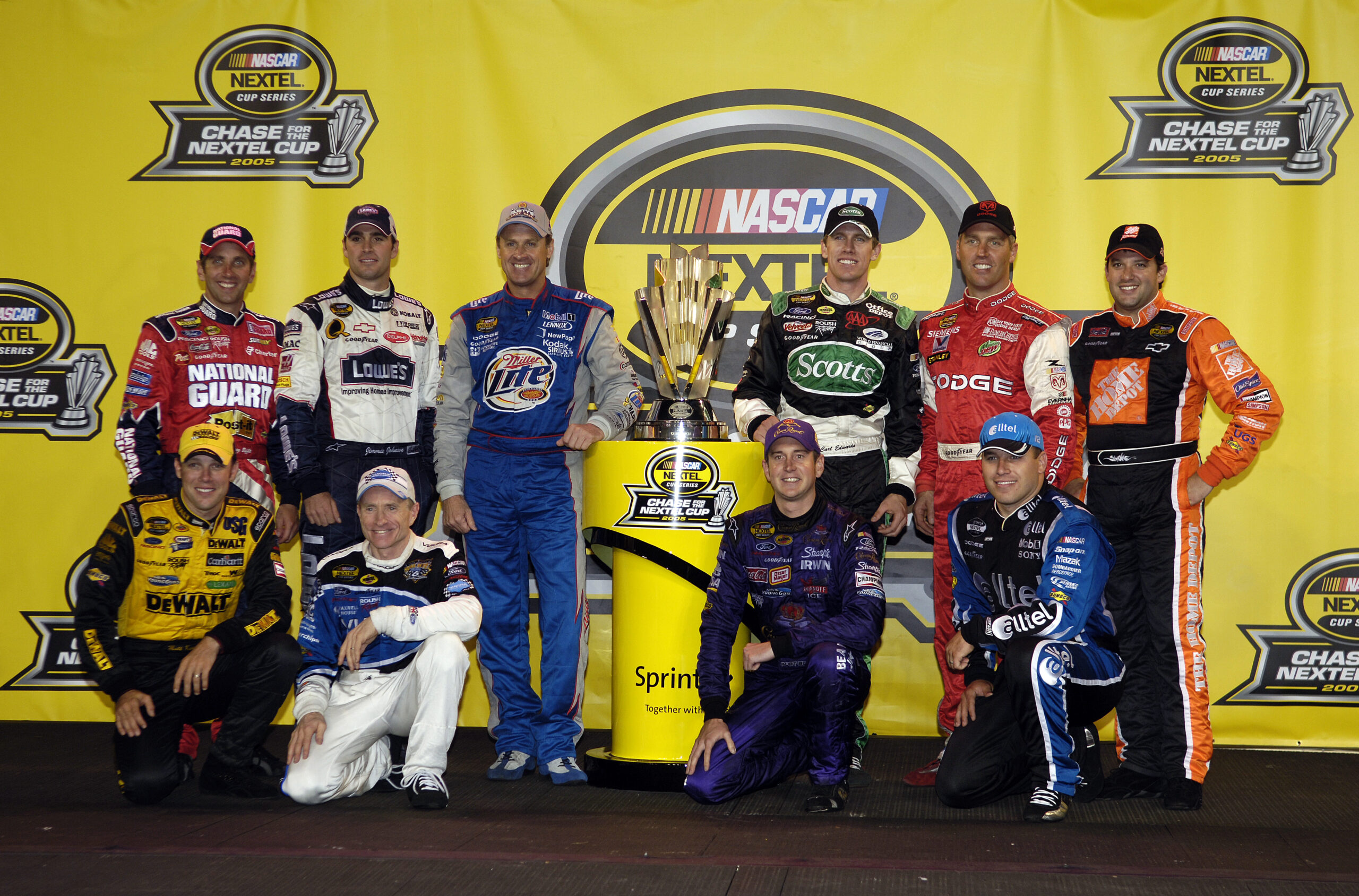
RICHMOND, VA - SEPTEMBER 10: The top ten drivers in the Chase for the NASCAR Nextel Cup Championship pose after the NASCAR Nextel Cup Series Chevy Rock & Roll 400 on September 10, 2005 at the Richmond International Raceway in Richmond, Virginia. Pictured are (back row L-R) Greg Biffle, Jimmie Johnson, Rusty Wallace, Carl Edwards, Jeremy Mayfield, Tony Stewart, (front row L-R) Matt Kenseth, Mark Martin, Kurt Busch, and Ryan Newman. (Photo by Rusty Jarrett/Getty Images)
Photo by Rusty Jarrett/Getty Images

What’s Happening?

In 2026, NASCAR is returning to a simplified, “Chase” format to crown its three NASCAR National Series Champions. The Chase was first introduced in 2004 and has not been used in its traditional form since 2013. So, how does the new Chase stack up against previous iterations of its ancestors?

The New Format

NASCAR’s new Chase Format is familiar to past iterations, though there are some key differences.

First, the system will also be used in the two lower NASCAR National Series, the NASCAR Craftsman Truck and NASCAR O’Reilly Auto Parts Series, with the Trucks having 10 drivers/seven races, the OAP Series having 12drivers/nine races.

Like every past NASCAR Playoff format, the Cup Series Chase will be a total of ten races, but expanded to 16 drivers from past iterations of 10, 12, and technically 13 (if you know you know).

Points Awarded Per Race in the 2026 NASCAR Chase

Points will be different from past years, but extremely different from those used under past Chase iterations, with the winner getting 55 points, and the rest of the field decreasing by one point all the way to 36th place.

  • 1st: 55 points
  • 2nd: 35 points
  • 3rd: 34 points
  • 4th: 33 points
  • 5th: 32 points
  • 6th: 31 points
  • 7th: 30 points
  • 8th: 29 points
  • 9th: 28 points
  • 10th: 27 points
  • 11th: 26 points
  • 12th: 25 points
  • 13th: 24 points
  • 14th: 23 points
  • 15th: 22 points
  • 16th: 21 points
  • 17th: 20 points
  • 18th: 19 points
  • 19th: 18 points
  • 20th: 17 points
  • 21st: 16 points
  • 22nd: 15 points
  • 23rd: 14 points
  • 24th: 13 points
  • 25th: 12 points
  • 26th: 11 points
  • 27th: 10 points
  • 28th: 9 points
  • 29th: 8 points
  • 30th: 7 points
  • 31st: 6 points
  • 32nd: 5 points
  • 33rd: 4 points
  • 34th: 3 points
  • 35th: 2 points
  • 36th: 1 point
  • 37th: 1 point
  • 38th: 1 point
  • 39th: 1 point
  • 40th: 1 point

Points Reset for the 2026 NASCAR Chase

The reset in 2026 will give the points leader at the start of the Chase a 25-point advantage, then dropping in increments of ten points from second to third, and then five from fourth to 16th.

  • 1st: 2,100 points
  • 2nd: 2,075 points
  • 3rd: 2,065 points
  • 4th: 2,060 points
  • 5th: 2,055 points
  • 6th: 2,050 points
  • 7th: 2,045 points
  • 8th: 2,040 points
  • 9th: 2,035 points
  • 10th: 2,030 points*
  • 11th: 2,025 points
  • 12th: 2,020 points**
  • 13th: 2,015 points
  • 14th: 2,010 points
  • 15th: 2,005 points
  • 16th: 2,000 points

* – The NASCAR Craftsman Truck Series Stops at Ten Drivers

** – The NASCAR O’Reilly Auto Parts Series Stops at 12 Drivers

Variables for 2026

In the new 2026 NASCAR Chase system, there are two overall variables compared to past versions.

First is stage points, which are awarded after in-race stages to the top-ten finishers, decreasing by 1 point after the stage winner receives ten points. Second is the Xfinity Fastest Lap award, which awards the driver with the fastest in-race lap one bonus point.

This means the maximum number of points per race in 2026 is 76.

The Original Chase

NASCAR’s first Chase system was introduced for the 2004 season for only the NASCAR Cup Series. The original system was simple, with no automatic bids, one reset, ten drivers, and ten races.

Points Awarded Per Race in the 2004-2006 NASCAR Chase

The points awarded per race were the same as those used prior to the Chase’s introduction in the Latford, or Winston Cup, points system. Though there was one key change, as winners in 2004 received 180 points, as opposed to 2003’s 175 points.

  • 1st: 180 points
  • 2nd: 170 points
  • 3rd: 165 points
  • 4th: 160 points
  • 5th: 155 points
  • 6th: 150 points
  • 7th: 146 points
  • 8th: 142 points
  • 9th: 138 points
  • 10th: 134 points
  • 11th: 130 points
  • 12th: 127 points
  • 13th: 124 points
  • 14th: 121 points
  • 15th: 118 points
  • 16th: 115 points
  • 17th: 112 points
  • 18th: 109 points
  • 19th: 106 points
  • 20th: 103 points
  • 21st: 100 points
  • 22nd: 97 points
  • 23rd: 94 points
  • 24th: 91 points
  • 25th: 88 points
  • 26th: 85 points
  • 27th: 82 points
  • 28th: 79 points
  • 29th: 76 points
  • 30th: 73 points
  • 31st: 70 points
  • 32nd: 67 points
  • 33rd: 64 points
  • 34th: 61 points
  • 35th: 58 points
  • 36th: 55 points
  • 37th: 52 points
  • 38th: 49 points
  • 39th: 46 points
  • 40th: 43 points
  • 41st: 40 points
  • 42nd: 37 points
  • 43rd: 34 points

Points Reset for the 2004-2006 NASCAR Chase

The 2004-2006 Chase reset is very different from the new Chase, with drivers being separated by five points no matter their position.

  • 1st: 5050 points
  • 2nd: 5045 points
  • 3rd: 5040 points
  • 4th: 5035 points
  • 5th: 5030 points
  • 6th: 5025 points
  • 7th: 5020 points
  • 8th: 5015 points
  • 9th: 5010 points
  • 10th: 5005 points

Variables for 2004-2006

For this time period, the system featured five bonus points for any driver who led a lap during a race, and five additional bonus points to the driver who led the most laps during a race.

This means the maximum number of points per race was 190.

The 2007-2010 Chase

The 2007 to 2010 Chase system was not that different from the one used from 2004 to 2006, but there were two key changes to the system. Starting in 2007, two more drivers were added, taking the Chase field to 12 entries, and the winner would now receive 185 points.

Points Awarded Per Race in the 2007-2010 NASCAR Chase

Below is the revised system for 2007, featuring the 15-point advantage for a race winner.

  • 1st: 185 points
  • 2nd: 170 points
  • 3rd: 165 points
  • 4th: 160 points
  • 5th: 155 points
  • 6th: 150 points
  • 7th: 146 points
  • 8th: 142 points
  • 9th: 138 points
  • 10th: 134 points
  • 11th: 130 points
  • 12th: 127 points
  • 13th: 124 points
  • 14th: 121 points
  • 15th: 118 points
  • 16th: 115 points
  • 17th: 112 points
  • 18th: 109 points
  • 19th: 106 points
  • 20th: 103 points
  • 21st: 100 points
  • 22nd: 97 points
  • 23rd: 94 points
  • 24th: 91 points
  • 25th: 88 points
  • 26th: 85 points
  • 27th: 82 points
  • 28th: 79 points
  • 29th: 76 points
  • 30th: 73 points
  • 31st: 70 points
  • 32nd: 67 points
  • 33rd: 64 points
  • 34th: 61 points
  • 35th: 58 points
  • 36th: 55 points
  • 37th: 52 points
  • 38th: 49 points
  • 39th: 46 points
  • 40th: 43 points
  • 41st: 40 points
  • 42nd: 37 points
  • 43rd: 34 points

Points Reset for the 2007-2010 NASCAR Chase

The 2007-2010 Chase reset was the first to see a major variation; instead of 5050 points, the leader would be reset to 5060, dropping 20 points to second at 5040, and tying fourth and fifth at 5020, sixth through 11th at 5010, with the final driver sitting at 5000 points.

  • 1st: 5060 points
  • 2nd: 5040 points
  • 3rd: 5030 points
  • 4th: 5020 points
  • 4th: 5020 points
  • 6th: 5010 points
  • 6th: 5010 points
  • 6th: 5010 points
  • 6th: 5010 points
  • 6th: 5010 points
  • 6th: 5010 points
  • 12th: 5000 points

Variables for 2007-2010

This version of the Chase still featured five bonus points for any driver who led a lap during a race, and the five additional bonus points to the driver who led the most laps during a race.

This means the maximum number of points per race was 195.

The 2011-2013 Chase

In 2011, NASCAR overhauled not only the Chase but also how many points drivers received each race and who qualified for the playoffs.

These changes included a reset to points, with the field separated by one point, new bonus points for winning a race, and a change to the Chase field, with the final two spots reserved for the sport’s winningest drivers who did not make the Chase on points. In 2011, these drivers were Brad Keselowski and Denny Hamlin.

Overall, this system is viewed as the first step into NASCAR’s eventual elimination playoff format, first used in 2014 (still under the Chase name), as the 2011 system featured automatic bids and a unique way to reset points.

In the final Chase cutoff race for this system, controversy resulted in NASCAR adding Jeff Gordon as the 13th driver in the Chase. This version of the Chase is the most recent, traditional, no-round, no-elimination version of a NASCAR postseason used until the new Chase was introduced this season.

Points Awarded Per Race in the 2011-2013 NASCAR Chase

Below are the points awarded, which started at 43 points to the winner, and dropped in increments of one point, though the winner technically automatically had 46 points, thanks to the three bonus points awarded to them for winning.

  • 1st: 43 points (+3 bonus points for winning)
  • 2nd: 42 points
  • 3rd: 41 points
  • 4th: 40 points
  • 5th: 39 points
  • 6th: 38 points
  • 7th: 37 points
  • 8th: 36 points
  • 9th: 35 points
  • 10th: 34 points
  • 11th: 33 points
  • 12th: 32 points
  • 13th: 31 points
  • 14th: 30 points
  • 15th: 29 points
  • 16th: 28 points
  • 17th: 27 points
  • 18th: 26 points
  • 19th: 25 points
  • 20th: 24 points
  • 21st: 23 points
  • 22nd: 22 points
  • 23rd: 21 points
  • 24th: 20 points
  • 25th: 19 points
  • 26th: 18 points
  • 27th: 17 points
  • 28th: 16 points
  • 29th: 15 points
  • 30th: 14 points
  • 31st: 13 points
  • 32nd: 12 points
  • 33rd: 11 points
  • 34th: 10 points
  • 35th: 9 points
  • 36th: 8 points
  • 37th: 7 points
  • 38th: 6 points
  • 39th: 5 points
  • 40th: 4 points
  • 41st: 3 points
  • 42nd: 2 points
  • 43rd: 1 point

Points Reset for the 2011-2013 NASCAR Chase

The reset of the points system depended on how a driver performed in the regular season. At the start of the Chase, NASCAR would reset all Chase drivers to 2000, and, for each regular season win, they would be awarded three points. The two wild card drivers, who made it in on total wins but not points, were not given these bonus points, ensuring they would be seeds 11 and 12 every season.

For reference, the 2011 field is listed below:

  • 1st: Kyle Busch – 2012 points (Four Wins/12 Bonus Points)
  • 2nd: Kevin Harvick – 2012 points (Four Wins/12 Bonus Points)
  • 3rd: Jeff Gordon – 2009 points (Three Wins/9 Bonus Points)
  • 4th: Matt Kenseth – 2006 points (Two Wins/6 Bonus Points)
  • 5th: Carl Edwards – 2003 points (One Win/1 Bonus Point)
  • 6th: Jimmie Johnson – 2003 points (One Win/1 Bonus Point)
  • 7th: Kurt Busch – 2003 points (One Win/1 Bonus Point)
  • 8th: Ryan Newman – 2003 points (One Win/1 Bonus Point)
  • 9th: Tony Stewart – 2000 points (No Wins in on Points)
  • 10th: Dale Earnhardt, Jr. – 2000 points (No Wins in on Points)
  • 11th: Brad Keselowski – 2000 points (Three Wins/No Bonus Points as Wild Card Driver)
  • 12th: Denny Hamlin – 2000 points (One Win/No Bonus Points as Wild Card Driver)

Variables for 2007-2010

There were many “variables” in this system, though the key ones were the three points for winning a race, and the reduction of the points given to a driver for leading a lap and leading the most laps in a race, which dropped from five points to just one point for each achievement.

This means the maximum number of points per race was 48.

What do you think about this? Let us know your opinion on Discord or X. Don’t forget that you can also follow us on InstagramFacebook, and YouTube.

Share this:

NASCAR Suspends Multiple Cup Series Crew Members After COTA

What’s Happening?

Two NASCAR Cup Series crew members for Ross Chastain’s No. 1 team were suspended following the race at Circuit of the Americas
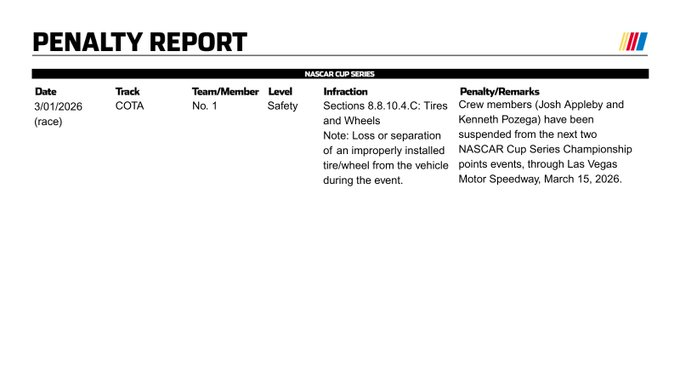
  • The crew members suspended were rear-tire changer Josh Appleby and jackman Kenneth Pozega.
  • They will be sidelined for two weeks, missing the races at Phoenix Raceway on March 8th and Las Vegas on March 15th.
  • The penalty comes after Ross Chastain had a loose wheel at Circuit of the Americas while running 13th. On lap 75, his wheel detached from the car, bringing out a caution. Right after the incident, Chastain was also held for 2 laps as part of the penalty, as specified in the rulebook.
  • Chastain ended up finishing 35th after winning stage 1 and grabbing the fastest lap of the race. The result dropped him 9 spots on the point standings. He sits 20th with 64 points, 4 behind Ryan Preece, who holds the final Chase spot for now.
  • It’s the first time in the 2026 NASCAR season that crew members have been penalized for a loose wheel outside of pit road.

What do you think about this? Let us know your opinion on Discord or X. Don’t forget that you can also follow us on InstagramFacebook, and YouTube.

NASCAR Reveals Full Details on The Crew Motorfest Content Update

What’s Happening?

On February 17, Ubisoft released a trailer that confirmed that NASCAR would be included in The Crew Motorfest’s next season update. Details were limited at the time, but in a press release issued today, Ubisoft revealed the full details of the update ahead of its March 4 launch.

What NASCAR Content will be Included?

  • 16 officially licensed NASCAR cars will be available at launch on March 4.
  • The 3 Next Gen Cup cars include the 2024 Ford Mustang Dark Horse, 2025 Chevrolet ZL1, and 2025 Toyota Camry XSE.
  • A 10-event NASCAR Motorfest Tour Playlist will run from qualifying rounds through finals, with players competing for the NASCAR Motorfest Tour Champion title.
  • NASCAR cars will be drivable across the full open world, not limited to playlist events.
  • NASCAR content launches March 4 as part of Season 9, which includes 31 total new vehicles across the broader season.

What Else is Included in the Update?

  • Season 9 features 31 total vehicle additions. Of those, 16 are NASCAR-related, but most are cosmetic team liveries rather than separate cars. In total, the season introduces 18 new drivable vehicles, with the remainder made up of cosmetic variations.
  • The 2019 Porsche 935 Racing Car arrives on April 1 as part of the Year Pass 3.
  • Trackforge debuts as a new user-generated track creator, offering two build templates: Motorsports and Coaster. It will have publishing and sharing functionality.
  • Custom circuits can be deployed across Moloka’i and Lanai, expanding playable layouts beyond developer-created events.
  • The RC Frenzy Playlist launches May 6, introducing two RC vehicles: Phazr General Rally Raid (2026) and Phazr Trickshot Street Tier 1 (2026). Both will be usable in dedicated events and the open world.
  • A new Island Playground, Summit Contest events, and weekly Main Stage activities round out the Season 9 content slate.

What Else has been Revealed?

Pit Stop Management
Crash Physics
Drafting System

Ubisoft says drafting will affect car speed and help save fuel, implying that drafting will be a huge factor in the game, at least with these cars. You can check out this and much more on Ubisoft’s official post linked below

Full Lineup and Prices

NASCAR Full Pack – 168,000 CC
  • HMS’s No. 9 Chevrolet (Chase Elliott)
  • HMS’s No. 24 Chevrolet (William Byron)
  • RCR’s No. 8 Chevrolet (Kyle Busch)
  • Trackhouse’s No. 1 Chevrolet (Ross Chastain)
  • Trackhouse’s No. 88 Chevrolet (Shane van Gisbergen)
  • Penske’s No. 12 Ford (Ryan Blaney)
  • Penske’s No. 22 Ford (Joey Logano)
  • RFK’s No. 6 Ford (Brad Keselowski)
  • 23XI’s No. 23 Toyota (Bubba Wallace)
  • 23XI’s No. 45 Toyota (Tyler Reddick)
  • JGR’s No. 19 Toyota (Chase Briscoe)
  • JGR’s No. 20 Toyota (Christopher Bell)
  • NASCAR Hoodie
NASCAR Chevrolet Pack – 122,500 CC
  • HMS’s No. 9 Chevrolet (Chase Elliott)
  • HMS’s No. 24 Chevrolet (William Byron)
  • RCR’s No. 8 Chevrolet (Kyle Busch)
  • Trackhouse’s No. 1 Chevrolet (Ross Chastain)
  • Trackhouse’s No. 88 Chevrolet (Shane van Gisbergen)
  • NASCAR Hoodie
NASCAR Ford Pack – 73,500 CC
  • Penske’s No. 12 Ford (Ryan Blaney)
  • Penske’s No. 22 Ford (Joey Logano)
  • RFK’s No. 6 Ford (Brad Keselowski)
  • NASCAR Hoodie
NASCAR Toyota Pack – 98,000 CC
  • 23XI’s No. 23 Toyota (Bubba Wallace)
  • 23XI’s No. 45 Toyota (Tyler Reddick)
  • JGR’s No. 19 Toyota (Chase Briscoe)
  • JGR’s No. 20 Toyota (Christopher Bell)
  • NASCAR Hoodie

Earlier this Tuesday, the official The Crew Motorfest account clarified confusion around the NASCAR bundles. The Crew Credit (CC) bundles only include cosmetic team liveries, not additional cars. The 3 base Next Gen cars (Ford Mustang Dark Horse, Toyota Camry XSE, and Chevrolet ZL1) are part of the free Season 9 update and can be purchased separately.

Mitch Rasmussen, NASCAR’s Senior Director of Interactive, said in the press release:

We’re excited to bring our iconic brand to life in The Crew Motorfest. This collaboration represents another important step in our strategy to bring NASCAR into the digital spaces and places where next generation fans spend their time, giving players new ways to interact with the culture and communities they love.

The content arrives as part of Year 3 Season 9 and is officially licensed by NASCAR. You can watch the first trailer and learn more in the article linked below

What do you think about this? Let us know your opinion on Discord or X. Don’t forget that you can also follow us on InstagramFacebook, and YouTube.

Too Many Road Courses In NASCAR? | New Power Rankings Post-COTA!

Four road courses on the schedule, and somehow that’s enough to spark one of the biggest debates in the garage. After recent comments from Brad Keselowski questioning the business value of road racing, the conversation has picked up serious steam. Is NASCAR leaning too far into it, or is the current balance about right?

  • Are road courses truly underperforming in ratings and attendance compared to traditional ovals?
  • Does a venue like Circuit of the Americas represent a growth opportunity, or schedule oversaturation?
  • Should NASCAR prioritize sponsor markets over competitive variety?
  • And what does the ideal long-term schedule balance actually look like?

There are valid points on both sides, from sponsorship realities to fan traditions to competitive diversity. Some tracks have gained traction. Others have struggled. The question isn’t just whether road courses belong, but how many make sense within a 36-race season. It’s less about extremes and more about direction. And with future schedule changes always looming, this debate probably isn’t settled anytime soon.

Watch Also: