
Every track, past, present, and future, has a story to tell–a storied history with some legendary moments and legendary winners. Since its inception in 1949, 179 unique speedways and tracks have been featured on the NASCAR circuit across its many distinctive series. Today, only 53 of those still remain on the schedule across all of NASCAR’s divisions, while the others often waste away. Some get sold to real estate developers. They get turned into condos or a Walmart or a parking lot or a shopping mall. Others get left to ruin, a painful reminder of their former glory. And some get torn down in order to build a new short track but never reach beyond the blueprint and/or good idea phase of planning.
When fans think of the opening race of the NASCAR season, most think of the Daytona 500. And why wouldn’t they? The Daytona 500 has served as the season-opening race of the NASCAR season since 1982. That may be news to some fans. But in all actuality, the Daytona 500 was not always the season-opening race of the NASCAR season. In fact, it wasn’t until the modern era that NASCAR’s crown jewel finally took its rightful place as the season-opening race. Before that, another track hosted the season-opening race a week or two ahead of the annual Daytona 500.
That track was Riverside International Raceway. Located near Riverside County, California, about 50 miles east of Los Angeles, Riverside International Raceway was a historic road course that appeared on the NASCAR schedule nearly from the very beginning. It was a staple on the schedule akin to Martinsville or North Wilkesboro. Even for its time, the track was held in very high regard by fans and industry insiders. However, the track no longer exists and hasn’t since the late 1980s. If the track was so popular, what happened? Why was it abandoned and subsequently demolished?
For this seventh entry in our Forgotten Speedways series, we’re going to take a look at Riverside International Raceway, a historic motorsports facility that once stood in the modern-day city of Moreno Valley, California.
Also Read:
Originally operating under the title of Riverside Motor Speedway, the nine-turn road course was first built in 1957 by the West Coast Automotive Testing Corporation. The head of the company was former racing driver, Rudy Cleye, who made a career racing in Europe. Despite many false starts in the construction, the track was ultimately funded by businessman John Edgar, who saw the construction of the track through to the finish. In its early years of operation, Riverside hosted a number of sports car club races and introduced the world to Dan Gurney, who would go on to become a road course ace in NASCAR. In fact, Dan Gurney was considered NASCAR’s best road course racer…until 2025, when Shane van Gisbergen went full-time in the NASCAR Cup Series.
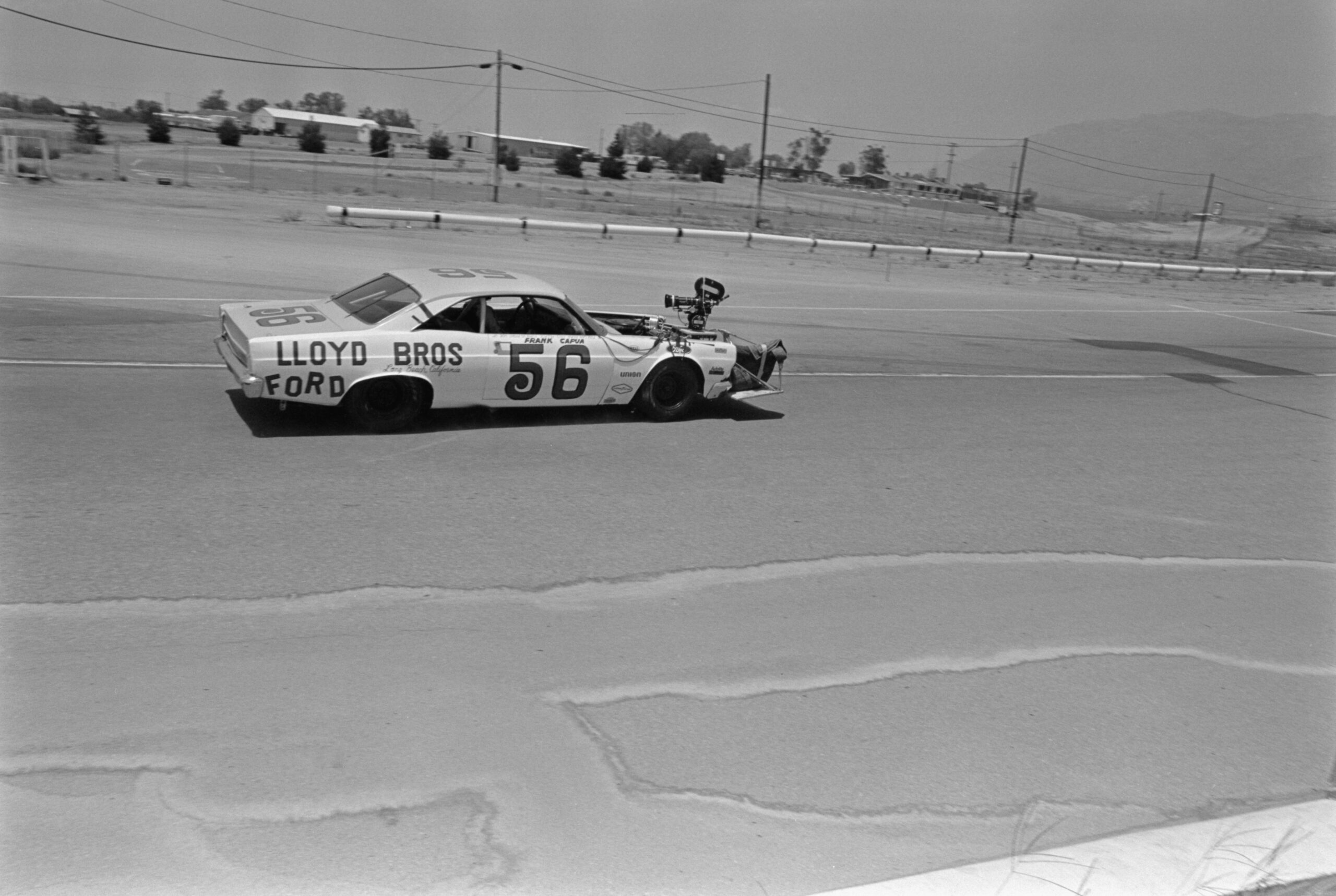
The course hosted a pair of one-off NASCAR races in 1958 and 1961 respectively before becoming a mainstay on the schedule in 1963. Both of those races were held in the late spring. However, in 1963, the date moved to late January, and the Winston 500 became the opening race of the NASCAR season, which it remained through the 1981 season. A second date was added for the 1970 season and beyond, running as the Budweiser 400 in June. This race remained on the schedule until 1988. The final NASCAR race held at the track occurred on June 12, 1988 and was won by NASCAR champion, Rusty Wallace. For the 1989 season, the track was left off the schedule entirely. However, the track remained open through the ’89 season, serving as a venue for special events, such as car shows.
During its time, Riverside International Raceway garnered a dangerous reputation. The many turns and dusty climate proved to be a serious challenge for many of NASCAR’s early greats. From 1981 to 1987, the track acted as the host of the NASCAR Cup Series finale. It is notable as being the site of Richard Childress Racing’s first win when, in 1983, Rucky Rudd drove his No. 3 Pontiac to victory lane at the venue. Following the 1989 season, the track closed permanently.
Throughout its existence, there were three main layouts used for Riverside International Raceway. Those layouts were: the Long Course (which measured in at 3.3 miles), the Short Course (which measured in at 2.547 miles), the more commonly used and the one we’ll focus on for the purpose of this article, the NASCAR Course (measuring in at 2.62 miles). This, of course, does not include the drag strip, which could have been incorporated into the larger course. The NASCAR layout of the track consisted of nine turns. The first corner was a slight left turn followed by a slight right. Then, turns 3-5 were part of a series of esses.
The, there were three tight hairpin turns for turns 6, 7, and 8. Coming out of 8, we have a long straightaway heading down into the final turn of the course. Turn 9 was a wide-sweeping right-hander that took the field back to the start-finish line. The surface of the track was asphalt.
A plethora of different racing series hosted events at the storied venue. CanAm, a precursor to today’s IMSA, the Los Angelous Times Grad Prix there from 1966-1973. Formula One held the United States Grand Prix there in 1960. It was a popular venue on the International Race of Champions (IROC) series. IndyCar raced there during their CART days from 1981-1983. But mainstay of the track was NASCAR. The NASCAR Southwest Series raced there from 1986-1988 but it was the NASCAR Winston Cup Series that truly claimed the track as their own. In 1958. 1961, and then from 1963-1988, NASCAR hosted the Winston 500 at the track. A second date was lated added and was on the schedule in 1963 and then from 1970-1988. That race was titled the Budweiser 400.
Looking at NASCAR winners at the track is like reading a who’s who of NASCAR racing. The driver who holds the record for most wins at the track with 6 is the late great Bobby Allison. He won at the track in 1971, 1973, 1975, 1979, and he swept the races in 1981. Darrell Waltrip, Richard Petty, and Dan Gurney all have five wins apiece. Tim Richmond scored 4 of his 13 wins career wins at the track. It was his home track. David Pearson and Cale Yarborough both won three times at the facility. Rusty Wallace won at the track twice, even winning the final race. And, of course, Terry Labonte and Ricky Rudd both have a pair of wins at the facility.
Today, Riverside International Raceway no longer exists. After the facility hosted its final races in 1988, the track remained open for a year before closing down entirely. With the population boom of the Moreno Valley area in the late 1980s and early 1990s, the property the track resided on was sold to land developers. The track was subsequently torn down and the land was repurposed. The Home Depot company purchased the land and built the Moreno Valley Mall at Towngate, which still stands today. Many streets around the mall were named after some of the drivers who dominated at the facility.
In 2003, plans were announced to recreate the Riverside track as Riverside Motorsports Park. The concept was to build a replica of the original design at a new location. Sadly, plans to recreate the track were abandoned in 2009.
What do you think of this, Daily Downforce readers? For some of our older viewers out there, have you ever been to this track? Have you ever watched an event here on TV? To date, almost all footage of the track seems to be lost to history, which is crazy considering the fact that it stayed open well into the 21st century. Would you have liked to see a race at this track, especially in the NextGen era? Let us know your thoughts! And be sure to keep your eyes peeled for the next installment of Forgotten Speedways.