
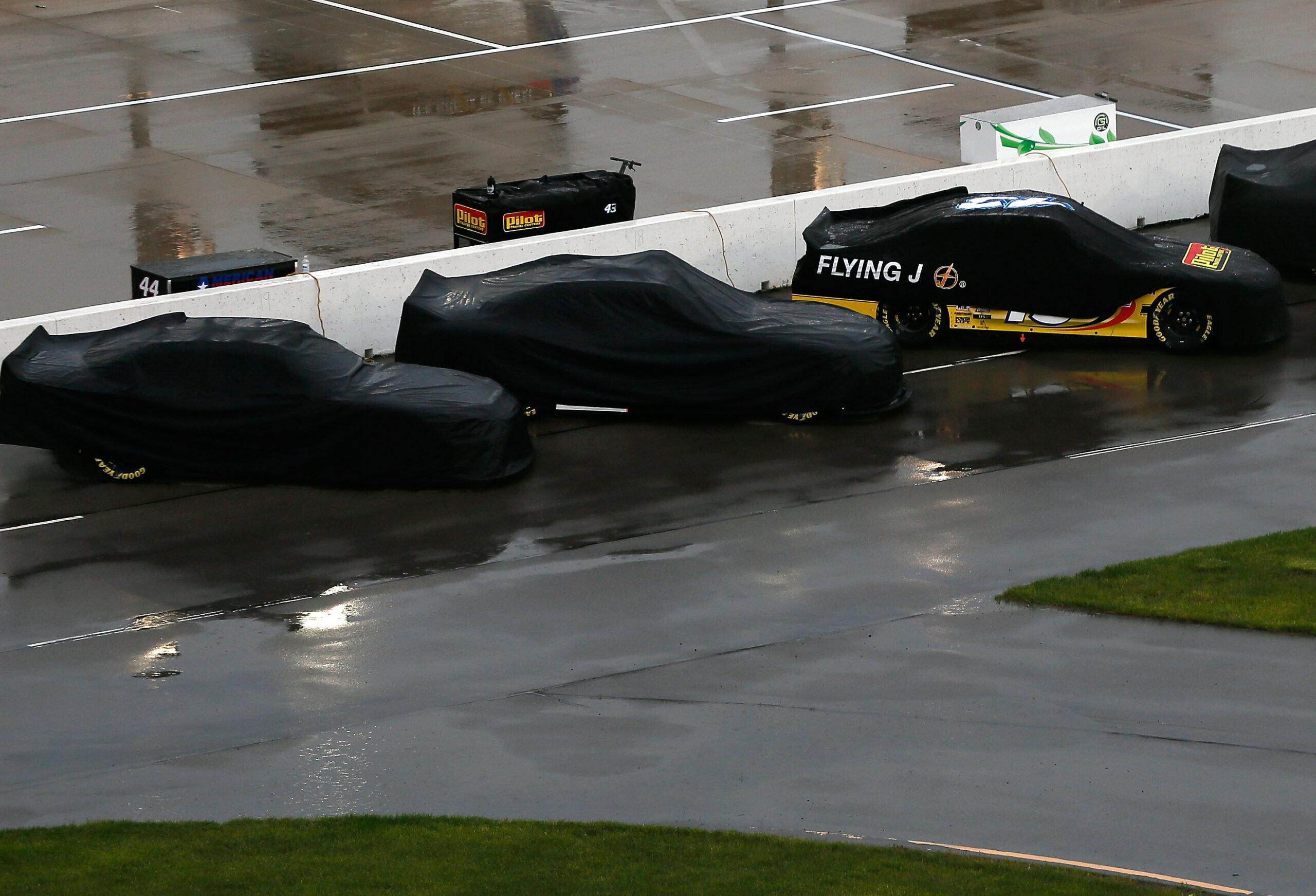


Weather could play a major role in the NASCAR weekend at EchoPark Speedway, with current forecasts calling for a 40% chance of rain Saturday afternoon and increasing to 55% in the evening. While conditions are expected to improve, contingency plans are already in place in case races cannot be completed as scheduled
NASCAR has not announced any official schedule changes yet, as decisions will be based on how conditions develop in real time. With rain chances increasing through Saturday afternoon and evening, teams are preparing for multiple outcomes, and Sunday is expected to serve as the primary backup window if events can’t be completed as planned.
Conditions are constantly being monitored, but fans should be prepared for possible schedule adjustments throughout the weekend. We’ll keep you updated throughout the race weekend here on The Daily Downforce

Just when things finally seemed to calm down in the NASCAR garage, a bombshell dropped. Joe Gibbs Racing is officially suing former competition director Chris Gabehart, and the allegations are serious. Power struggles, confidential data, secret photos, and a potential move to Spire Motorsports.
From competition department tension to an $8 million damages figure, this lawsuit could have major implications beyond just one team. Gabehart helped elevate Denny Hamlin back into championship form and played a key role in JGR’s recent success, which makes this split even more shocking. This preview only scratches the surface. The full breakdown dives into the timeline, the alleged evidence, and what this could mean for the Cup Series balance of power moving forward. Watch the full video to learn much more
Watch Also

NASCAR President Steve O’Donnell says the Cup Series schedule is not guaranteed to remain at 36 races, and the sanctioning body is evaluating whether a different structure would make more sense.
Speaking about the long-term outlook, O’Donnell said everything from the total number of events to when they are held is under consideration.
“It’s worked for us, but I would not say this is the way it will always be. Is there a number of races that makes more sense? Could it be 30, or even more? Could we introduce midweek races and shorten the season? All of that is on the table.”
The Cup Series has run a 36-race points schedule for more than two decades, typically from February through November.
NASCAR’s current media rights deal spreads races across multiple broadcast, cable, and streaming partners, having been in place since 2025. Compared to the previous deal, far fewer races now air on traditional broadcast television, so fans have to follow the season across several networks and platforms, including FS1, USA, Prime Video, and TNT Sports. O’Donnell previously acknowledged that the transition led to a late-season dip in viewership as coverage has been on broadcast TV less often, and it clashes directly with the NFL.
O’Donnell says weekday races are an option if NASCAR wants to shorten the overall calendar without dramatically reducing the number of races. The sport last had midweek races during the 2020 season, when it was the first sport to return to action, at Darlington. During that time, NASCAR did multiple midweek races, including at Darlington, Charlotte, and Kansas, to compensate for the weeks missed during quarantine, and the audience showed up in TV ratings.
A shorter season could also reduce direct competition with football, which dominates the U.S. sports calendar each fall, while additional races would create more inventory for media partners.
Across sports, schedules are increasingly shaped by media strategy rather than tradition. The NFL, for example, has expanded its reach without drastically lengthening its season, adding standalone games on holidays, exclusive streaming packages, and international matchups to maximize value per game. The league also added a 17th regular-season game in 2021, its first expansion in decades, as part of a broader revenue push.
Other U.S. leagues are following similar paths. The NBA introduced an in-season tournament to create new broadcast inventory without extending the schedule, while MLB continues to sell national windows and streaming packages across its existing 162-game season.
In motorsports, Formula 1 has expanded the calendar itself. The series ran 21 races in 2021. 10 years earlier, it ran 19 races. And now it has a record-breaking 24-race schedule, despite being a global championship. Much of that growth is driven by hosting fees from cities and governments, as well as rising international demand, but drivers and the industry have already shown displeasure regarding the ever-growing schedule, deeming it too exhausting.
The shifts across sports accelerated drastically after the pandemic, when leagues became more dependent on media revenue and more willing to adjust calendars, formats, and distribution to match changing viewing habits. NASCAR, for example, rarely changed its calendar before 2020, but after the pandemic, it’s become one of the most diverse calendars in motorsports: racing on dirt, in stadiums, reviving old tracks, adding road courses, expanding internationally, and constantly changing its post-season race placements.
NASCAR has not announced any plans to alter the Cup schedule. O’Donnell’s comments indicate the organization is evaluating options as it plans future seasons under an evolving sports media environment.
What do you think? Should NASCAR have more, fewer, or the same number of races going forward? Would you like to see midweek races? Let us know what you think on Discord or X. Don’t forget that you can also follow us on Instagram, Facebook, and YouTube.